
Day Trip to Nara from Kyoto | Travel Guide and Itinerary
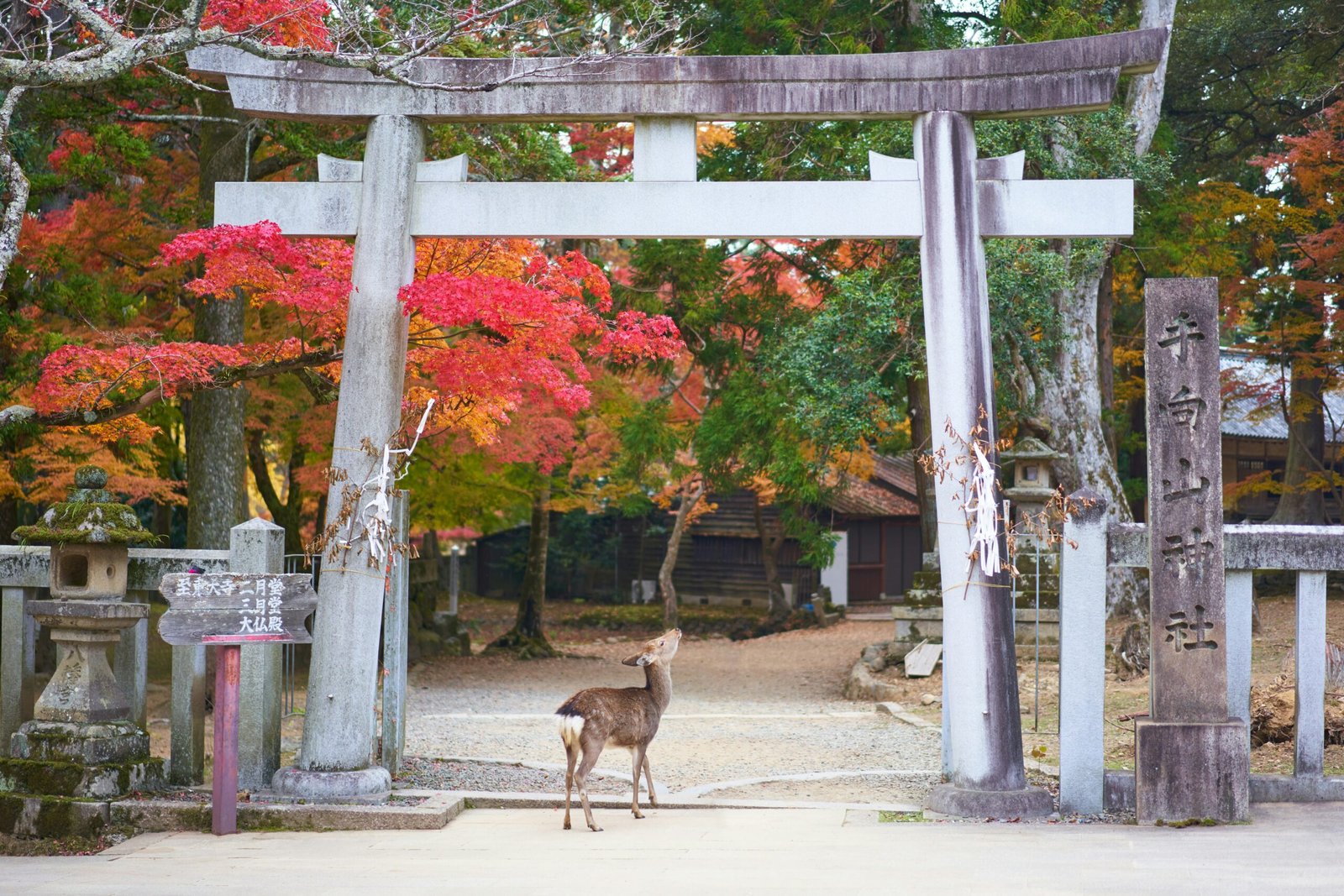
A day trip to Nara from Kyoto offers a perfect blend of history, culture, and natural beauty. Once Japan’s first permanent capital, Nara is home to some of the country’s most treasured temples and shrines, including the iconic Tōdai-ji with its towering Great Buddha statue.
I first got to know about Nara, a beautiful temple town in Japan, through David Attenborough’s documentary The Year Earth Changed on Apple TV+. In the documentary, Attenborough shared a fascinating story about how, during the COVID lockdowns, the famous deer of Nara wandered further into the city in search of food, as they had long depended on the crackers fed to them by visitors around the temple complex.
To me, it was such a striking reminder of how deeply intertwined humans and nature can become. That story stayed with me long after the documentary ended, and before I knew it, Nara had earned a permanent spot on my travel bucket list. So when our Japan trip finally came together, I knew I had to take a day trip to Nara from Kyoto.
About Nara, The Ancient Capital of Japan
Often regarded as the cradle of Japanese civilization, Nara was Japan’s first permanent capital, established in the 8th century. Even with its immense historical importance, the city feels peaceful, compact, and refreshingly slower-paced compared to the lively bustle of Kyoto or Osaka. Nara is best known for its centuries-old temples, tranquil gardens, and the famous free-roaming deer that are considered sacred in Shinto belief.
At the centre of it all is Nara Park, where hundreds of deer wander freely among some of Japan’s most treasured heritage sites. One of the highlights is Tōdai-ji, home to an enormous bronze Buddha statue and one of the most impressive temple complexes in the country. Long before Kyoto rose to prominence as Japan’s imperial capital, Nara had already established itself as the nation’s cultural and political heart.
A Day Trip to Nara from Kyoto
I only had a day to explore Nara, which barely felt enough to experience everything the city has to offer fully. Even so, the quiet charm, deep history, and unique atmosphere left a lasting impression on me. It is one of those places that makes you slow down and appreciate the beauty of old Japan, and I already know I’ll have to return someday to discover more of it.
How to Get to Nara from Kyoto?
Getting to Nara from Kyoto is incredibly easy, making it one of the best day trips to take while visiting Kyoto. Depending on the train you take, the journey takes anywhere between 45 to 60 minutes.
One important thing to know is that Nara has two train stations:
- JR Nara Station
- Kintetsu-Nara Station
If possible, you’ll want to arrive at Kintetsu-Nara Station because it’s much closer to all the main attractions, including Nara Park, Todai-ji, and Kasuga Taisha Shrine.
Train Options from Kyoto
- Kyoto Station to Kintetsu-Nara via the Kintetsu Limited Express: around 35 minutes
- JR Kyoto Station to JR Nara Station: around 45 minutes
I chose the Kintetsu line because it was faster and made it easier to start exploring immediately after arriving.
Arriving in Nara and Meeting the Sacred Deer
The moment you begin walking towards Nara Park, you’ll quickly realise that the deer truly rule this city!
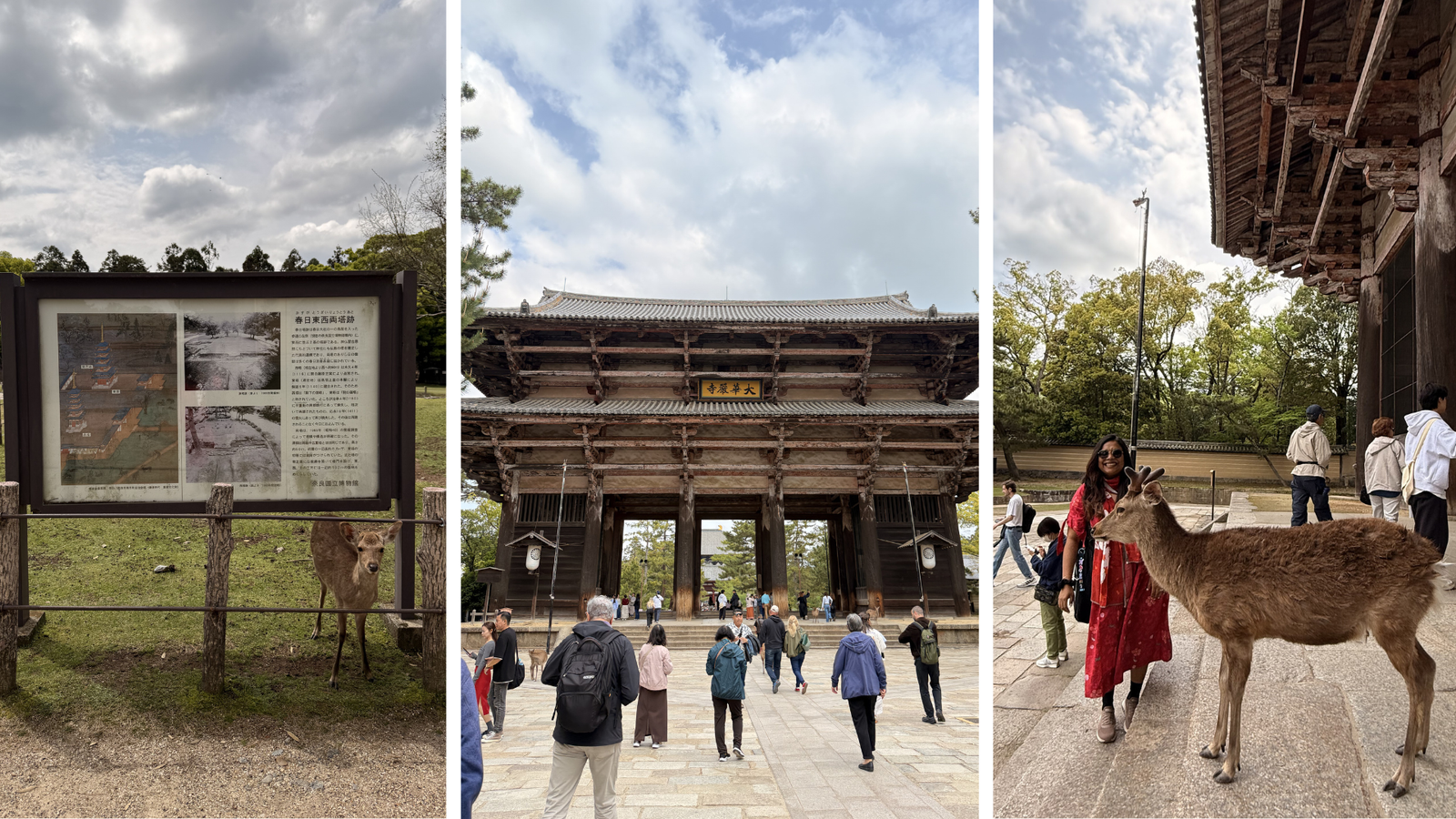
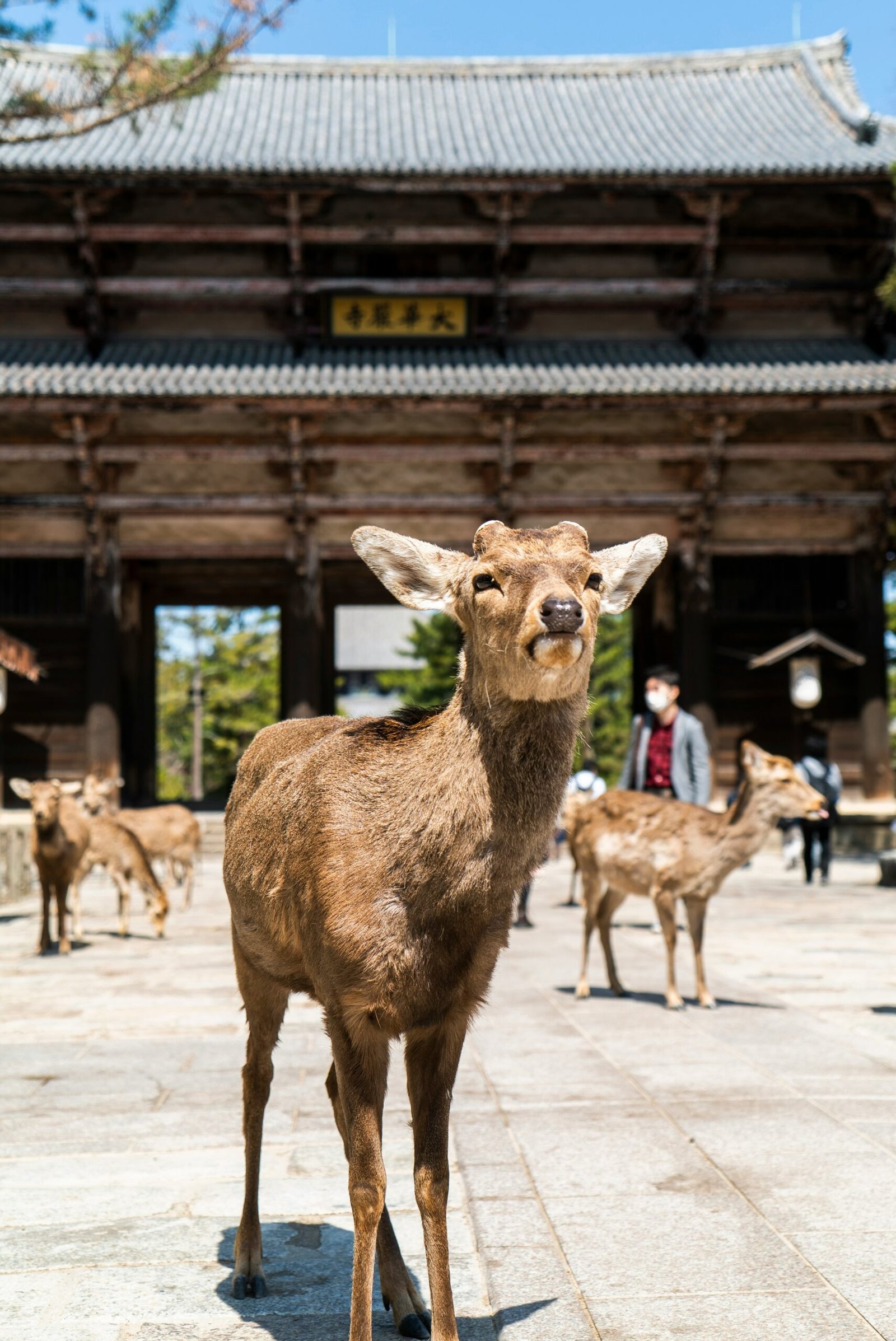
As I walked down Omiya-dori, I spotted deer casually wandering along the footpaths, resting on the grass, and interacting with tourists like they owned the place. And honestly, they kind of do! Over 1,200 sika deer live around Nara Park, and they are considered sacred messengers of the gods in the Shinto tradition. The deer have been roaming freely here for more than 1,300 years.
One of the funniest things to witness is how intelligent they are! Many of them have learned to bow to visitors in exchange for food, and some even wait patiently at pedestrian crossings alongside humans. You can buy shika senbei (special deer crackers) from vendors around the park for around ¥200. I’d definitely recommend getting at least two packs because once one deer notices you have crackers, many more suddenly appear.
[FYI, I was too scared to feed them, so I just watched others feeding the deer!]
There’s even a Japanese word, shikadamari, which roughly translates to “deer gathering spot,” describing the clusters of deer relaxing together across the lawns of the park. And it’s a beautiful sight to just watch them, lazing around.
[Also read: The Temples, the Ryokans, and a Walk Around the Geisha District in Kyoto]
Walking to Kasuga Taisha
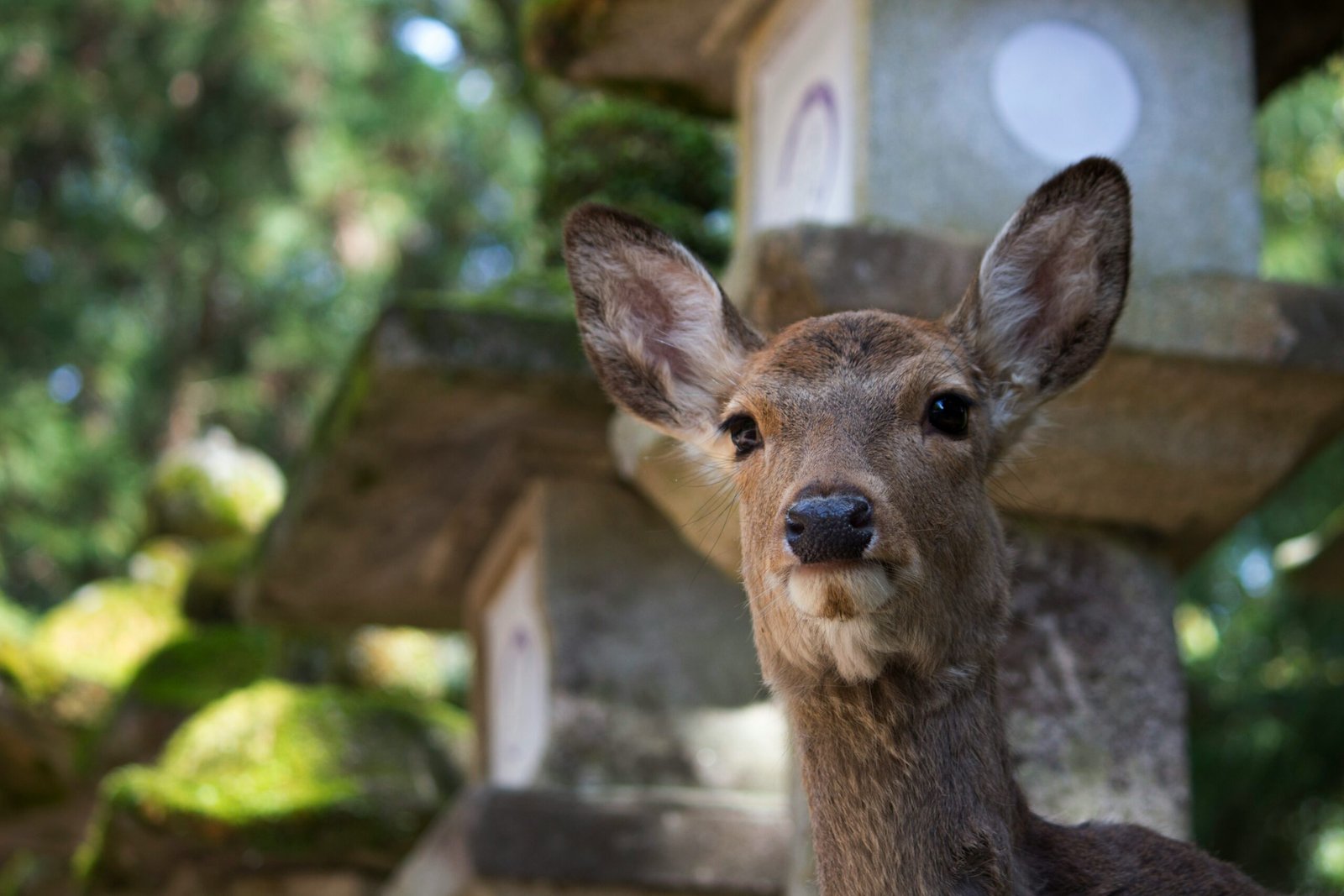
From the park, I continued towards Kasuga Taisha Shrine, one of Nara’s most important Shinto shrines. The walk itself was beautiful. Forested paths, stone lanterns covered in moss, and wandering deer gave the entire area a peaceful and slightly mystical atmosphere.
Kasuga Taisha is famous for its thousands of lanterns, both bronze and stone, which line the pathways and shrine buildings. The shrine dates back to 768 AD and has deep historical ties to the powerful Fujiwara clan. If you happen to visit during late April or early May, the nearby Manyo Botanical Garden is also worth stopping by, especially during wisteria season when the flowers are in bloom.
Collecting Goshuin in Nara
One of my favourite parts of visiting temples and shrines in Japan was collecting goshuin.
A goshuin is a traditional handwritten temple or shrine seal, usually created using beautiful Japanese calligraphy alongside a red ink stamp. They are collected in a special notebook called a goshuincho and serve as both a spiritual keepsake and a unique travel memory.
Every temple and shrine has its own distinctive design, and collecting them almost becomes a journey in itself. Nara is actually one of the best places in Japan for goshuin collecting because so many historic temples and shrines are located close together.
I picked up a few during my day in Nara, and they’ve become some of my favourite souvenirs from Japan. Much more meaningful than magnets or keychains, honestly.
Pro tip: You can download the app – GoshuinGo, in order to track the temples and shrines from where you can collect them! And if you’re keen to learn some calligraphy and Japanese art, then Nara is the best place for that too.
Visiting Tōdai-ji and the Great Buddha Hall
No visit to Nara is complete without seeing Todai-ji.
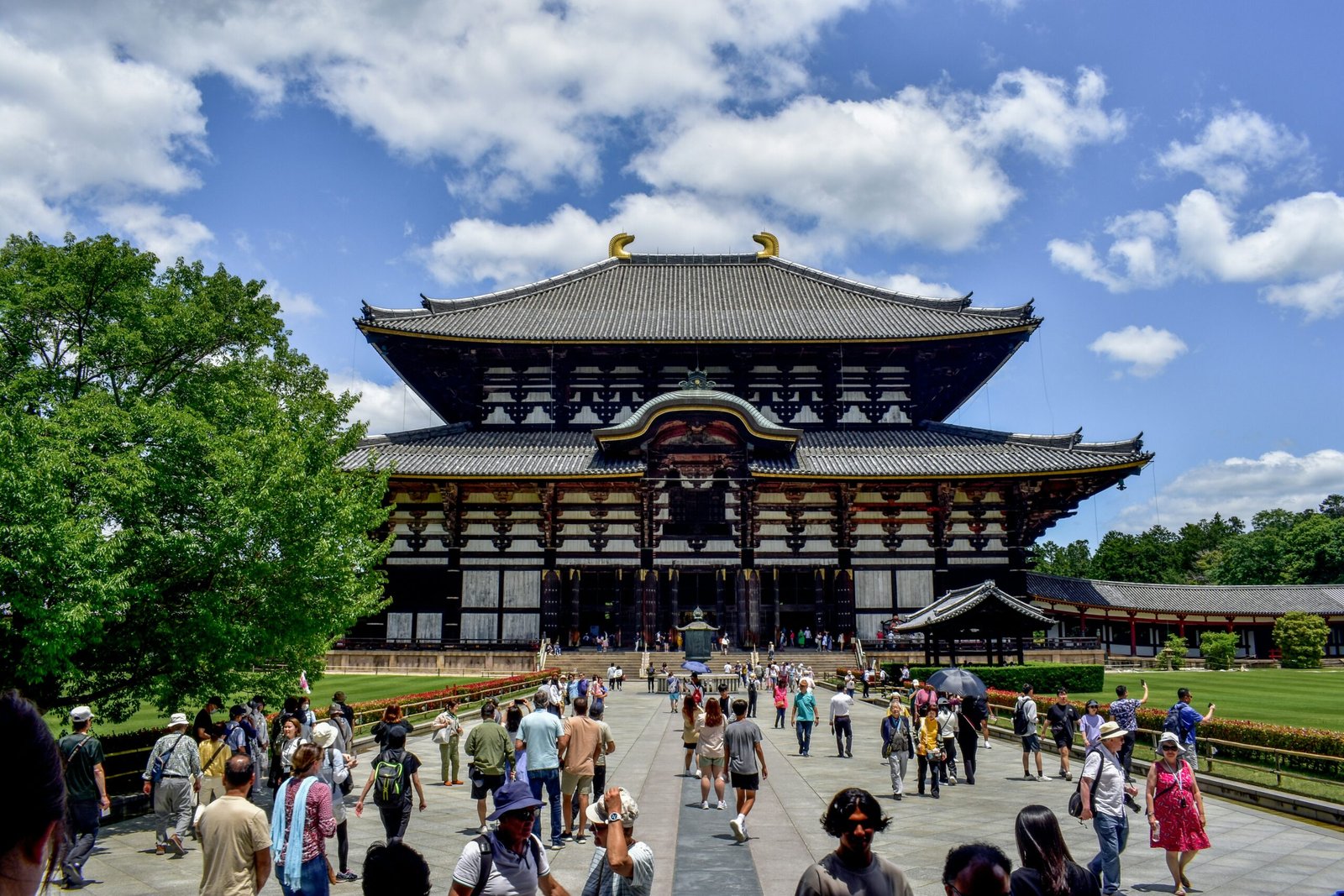
As you pass through the massive Nandaimon Gate and walk along the approach towards the main hall, the scale of the temple slowly begins to sink in. Todai-ji, meaning “Eastern Great Temple,” was once the largest wooden structure in the world. Even today, it feels enormous.
What amazed me most was learning that the structure was built using traditional methods without nails holding it together.
Inside lies the Daibutsu, or Great Buddha, one of the largest bronze Buddha statues in the world. Standing around 16 metres tall and dating back to the 8th century, it’s impossible not to feel tiny standing in front of it. Despite the crowds, there’s still something incredibly calming about the atmosphere inside the hall.
Note: You will need to pay an entrance fee of ¥800 to enter Todai-ji and to go into the Big Buddha Hall to see the Bronze Buddha Statue.
Exploring Nigatsu-dō
A short walk uphill from Tōdai-ji brought me to Nigatsu-do, easily one of my favourite places in all of Nara. Although it is technically part of the Todai-ji temple complex, Nigatsu-do has a distinct atmosphere of its own that feels quieter, more intimate, and deeply spiritual.
Nigatsu-do’s wooden terrace overlooks the city of Nara, and during sunset, the light filtering through the mountains creates an unbelievably peaceful atmosphere. The hanging bronze lanterns across the verandah were probably my favourite detail here.
Nigatsu-do is also famous for hosting Omizutori, one of Japan’s oldest Buddhist ceremonies, held every March since 752 AD without interruption. During the ritual, enormous flaming torches are carried across the temple balcony, sending showers of sparks dramatically into the night sky. The following day, sacred water is drawn from a well beneath the temple, believed to have healing and purifying properties. Knowing that this tradition has continued uninterrupted for over a thousand years made the place feel even more special.
Visiting Kōfuku-ji
It was late afternoon, and I had walked 10,000 steps already! But I stopped at Kofuku-ji, another of Nara’s UNESCO World Heritage Sites.
Originally established in 730 AD, the temple was once one of the most influential religious complexes in Japan under the patronage of the Fujiwara clan. The most recognisable part of the complex is its elegant five-storied pagoda, which has become one of Nara’s defining landmarks. Unfortunately, restoration works are currently ongoing, but the temple grounds are still worth visiting for their historical atmosphere alone.
The complex also includes several historic halls and the National Treasure Museum, which houses important Buddhist artefacts and sculptures.
Shopping on Higashimuki Street
On the way back to the station, I wandered through Higashimuki Shopping Street to pick up a few souvenirs and snacks before leaving Nara.
The covered shopping arcade is filled with souvenir shops, local sweets, cafés, and small restaurants. It’s a nice final stop before heading back to Kyoto and a good place to grab deer-themed souvenirs that you’ll probably end up buying whether you planned to or not.
The Beautiful Gardens of Nara
One thing I unfortunately had to skip during my day trip to Nara was its beautiful traditional gardens. With only a limited amount of time and so many temples and shrines to explore, I had to make a few difficult choices. But if you have extra time in your itinerary, I’d definitely recommend slowing down and visiting at least one of Nara’s gardens.
The two most well-known are Isuien Garden and Yoshikien Garden, both located close to Todai-ji and Nara Park.
Isuien Garden is famous for its beautifully landscaped ponds, teahouses, stone pathways, and carefully framed views of the surrounding mountains and temple rooftops. The garden was designed in a way that blends the natural scenery of Nara into the landscape itself, making it feel incredibly peaceful and harmonious.
Right beside it is Yoshikien Garden, which is often described as quieter and more intimate. Divided into different garden styles, including a moss garden, pond garden, and tea ceremony garden, it looks especially beautiful during autumn and spring.
After walking through Nara’s historic temples and busy deer-filled paths, these gardens seem like the perfect place to slow down for a while and appreciate the calmer side of the city. I didn’t manage to fit them into my schedule this time, but they’ve definitely gone onto my list for my next visit to Nara.
Is Nara Worth Visiting for Just One Day?
Absolutely yes!
I only spent a day exploring Nara, and while I definitely wish I had more time, I still felt like I was able to experience the city’s highlights at a comfortable pace.
Nara has a completely different atmosphere compared to Kyoto or Osaka. It feels more intimate, more peaceful, and deeply connected to Japan’s ancient roots. Between the sacred deer, historic temples, quiet gardens, and centuries of history, it’s one of those places that leaves a lasting impression without trying too hard.
And honestly, I already know I’ll return someday to explore more of it.
[Also read: Things You Must Know Before Travelling To Japan]
FAQs About a Day Trip to Nara
1. How much time do you need in Nara?
A full day is enough to see Nara’s main highlights at a relaxed pace. However, if you enjoy history, temples, gardens, or slower travel, you could easily spend two days exploring more deeply.
2. Why are the deer in Nara famous?
The deer in Nara are considered sacred messengers of the gods in the Shinto tradition and have lived freely around the city for more than 1,300 years. Today, over 1,200 deer roam around Nara Park.
3. Can you feed the deer in Nara?
Yes. Visitors can buy special deer crackers called shika senbei from vendors around Nara Park. Many of the deer will even bow before being fed.
4. Are the deer in Nara friendly?
Most deer are calm and used to tourists, but they can become excited when they see food. It’s best to be respectful, avoid teasing them, and keep your belongings secure because some deer may try to grab maps or paper bags.
5. What is the best time to visit Nara?
Spring and autumn are especially beautiful due to cherry blossoms and autumn foliage, but Nara is lovely year-round. Summer is lush and green, while winter feels peaceful and far less crowded.
Disclaimer: This post contains a few affiliate links. If you happen to click on any of them and make a purchase, I might earn a small commission at no extra cost to you. Just know that I truly appreciate your support if you choose to do so.
Tags:
Share:


1 Comment
Leave a Reply

About Me
I travel to collect stories, slowly and meaningfully, with an open heart. I wander a little farther for good food, linger longer to understand a place, and write so I can call it “work.” A slow traveller at heart, I believe in experiences over checklists, in moments that unfold at their own pace, and in connections that stay long after the journey ends.
An absolute foodie and die-hard mountain lover, I find my happiest moments in quiet Himalayan towns with a cup of lemon-honey-ginger tea in hand. Over the years, I’ve had the joy of exploring places across India and beyond, each trip teaching me something new about people, cultures, and myself. When I’m not lost in thought or coffee, you’ll find me exploring the world one destination at a time, always looking for places that make me feel something. I love to read and write (give me a book and I’ll love you all the more) and share honest insights, real photos, and thoughtful recommendations from my own travels, so you can experience every place a little deeper, a little slower, and with just the right touch of comfort.
 Pinterest
  Linkedin
  MuckRack
Exploring The World, One Place At a Time!















Lovely Read ! Nara looks like absolute dream <3, thank you for sharing this offbeat and peaceful place.