Hoi An makes a wonderful base for exploring Central Vietnam. Once you’ve had your fill of lantern-lit streets, cafés and old merchant houses, there are several interesting places within easy reach of town — from ancient Cham ruins and island escapes to mountain temples and one of Vietnam’s most elaborate hilltop attractions.

If you have time for only one day trip from Hoi An, I’d make it My Son Sanctuary.
About 90 minutes from Hoi An, this ancient temple complex sits in a lush valley surrounded by forest and mountains. Built by the Champa civilisation between the 4th and 13th centuries, the red-brick temples are an extraordinary reminder of a civilisation that once flourished across Central Vietnam. Often compared to Angkor Wat, My Son has its own distinct character and history. The ruins were badly damaged during the Vietnam War, but several temple structures still stand, with intricate carvings and remarkable brickwork.
Go early in the morning if you can. The heat can be intense later in the day, and arriving before the larger tour groups makes a considerable difference to the experience.
Distance from Hoi An: Around 40 km
Travel time: 1.5 hours each way
Best for: History, archaeology and photography
For a day by the sea, head to the Cham Island Archipelago, a group of eight islands off the coast of Hoi An. The largest and most visited is Hon Lao, which is accessible by speedboat or ferry from Cua Dai Pier.
The journey takes roughly 30–45 minutes, depending on the boat, and the reward is turquoise water, sandy beaches and opportunities for snorkelling around the islands. Cham Island is also a UNESCO Biosphere Reserve and offers a glimpse into a more laid-back side of coastal Vietnam. Don’t expect the scale or polish of Thailand’s famous island destinations — Cham Island feels much more local and low-key. There are small restaurants, homestays and guesthouses around the island, making it possible to extend your trip beyond a day if you want more time by the water.
Travel time: 30–45 minutes by speedboat
Best for: Beaches, snorkelling and a change of scenery
A day trip to Da Nang makes for an excellent contrast to Hoi An. The coastal city is only around 30 km away, so you can comfortably combine several sights in one day.
Start with the Marble Mountains, a cluster of limestone and marble hills dotted with caves, Buddhist shrines, temples and pagodas. Climbing through the caves and reaching the viewpoints gives you a completely different perspective of Central Vietnam. From there, head towards the Linh Ung Pagoda on Son Tra Peninsula, home to the impressive 67-metre Lady Buddha statue overlooking the sea. The drive along the peninsula is worth the trip in itself, with sweeping views of Da Nang’s coastline.
You can round off the day with lunch in Da Nang and some time by My Khe Beach before heading back to Hoi An.
Distance from Hoi An: Around 30 km
Travel time: 45 minutes to 1 hour each way
Best for: Temples, mountains, coastal views and city life
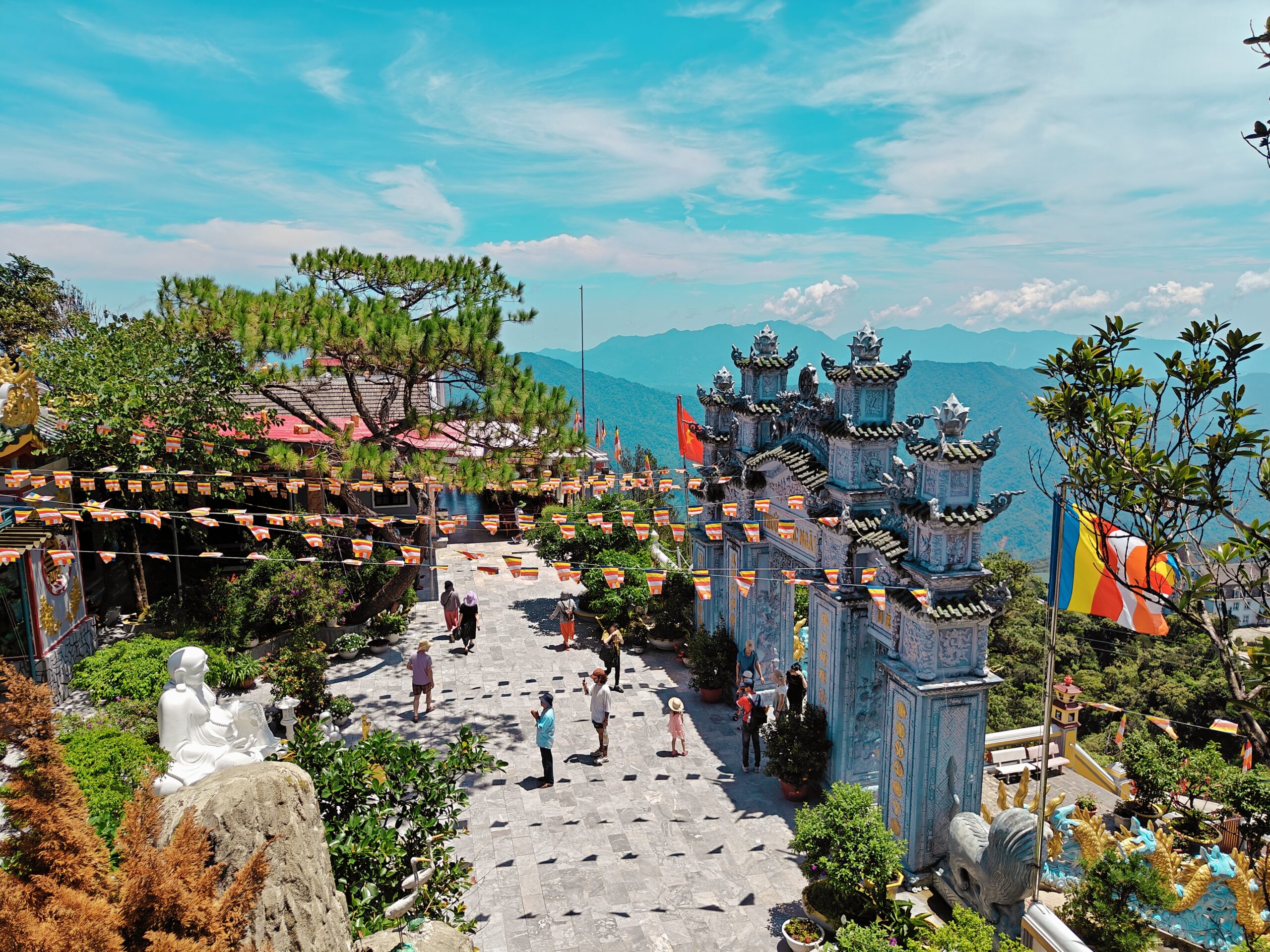
If you’re looking for something completely different, spend a day at Ba Na Hills, a mountain resort about an hour and a half from Hoi An.
The journey up the mountain itself is part of the experience, thanks to the cable car ride offering panoramic views of the surrounding landscape. At the top, you’ll find the famous Golden Bridge, held aloft by enormous stone-like hands, along with gardens, restaurants, French-inspired architecture and an amusement park. It is undeniably touristy and feels worlds away from the historic charm of Hoi An — but that is also what makes it interesting.
I’d recommend it if you want to see a more extravagant, contemporary side of Vietnam and have a day to spare.
Distance from Hoi An: Around 70 km
Travel time: 1.5–2 hours each way
Best for: The Golden Bridge, mountain views, cable cars and family-friendly attractions
Where to stay in Hoi An?
One of the things I love about Hoi An is that you don’t have to stay in the middle of the Ancient Town to experience the best of it. There are beautiful riverside hotels, charming boutique stays, wellness retreats and sprawling beach resorts, all within easy reach of the Old Town.
Want to walk out for coffee and be in the middle of the action? Stay close to the Ancient Town.
Looking for a resort holiday? Head towards the beach.
And if you’re staying for longer, some of the riverside retreats make it very tempting to spend an entire day at the property.
For me, Anantara Hoi An gets a lot right. Set along the Thu Bon River and less than a kilometre from the Ancient Town, it gives you the best of both worlds — a beautiful resort setting while keeping you close enough to walk into town whenever you fancy. The low-rise architecture, landscaped gardens and riverfront setting give the property a lovely sense of place. You can spend your mornings exploring Hoi An and return to the hotel for a slower afternoon by the pool or a drink overlooking the river.
If this is your first visit and you want a luxury stay without being too far removed from Hoi An’s everyday life, this is a lovely option.
For something more contemporary, Moire Hoi An is worth considering. The relatively new property sits along the Do River, around a 10-minute walk from the Ancient Town, making it particularly convenient for travellers who want to be close to the action.
The design takes cues from Hoi An’s architectural palette, with its yellow exterior and white shutters, but the interiors feel fresh, polished and modern. It is the kind of hotel I would pick when I want the convenience of being near the Old Town without staying in a traditional-style property.
If your idea of a Hoi An holiday involves a little more wellness and a lot more time at your hotel, look at Namia River Retreat. Set along the Thu Bon River, the retreat is centred around private-pool villas, lush surroundings and a wellness-led experience inspired by traditional Vietnamese healing.
The villas are beautiful, but what I particularly like about Namia is that it encourages you to make the hotel part of the holiday rather than treating it as somewhere to sleep between sightseeing stops. This is the sort of place where I would happily block out an entire afternoon.
And then there is Four Seasons Resort The Nam Hai — the stay for when you want to make the hotel a destination in itself!
Set on the coast at Ha My Beach, the all-villa resort combines expansive gardens, beachfront villas, multiple pools and a design language that draws heavily from Vietnamese architectural traditions. Some villas also come with private pools. It is a splurge, without a doubt, but if you’re celebrating something special or planning a proper resort holiday, The Nam Hai is hard to overlook. The big decision here is whether you want to spend your days exploring Hoi An or happily never leave the resort.
La Siesta Hoi An is another excellent option if you want a resort-like stay without giving up easy access to the Ancient Town. Located around a kilometre from the historic centre, it combines landscaped grounds, multiple pools and a substantial spa with the convenience of being close to town.
I would suggesr staying here if you’re looking for a little bit of everything — Hoi An’s cafés and heritage streets during the day, followed by pool and spa time when you return. Also, this is a more budget-friendly option!
Another riverside option is Little Riverside Hoi An, which puts you close to the Ancient Town while giving you a more intimate boutique-hotel experience. This is a good middle ground if you like the idea of being near the river and Old Town but don’t necessarily want the scale of a large resort. It also works well for travellers who want to spend most of their time exploring Hoi An rather than staying on the property.
For a stay surrounded by greenery and away from the busiest part of town, consider Silk Sense Hoi An River Resort. The riverside property combines resort facilities with an emphasis on eco-conscious design and makes a good base for a slower Hoi An holiday. It is particularly appealing if you’re staying for several nights and want a little more space around you, while still being close enough to cycle or take a short ride into the Ancient Town.
And if your version of Hoi An includes plenty of beach time, Victoria Hoi An Beach Resort & Spa is another option to consider. Located along Cua Dai Beach, it gives you a more traditional beach-resort experience while keeping Hoi An’s Ancient Town within easy reach. For me, this works best when the trip is less about ticking off every attraction and more about combining a few days of exploring with a few days of doing very little at all.
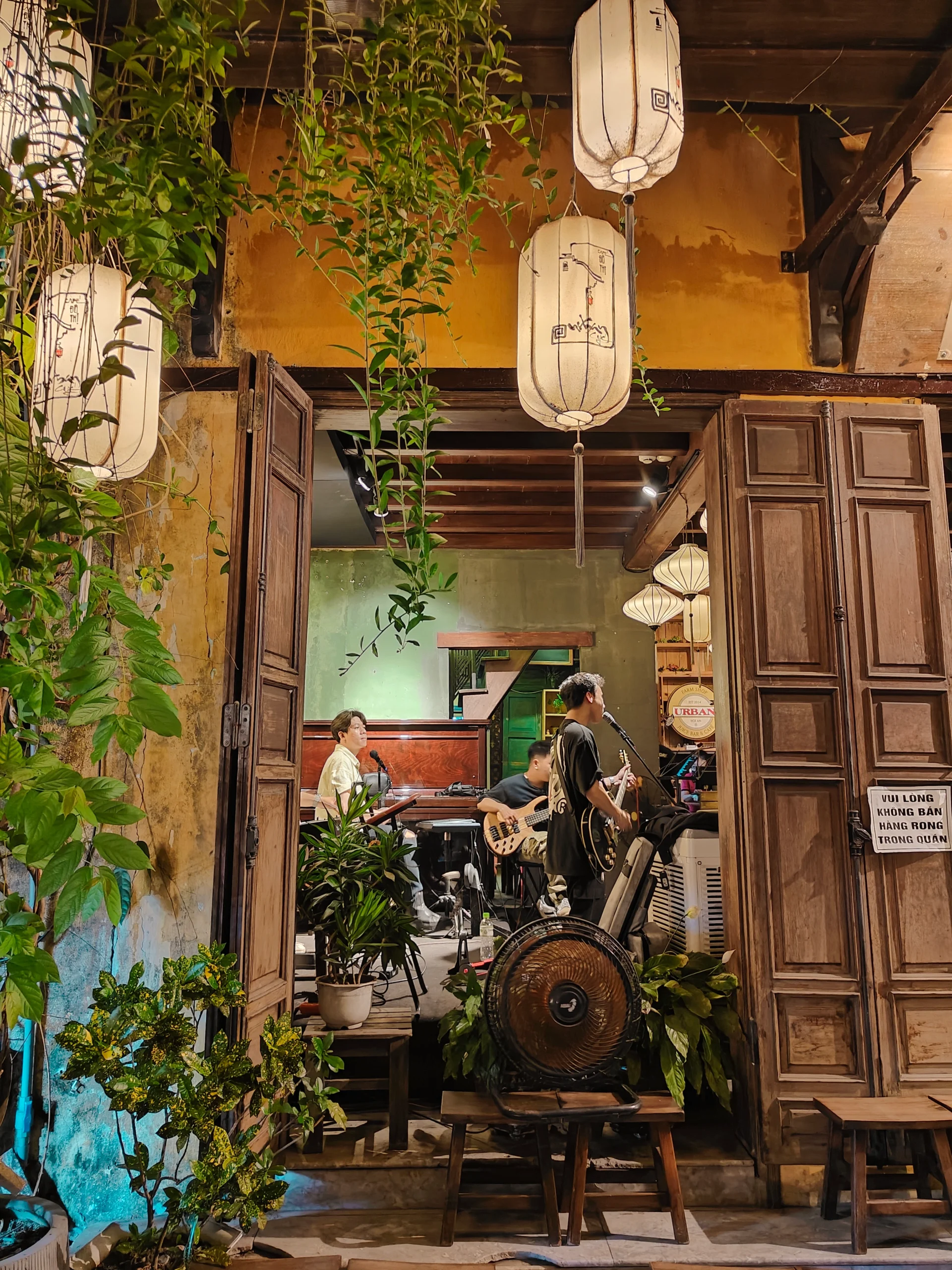
How to get around Hoi An?
One of the best things about Hoi An is that you don’t really need much to get around. The Ancient Town is compact, and some of my favourite moments here have come from walking or cycling without much of a plan. Once you venture further out, you have plenty of other options too.
WALKING
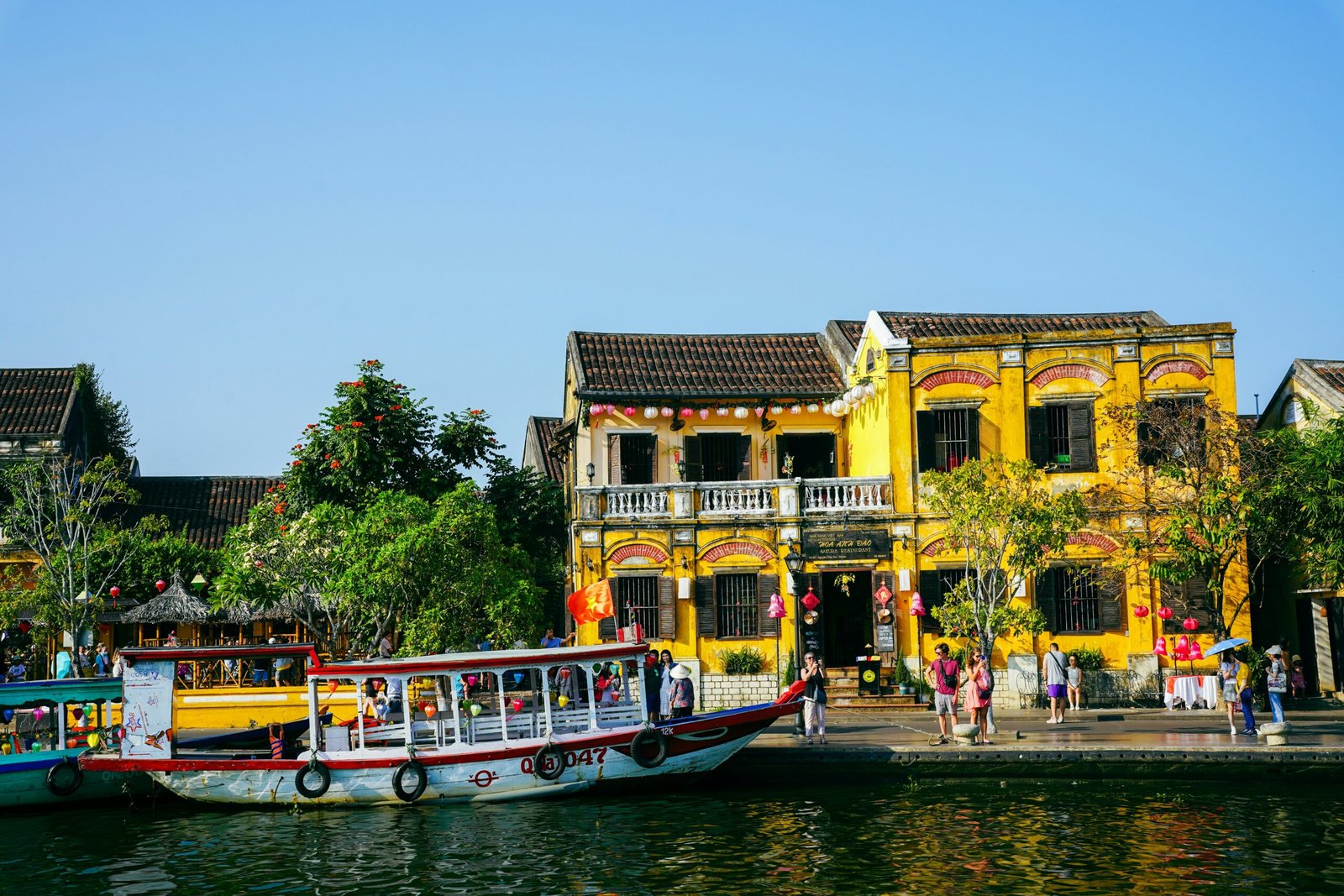
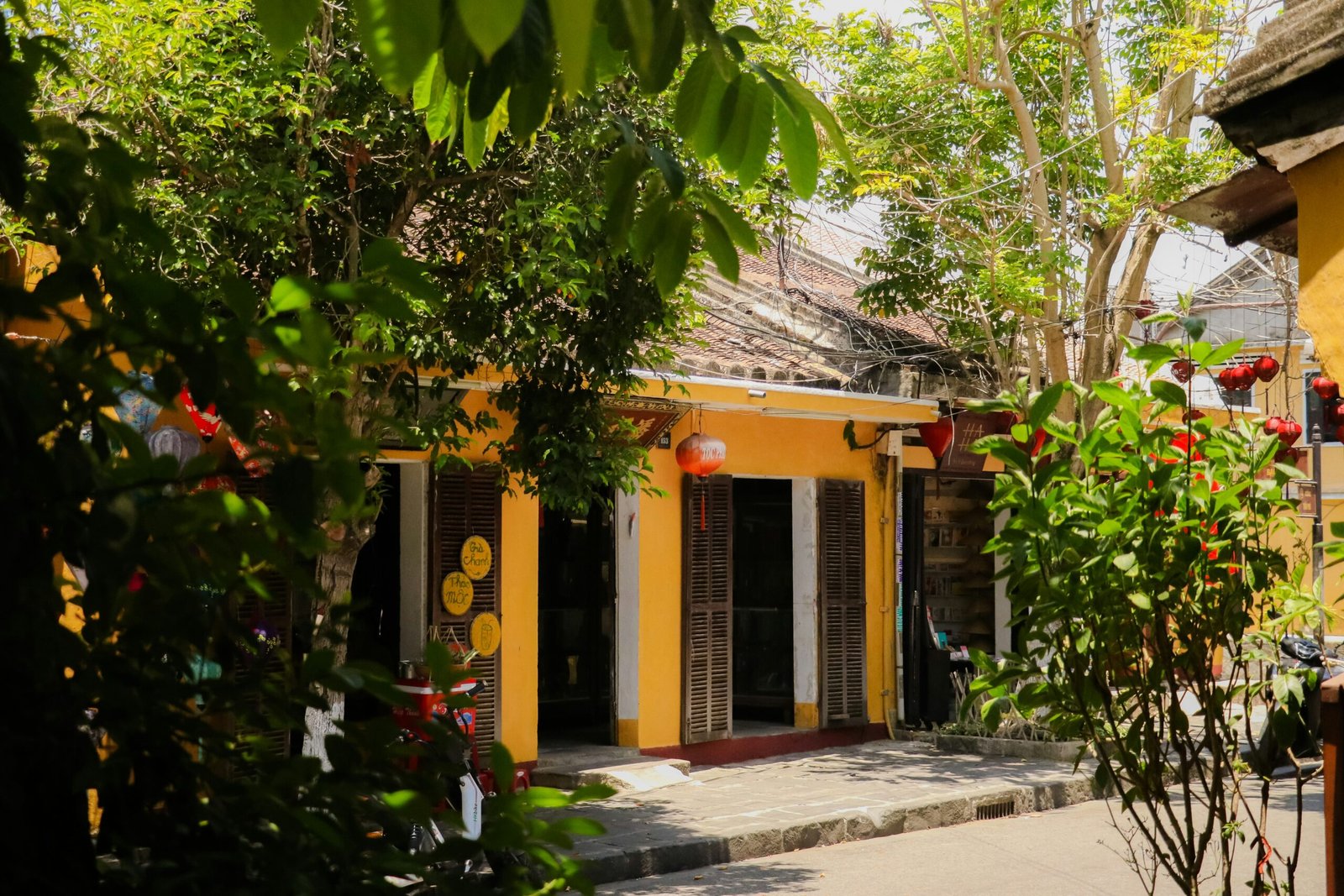
The Ancient Town is best explored on foot. The streets are compact and pedestrian-friendly, and walking gives you the chance to notice all those little details you might otherwise miss — an old wooden doorway, a tiny coffee shop, a courtyard tucked behind a yellow wall.
BICYCLE
If there is one mode of transport I associate with Hoi An, it has to be the bicycle. Cycling through the Ancient Town and out towards the rice fields is one of my favourite ways to experience the city.
Most hotels, homestays and guesthouses offer bicycles to their guests, often at no extra cost. Pick one up and cycle beyond the Old Town towards Cam Chau, Cam Thanh or the surrounding countryside. There is something wonderfully liberating about having two wheels and nowhere particular to be.
SCOOTER OR MOTORBIKE
For longer distances, renting a scooter or motorbike gives you much more freedom. It is particularly useful if you want to explore the countryside, beaches or places outside Hoi An at your own pace.
If you plan to ride, make sure you have the appropriate licence and insurance, and are comfortable with local traffic conditions.
GRAB
For those moments when you don’t want to walk, cycle or ride yourself, Grab is your best bet. The ride-hailing app is widely used in Vietnam and is handy for getting between Hoi An, Da Nang, the beach and your hotel.
I usually keep Grab on my phone when travelling around Vietnam — it saves you the trouble of negotiating fares and makes getting around unfamiliar places much easier.
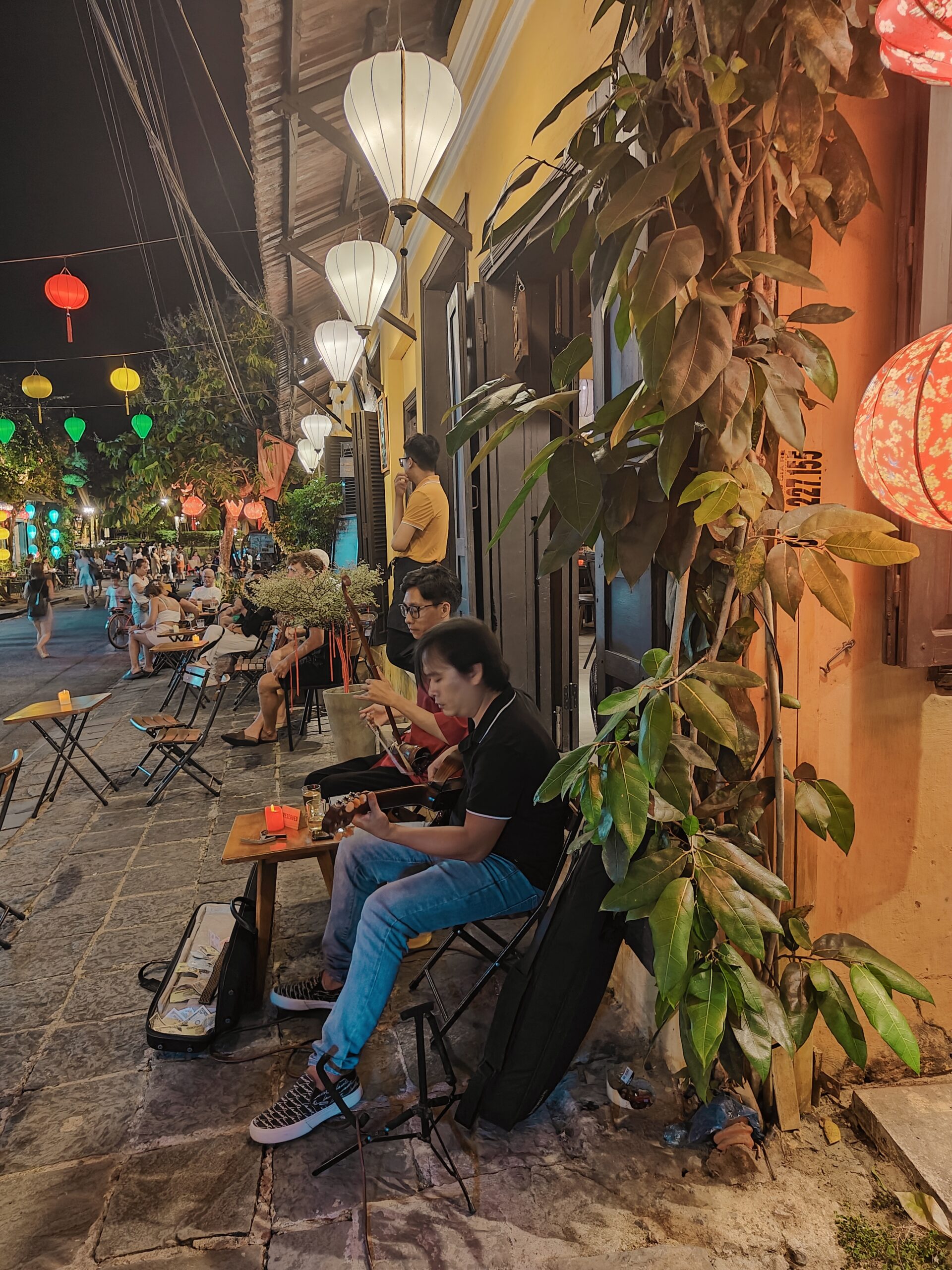
Which are the best cafés in Hoi An?
Is Hoi An a paradise for caffeine addicts? Absolutely!
It is also the kind of town where café hopping can easily become an itinerary in itself. From rooftops overlooking the Old Town to tiny coffee shops tucked into yellow colonial buildings, there is always another cup, and another charming corner, waiting to be discovered.
92 STATION CAFE
Head here for rooftop views, Vietnamese coffee and a great vantage point over the tiled rooftops of Hoi An. It is especially lovely around sunset, when the town begins to turn golden.
FAIFO COFFEE
One of Hoi An’s most popular cafés, Faifo is best known for its rooftop overlooking the Ancient Town. Come for the view, stay for the coffee — and be prepared to wait for that perfect rooftop photograph.
HOI AN ROASTERY
With several locations around town, Hoi An Roastery is an easy go-to for Vietnamese coffee and a reliable caffeine fix. Their traditional coffee preparations are worth trying if you’re still getting acquainted with Vietnam’s serious coffee culture.

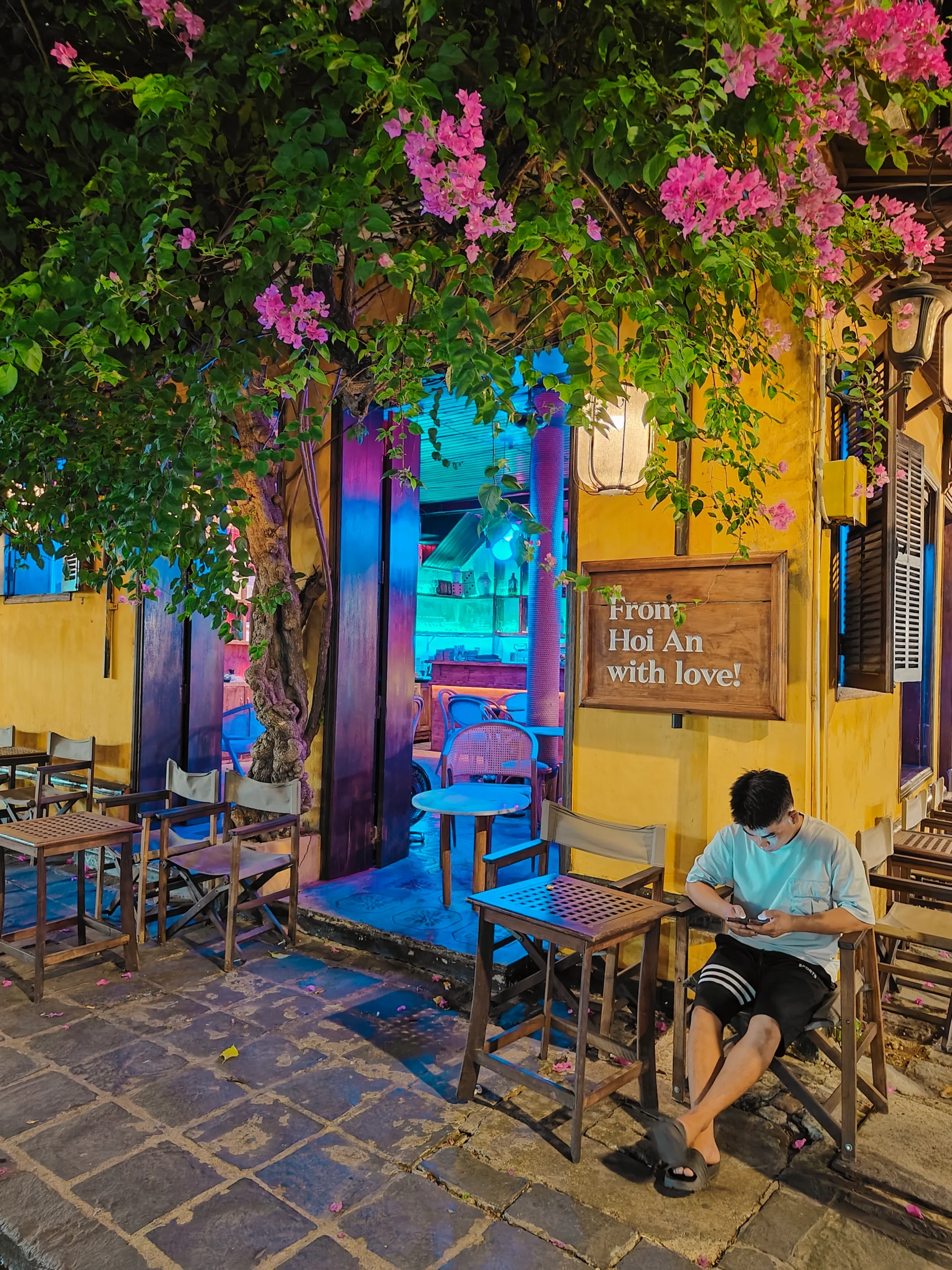
MOMENTS CAFE
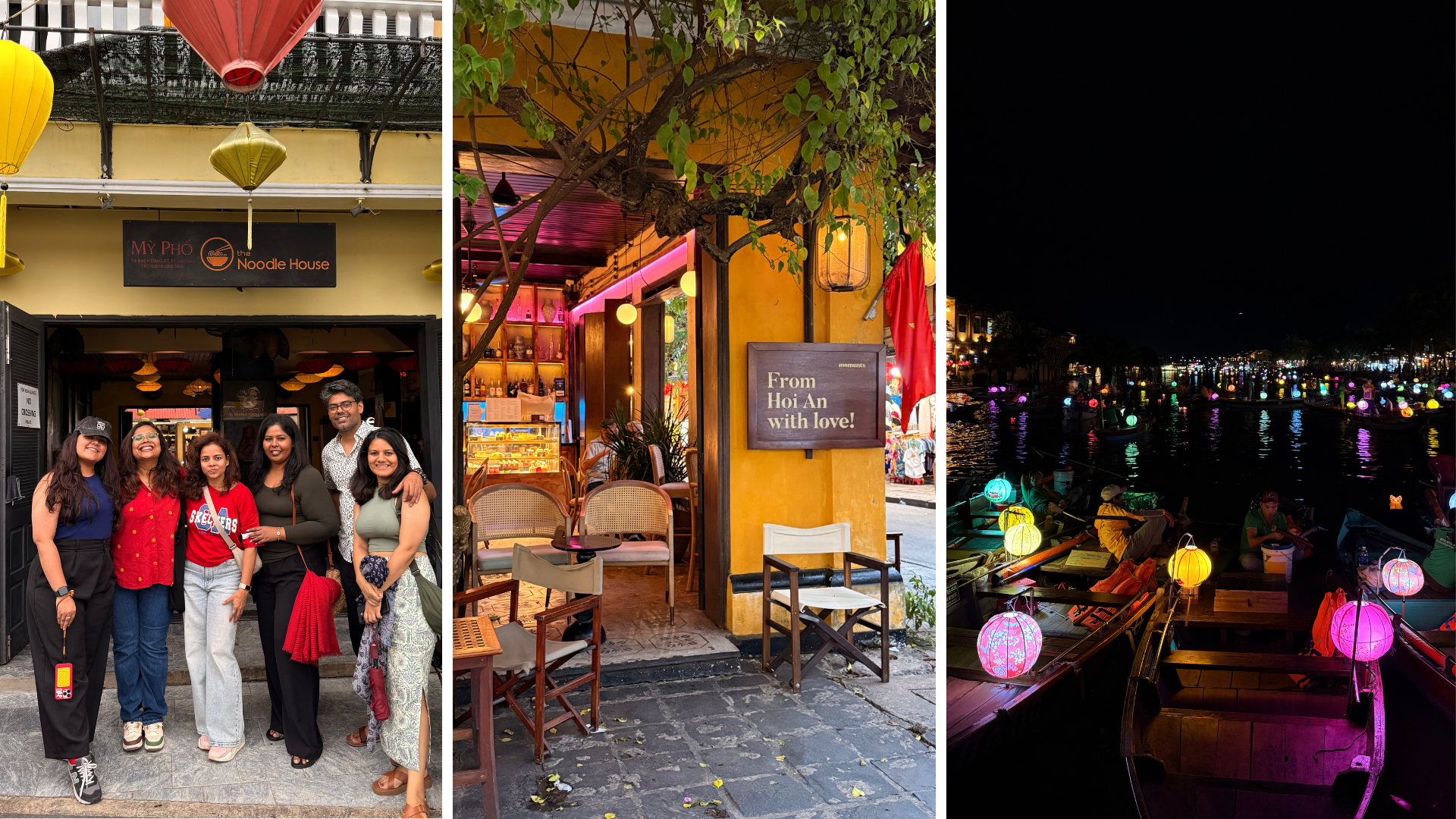
Moments Cafe has the kind of cosy, unhurried atmosphere that makes you want to stay longer than planned. Order a Vietnamese coffee, find a seat and watch Hoi An go about its day.
MóT HOI AN
You cannot make a café list for Hoi An without mentioning Mót. Famous for its photogenic herbal tea served with lotus petals, lemongrass and other Vietnamese ingredients, this tiny spot has become one of the town’s most recognisable food-and-drink stops.
ROSIE’S CAFE
Rosie’s is made for slow mornings, brunch and pretty plates. Tucked away from the busiest streets, it is a lovely place to start the day with coffee, something to eat and a little time before heading back into the Ancient Town.
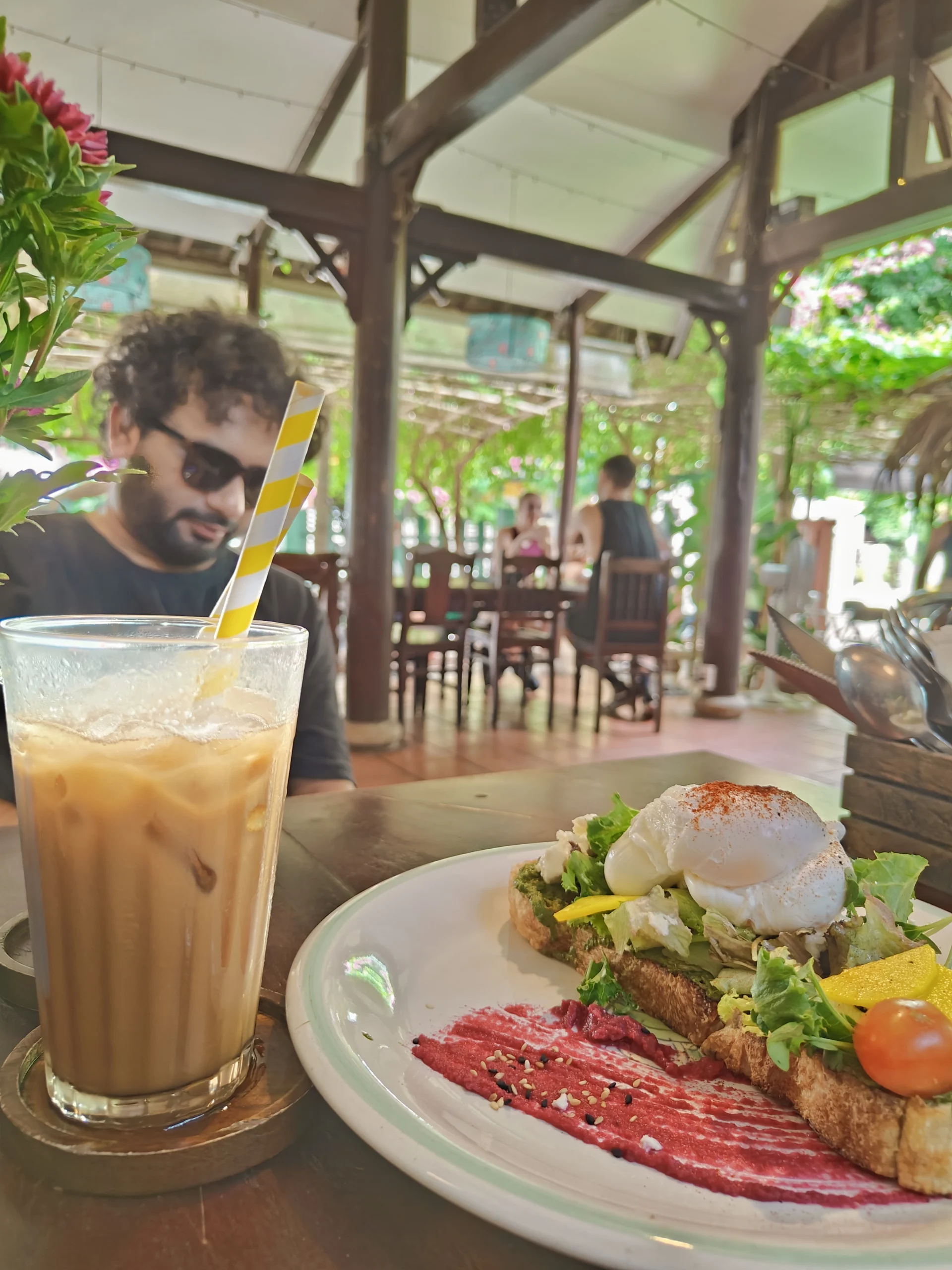
CỘNG CÀ PHÊ
A Hoi An café list would feel incomplete without Cộng Cà Phê . With its nostalgic, military-inspired interiors and distinctly Vietnamese aesthetic, it is a fun place to stop for a coffee while exploring the Ancient Town. Order their famous coconut coffee — creamy, cold and strong enough to keep you going through another few hours of wandering around Hoi An.
I must tell you that Hoi An is made for café hopping! Start your morning with a strong Vietnamese coffee, take a break from sightseeing at another café in the afternoon, and find a rooftop spot for sunset. And if you’re anything like me, you’ll probably end up adding a few more cafés to the list before the trip is over!
[Also read: 7 best local dishes in Hoi An, Vietnam]

Five visits to Vietnam later, I still find myself returning to Hoi An — and perhaps that says more about the town than any list of things to see and do ever could.
Every time I return, I notice something I had missed before — a new café tucked into an old building, a different street catching the evening light, a conversation with a local, or simply a familiar corner looking different from the last time.
For a town I thought I had already discovered, Hoi An continues to surprise me. And perhaps that is why, after five visits, I still don’t feel done with Hoi An. I’m not sure I ever will!
Frequently Asked Questions About Travelling to Hoi An
1. What is Hoi An famous for?
Hoi An is best known for its beautifully preserved Ancient Town, colourful lanterns, ochre-yellow buildings and rich blend of Vietnamese, Chinese and Japanese influences. It is also famous for its food, coffee culture, tailoring, riverside setting and surrounding rice fields. For me, though, Hoi An’s biggest draw is its pace — it is the kind of place where wandering, eating and café-hopping can easily fill an entire day.
2. Is Hoi An expensive to visit?
Hoi An can be surprisingly affordable, depending on how you travel. You can find everything from budget homestays and local eateries to high-end resorts and fine-dining restaurants. Street food, Vietnamese coffee, bicycles and local transport are generally inexpensive, while luxury hotels and experiences can push up your budget. This makes Hoi An a destination where you can easily tailor your trip to your travel style.
3. Is Hoi An worth visiting?
Absolutely! Hoi An is one of my favourite places in Vietnam, and after five visits, I still find myself wanting to return. Its beautifully preserved Ancient Town, Vietnamese food and coffee culture, surrounding rice fields, beaches and easygoing pace make it a destination that works equally well for a short trip or a longer stay.
4. How do you get to Hoi An from Da Nang?
The easiest way to get to Hoi An from Da Nang is by car or taxi, with the journey taking roughly 45 minutes to an hour depending on traffic. You can also use Grab, Vietnam’s popular ride-hailing app. Da Nang International Airport is the closest major airport to Hoi An.
5. What are the best things to do in Hoi An?
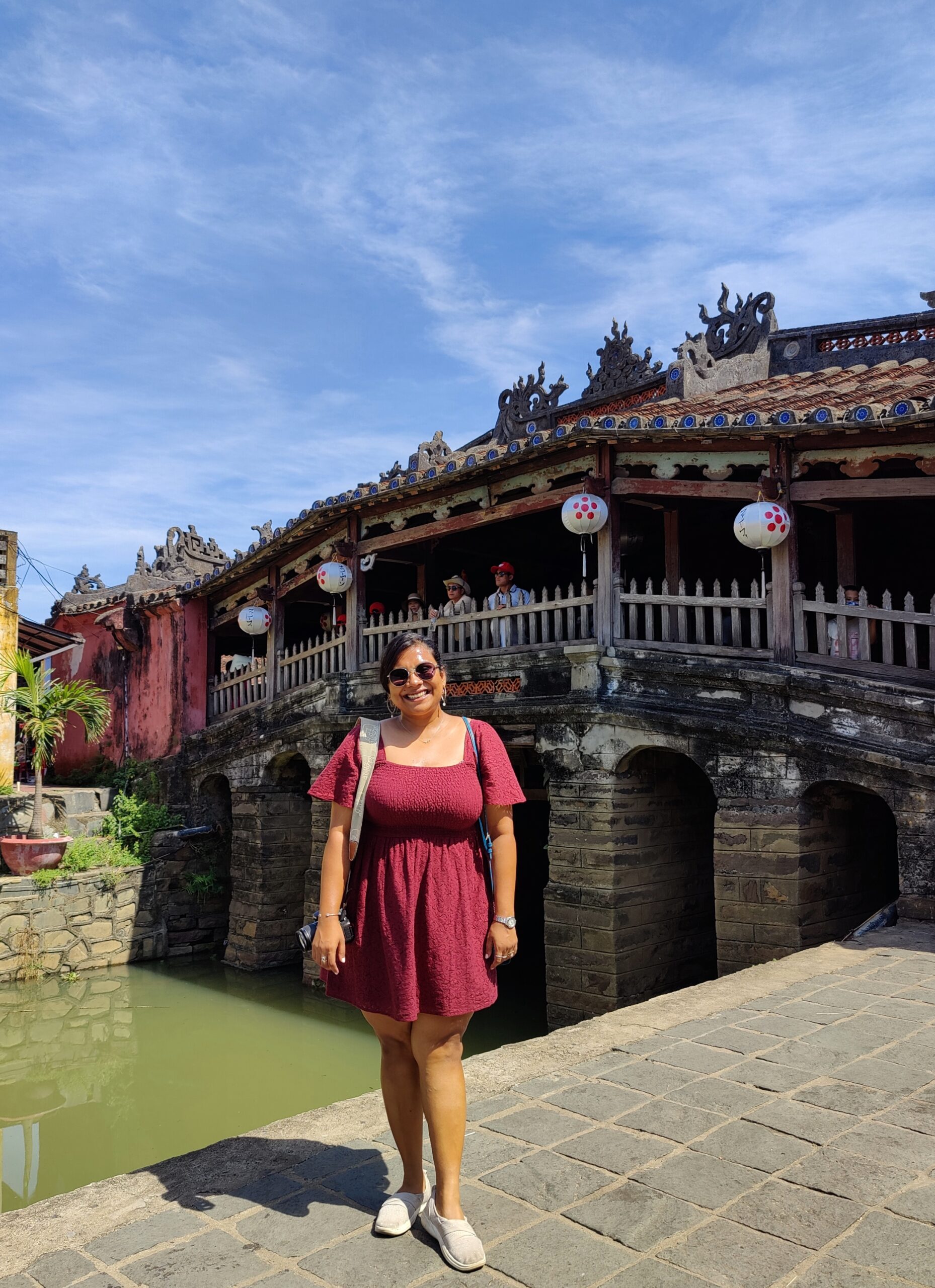
Start with the Ancient Town, then make time for the Japanese Covered Bridge, Chinese assembly halls, Hoi An Night Market and a boat ride or walk along the Thu Bon River. I’d also recommend cycling through the rice fields, café hopping, trying local specialities, visiting the beach and taking a day trip to My Son Sanctuary.
And if you are a coffee lover, you must attend a coffee making workshop and learn how to make the authentic Vietnamese coffee!
6. Where is the best area to stay in Hoi An?
It depends on the kind of holiday you want. Near the Ancient Town is ideal if you want to walk to restaurants, cafés, markets and heritage sites. Cam Chau and the riverside areas are great for a more relaxed stay while remaining close to the action. If you’re looking for a resort holiday, consider staying around Cua Dai Beach or Ha My Beach.
Disclaimer: This post contains a few affiliate links. If you click any of them and make a purchase, I might earn a small commission at no extra cost to you. Just know that I truly appreciate your support if you choose to do so.




 Pinterest
  Linkedin
  MuckRack