Poland
RIYANKA

Do You Know Where Nicolaus Copernicus Was Born?

Long before he changed how we understood the universe, Nicolaus Copernicus was born in the medieval Polish city of Toruń. Today, you can walk through the same charming old town, discover the house where he is believed to have been born, wander past Gothic buildings, and, of course, eat your way through Toruń’s famous gingerbread.
torun nicolas copernicus birthplace

“We will go visit Toruń. It’s where Nicolaus Copernicus was born,” Kasia said, almost too excitedly, when I told her about my plans to visit Poznań. “You know Copernicus was Polish, right?” I could hear the enthusiasm in her voice. “And Toruń is just a couple of hours from Poznań!”

And that was it. Toruń was added to my Poland itinerary, even though, until that conversation, I had never even heard of the place. I trusted my friend, followed her lead, and set off to discover this gorgeous little Polish city for myself.

A Day Trip to Toruń from Poznań

We took the train at around 8.30 am that day, and by 10 am, we were in Toruń.

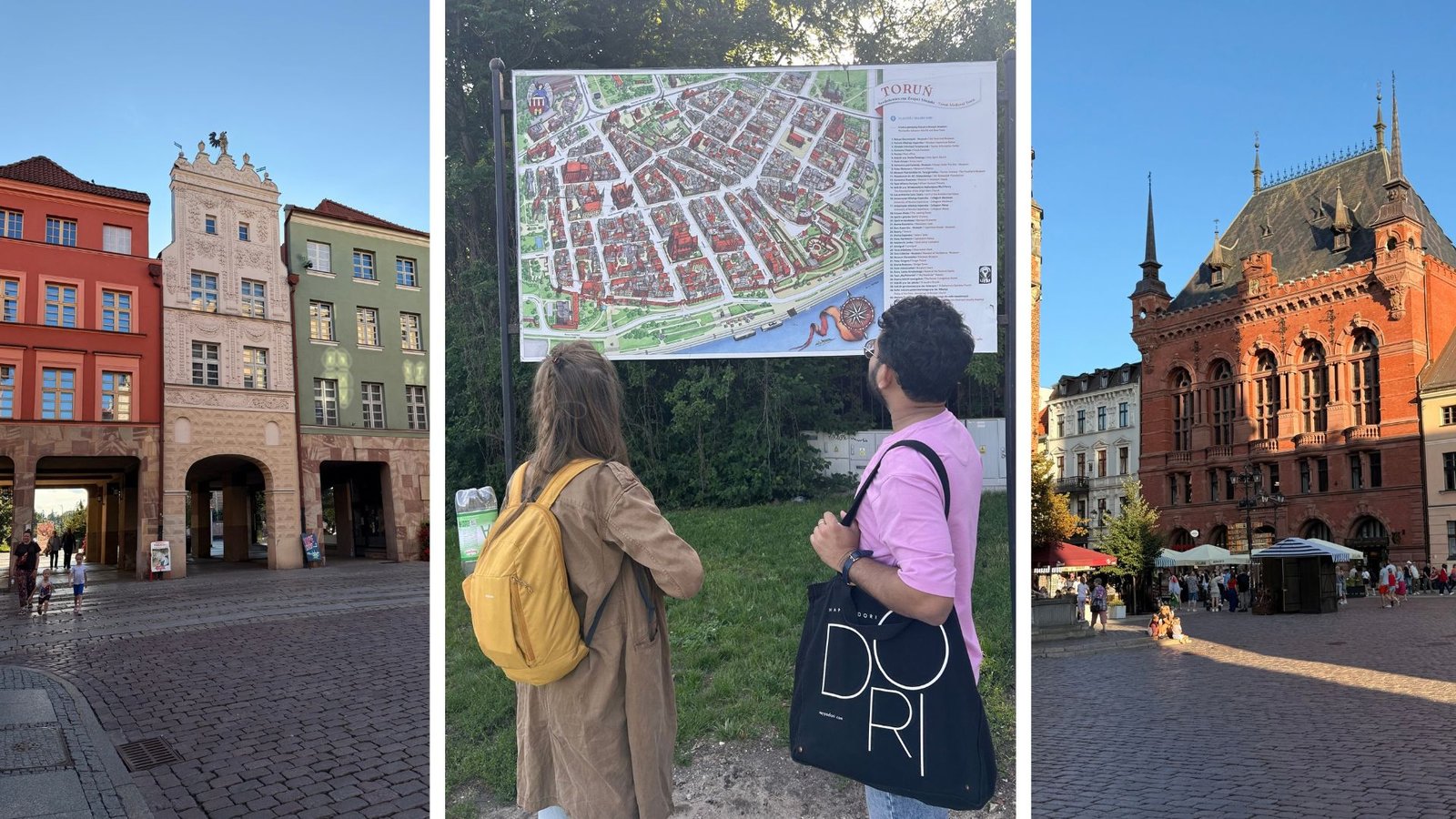
It felt like one of those places you accidentally discover and then wonder why you hadn’t heard more about it before. Sitting on the banks of the Vistula River, the city has a beautifully preserved medieval heart, with Gothic buildings, cobbled streets, old city walls, and little corners that make you want to slow down and look around. Kasia told us that, apart from Copernicus, Toruń is famous for its pierniki, traditional Polish gingerbread, and there was a whole museum dedicated to it!
this is where nicolas copernicus was born

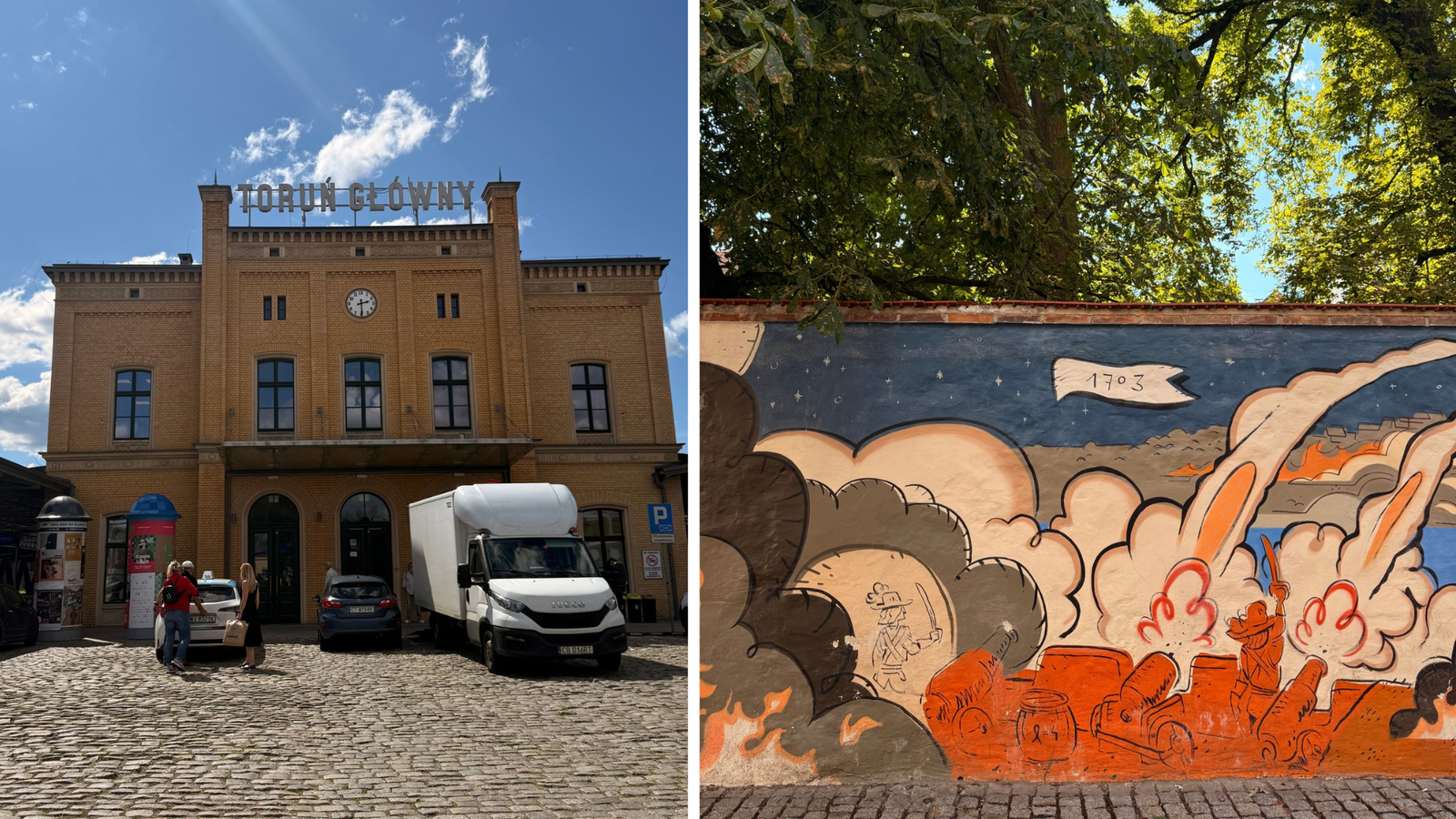
From Toruń Główny, the main railway station, we took an Uber to the Teutonic Castle (it cost us around 17 PLN), and that’s when I also realised that Toruń wasn’t quite as small as I had thought it would be!

Exploring the Teutonic Castle of Toruń

We bought the entry tickets and walked through the castle gate. Standing amid the ruins of Toruń’s Teutonic Castle, it is hard to imagine that this was once a formidable seat of power. Built from the 13th century onwards on the site of an earlier fortified settlement, the castle had an unusual horseshoe shape and, for nearly two centuries, was home to the Teutonic Knights and their commander, representing the Order’s power in these lands.

But the castle’s story didn’t end with an invading army. In 1454, the people of Toruń rose against the Teutonic Order, took over the castle and, quite literally, pulled it down. Stone by stone, much of the fortress was dismantled, leaving behind the ruins we see today.
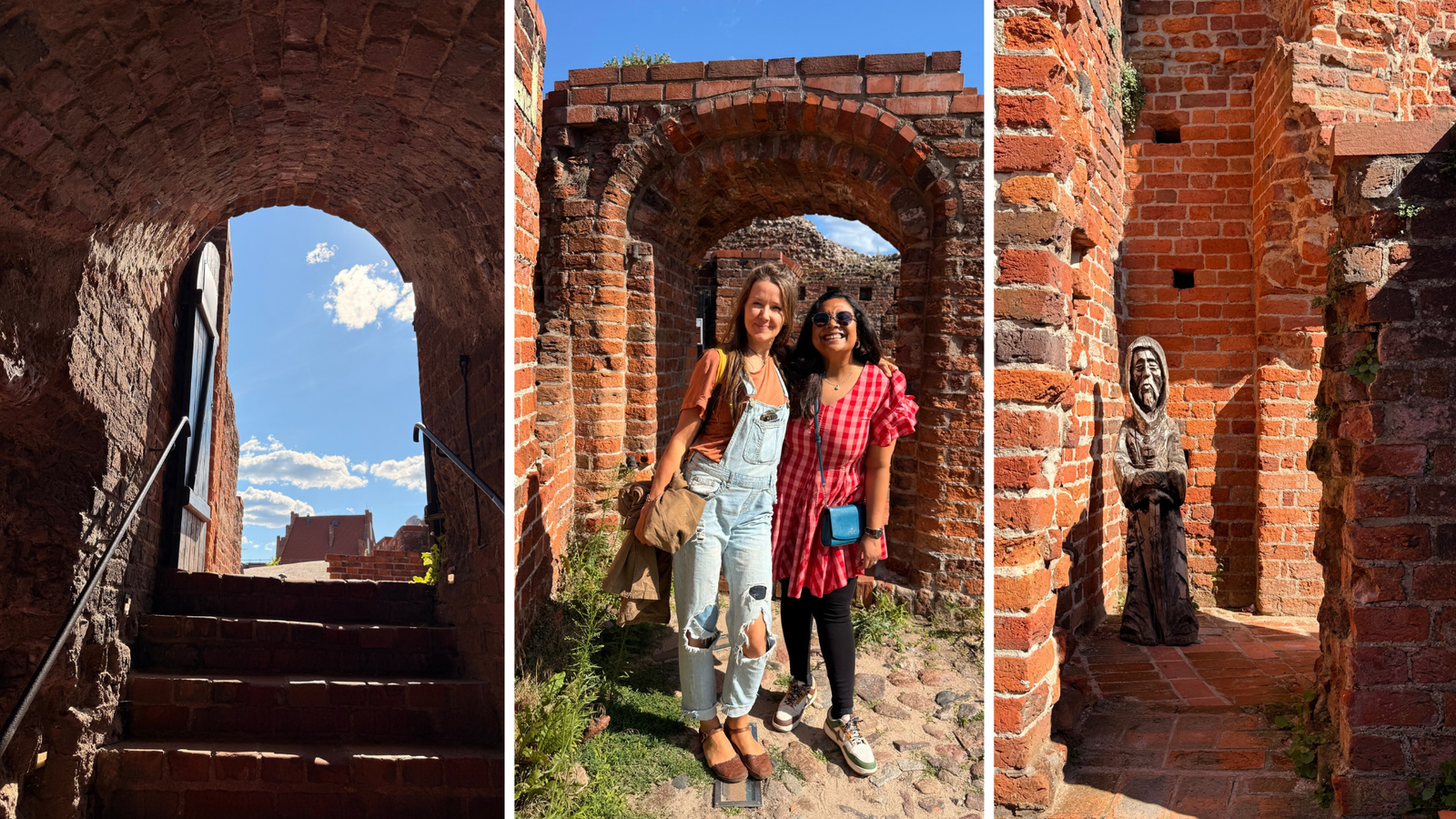
castle ruins of Torun

There isn’t much of the castle left now. A few walls, foundations, the Gdanisko tower, and excavated sections hint at what once stood here. And yet, there is something strangely charming about wandering through it. The jagged ruins, the old brickwork, and the spooky corners still carry that unmistakable medieval atmosphere. Walking around the ruins, I found myself imagining the knights who once lived here, the townspeople who eventually turned against them, and the centuries of stories these stones have witnessed.

Kasia also told me that when she was in school, the chapter on this castle used to be one of her favorites! And by the time we walked out of this place, it was already midday.

  • Opening hours: April–September, daily 10 am–6 pm; October–March, daily 10 am–4 pm
  • Entry: Around 20–25 PLN (prices may vary)
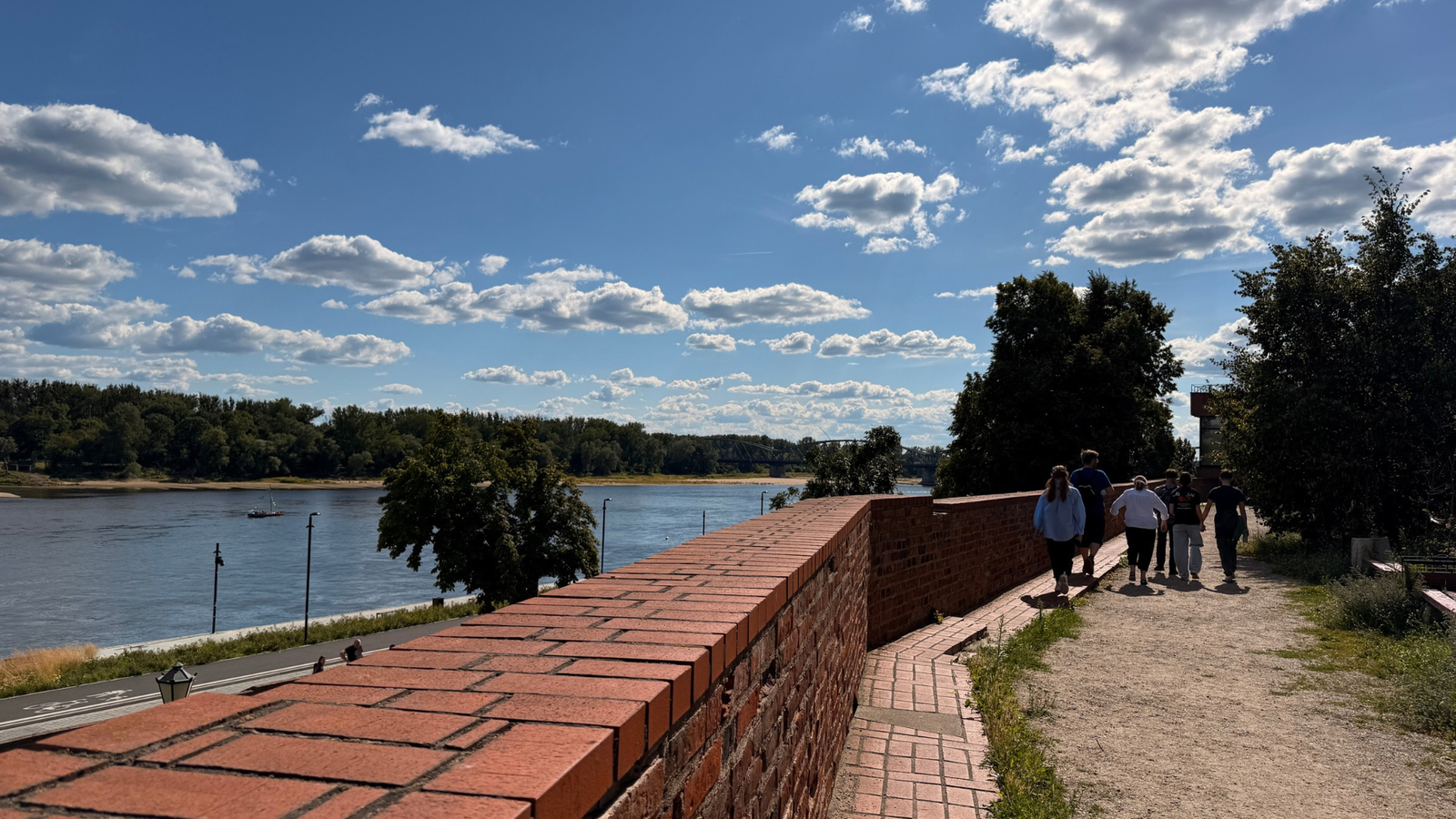
View of the river from the castle in Torun

Visiting the Place Where Nicolaus Copernicus Was Born

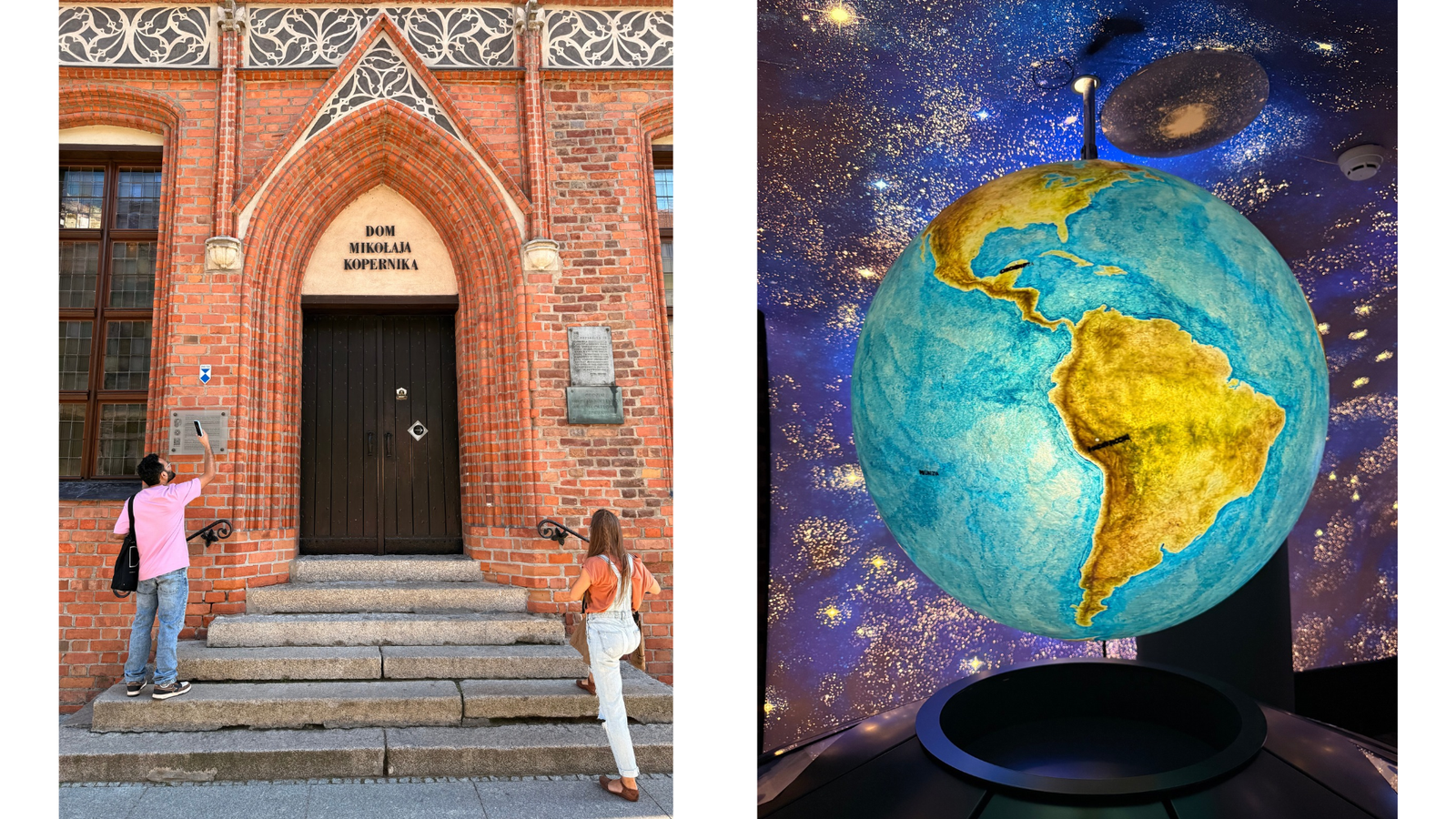
From the castle, we walked to the place we had been waiting to visit all morning — the home of Nicolaus Copernicus, now a fascinating museum dedicated to his life and work.

Soon, we were standing outside this beautiful Gothic house, tucked away in Toruń’s Old Town. As I walked through the galleries, I found myself stopping at almost every display, in awe of the story unfolding around me. From 15th-century maps and models of Toruń to astronomical instruments and details of Copernicus’s life, the museum offers a glimpse into the world of the man who dared to challenge everything we thought we knew about the universe.
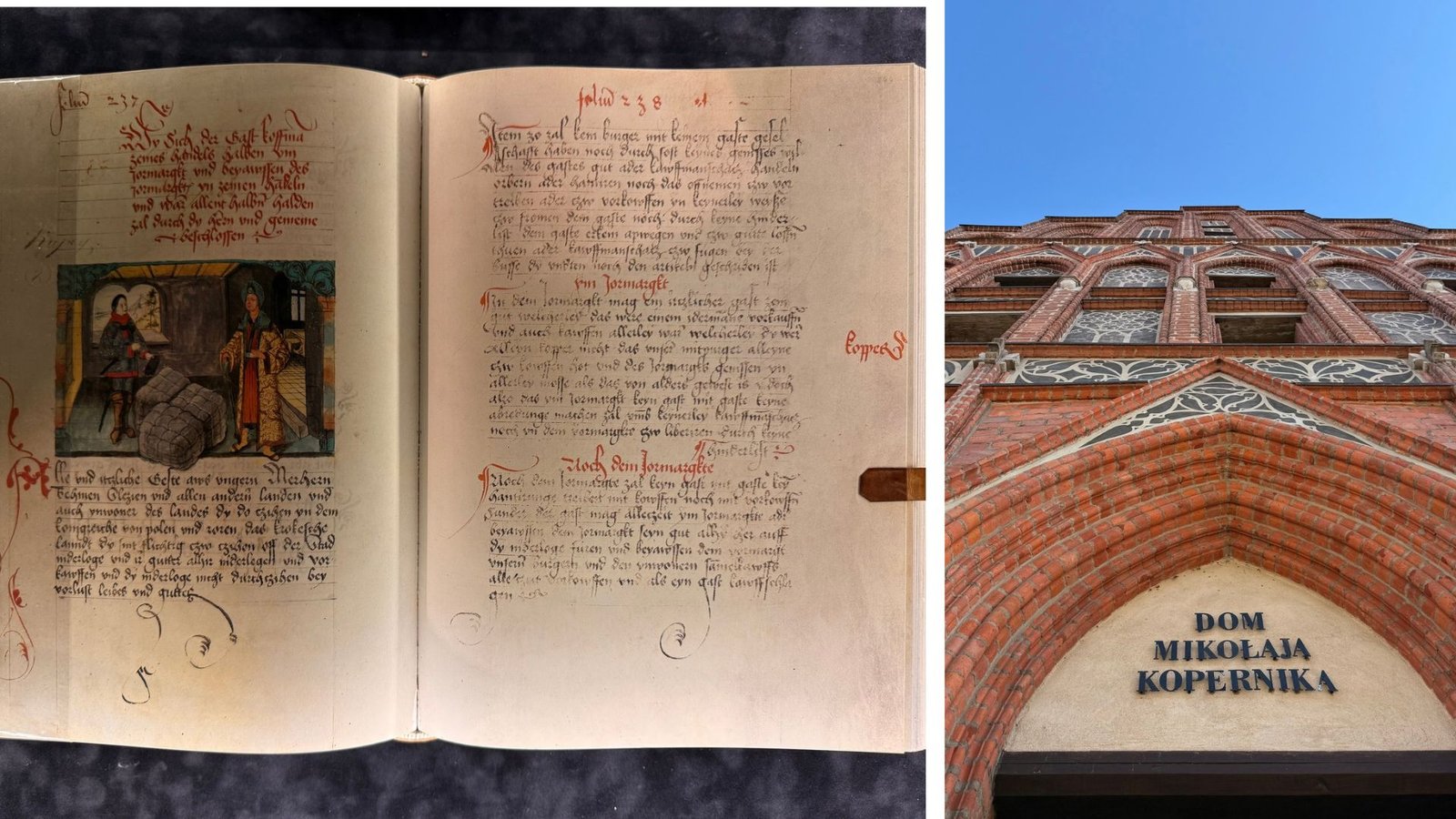
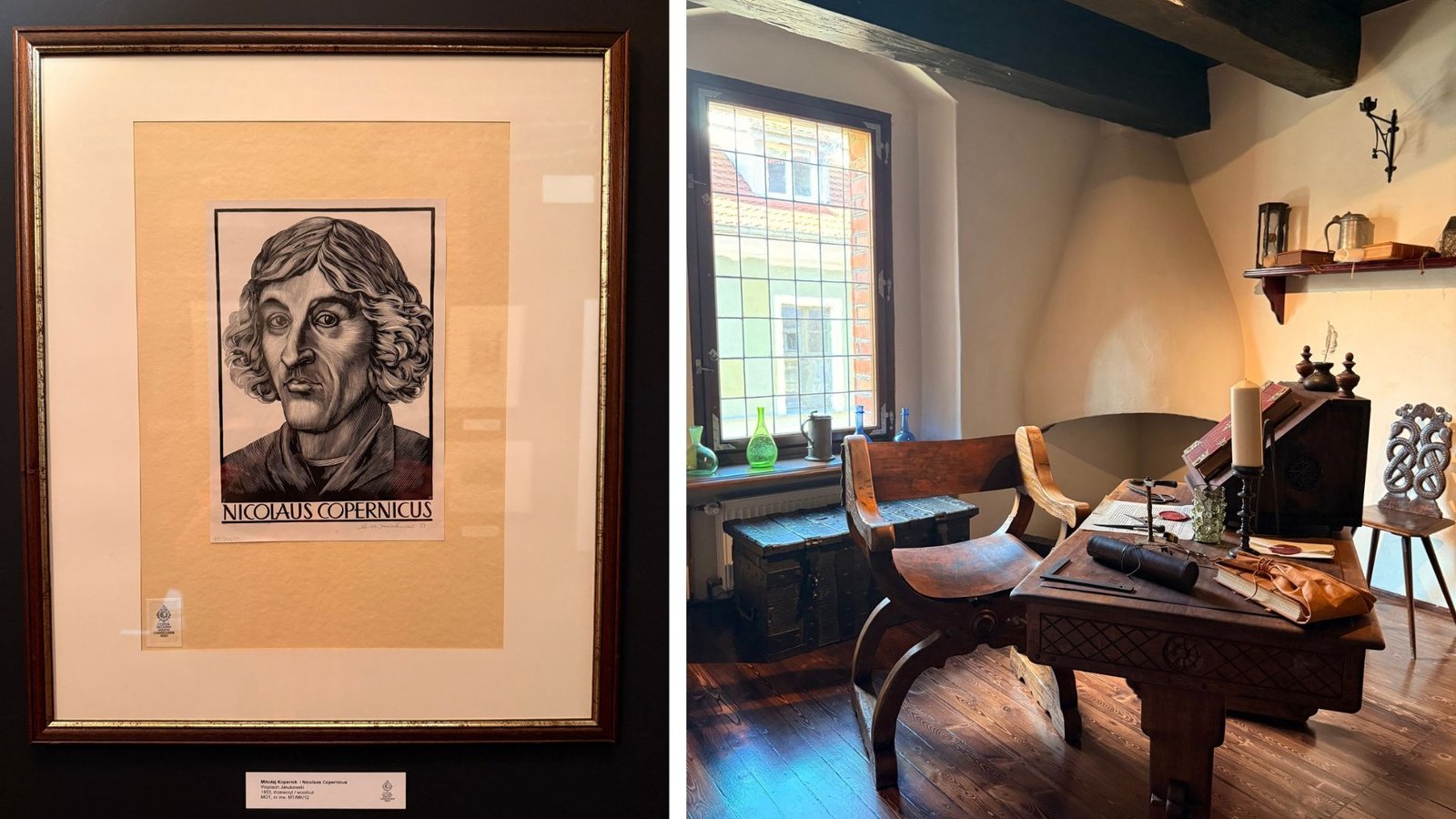
Nicolaus Copernicus Was Born

Nicolaus Copernicus Was Born

Born here in 1473 into a wealthy merchant family, Copernicus went on to study in Kraków and Italy, exploring everything from law and medicine to mathematics and astronomy. His groundbreaking work De revolutionibus eventually proposed that the Sun, rather than the Earth, was at the centre of the universe. Not just that, but seeing the pieces of his life, like the snippets of his original writing, the desk where he once worked, and glimpses of the places he travelled to centuries ago, made me quite happy to be there.
  • Opening hours: May–September (Tuesday–Sunday 10 am–6 pm); October–April (Tuesday–Sunday 10 am–4 pm). Closed on Mondays.
  • Entry: 31 PLN for a regular ticket; 26 PLN for a reduced ticket. Free entry on Thursdays.

Lunch at a Georgian Restaurant

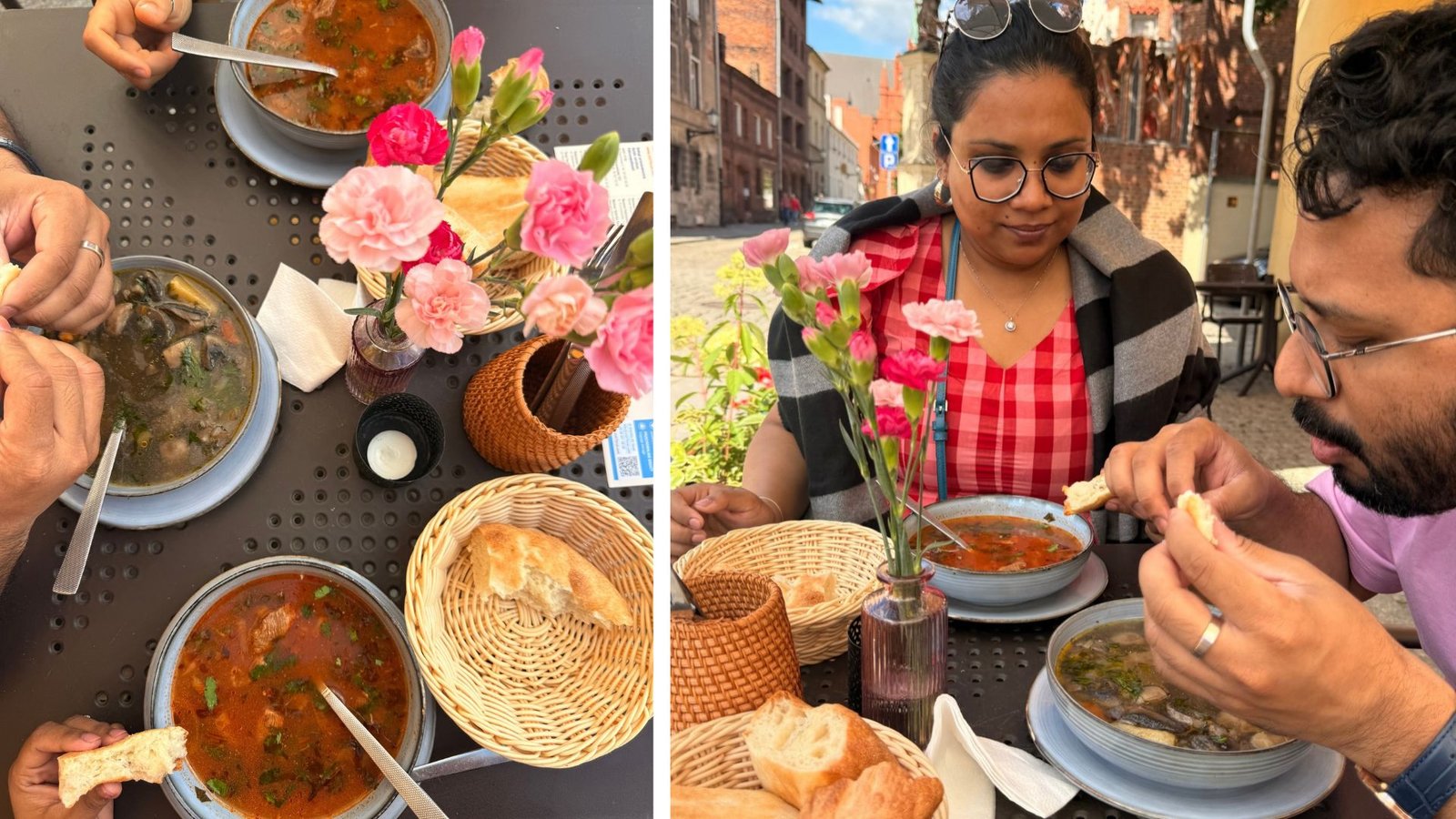
By the time we stepped out of Copernicus’s house, we were extremely hungry. So, we did what seemed like the most sensible thing to do — head straight for lunch at a Georgian restaurant, Restauracja Serce Gruzji.

The Google reviews had promised good food, and thankfully, they weren’t wrong. We found a table outside, ordered a few dishes to share, and tucked into some delicious Georgian flavours — exactly what we needed after a morning of walking, exploring and taking in far more history than we had expected!

lunch in torun

A Quick Stop at the Church of St. James (Kościół św. Jakuba)

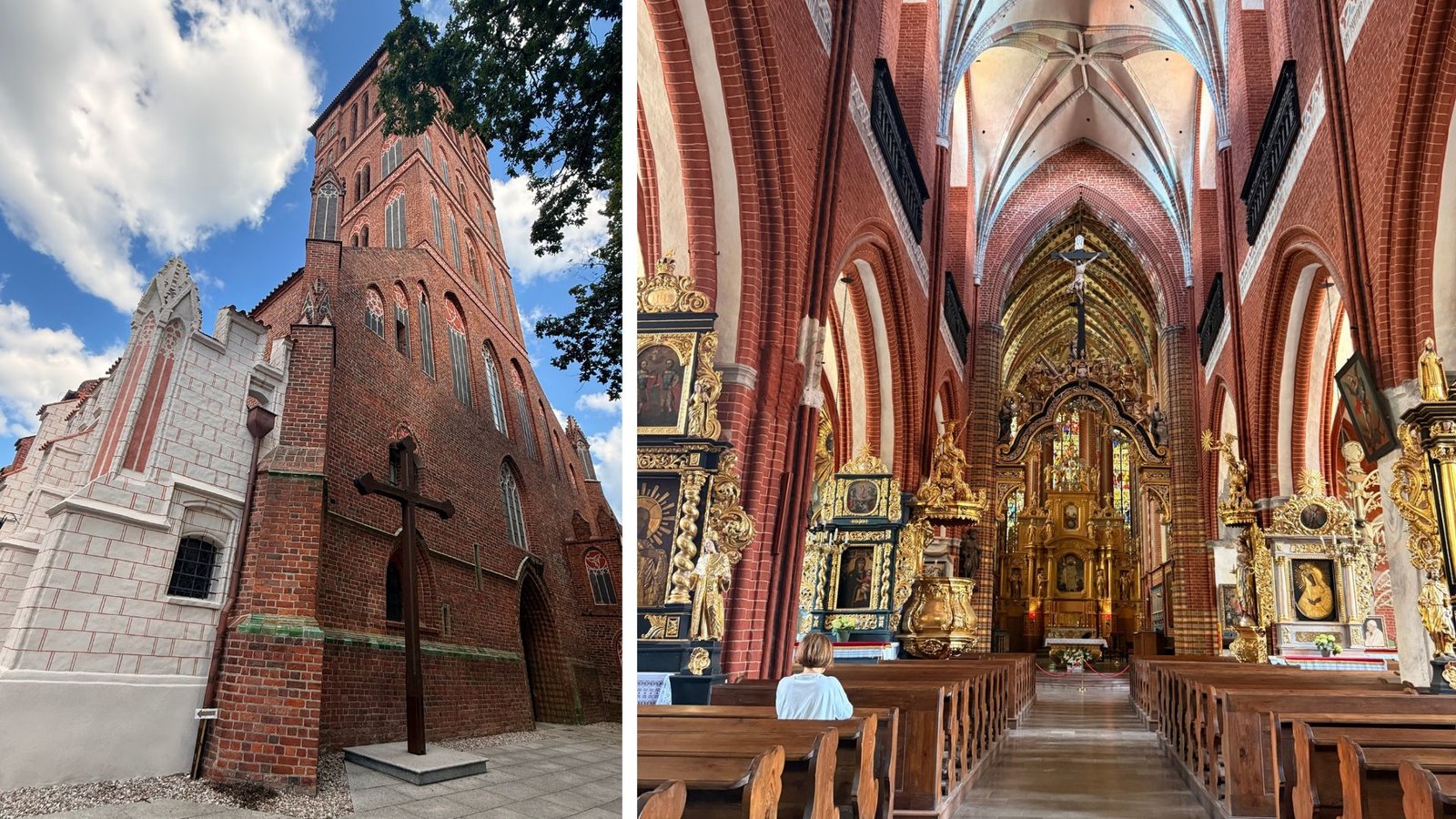
While we were enjoying our lunch, we noticed a beautiful church right next to the restaurant. Obviously, that had to be our next stop! And honestly, this is one of the things I love most about travelling — having no plans, following your curiosity, and simply letting the day unfold. We hadn’t planned on visiting the Church of St. James, but there we were, standing in front of one of Toruń’s most beautiful Gothic churches.

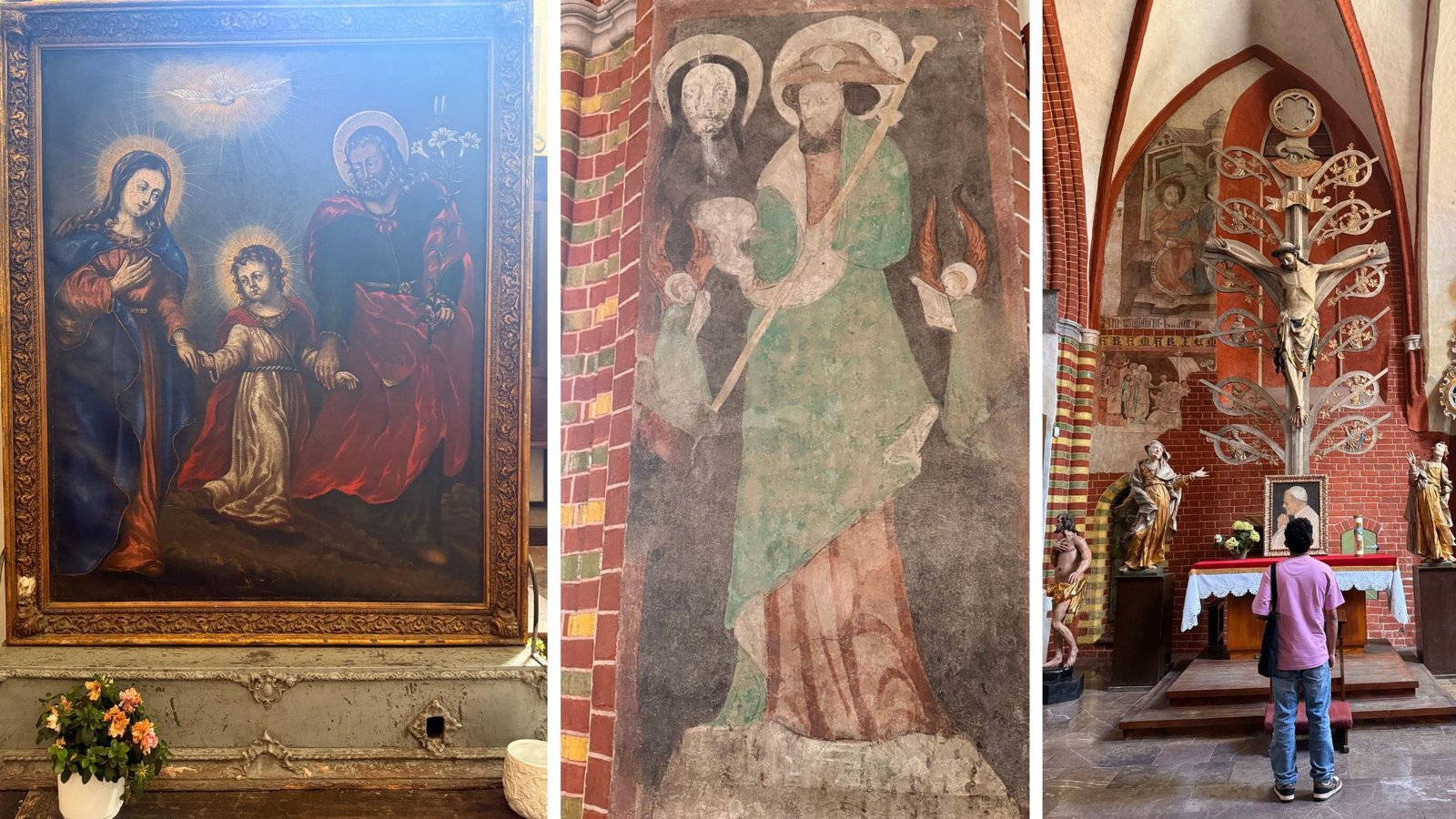
Built in the first half of the 14th century as a parish church for the residents of Toruń’s New Town, St. James’s is considered one of the city’s finest examples of Gothic architecture. Its striking brick exterior caught my attention first, but it was the interiors that made me stop and look around.

church in Torun

church in Torun

Inside, beautiful artwork covered the walls, while the soft, quiet atmosphere brought a sense of calm that felt almost unexpected in the middle of a day of sightseeing. It was nearly 3 pm, and the church was almost empty. While Kasia and Sourav wandered around admiring the murals, I took my time to sit quietly and pray. There was something deeply peaceful about having that little moment to myself, surrounded by centuries-old walls and the fading frescoes.

A Sneak Peek at the Gingerbread Museum

When our day trip to Toruń was being planned, Kasia shared one more interesting fact about the place — gingerbread originated here! Naturally, that meant a visit to the Museum of Toruń Gingerbread had to be on our list.

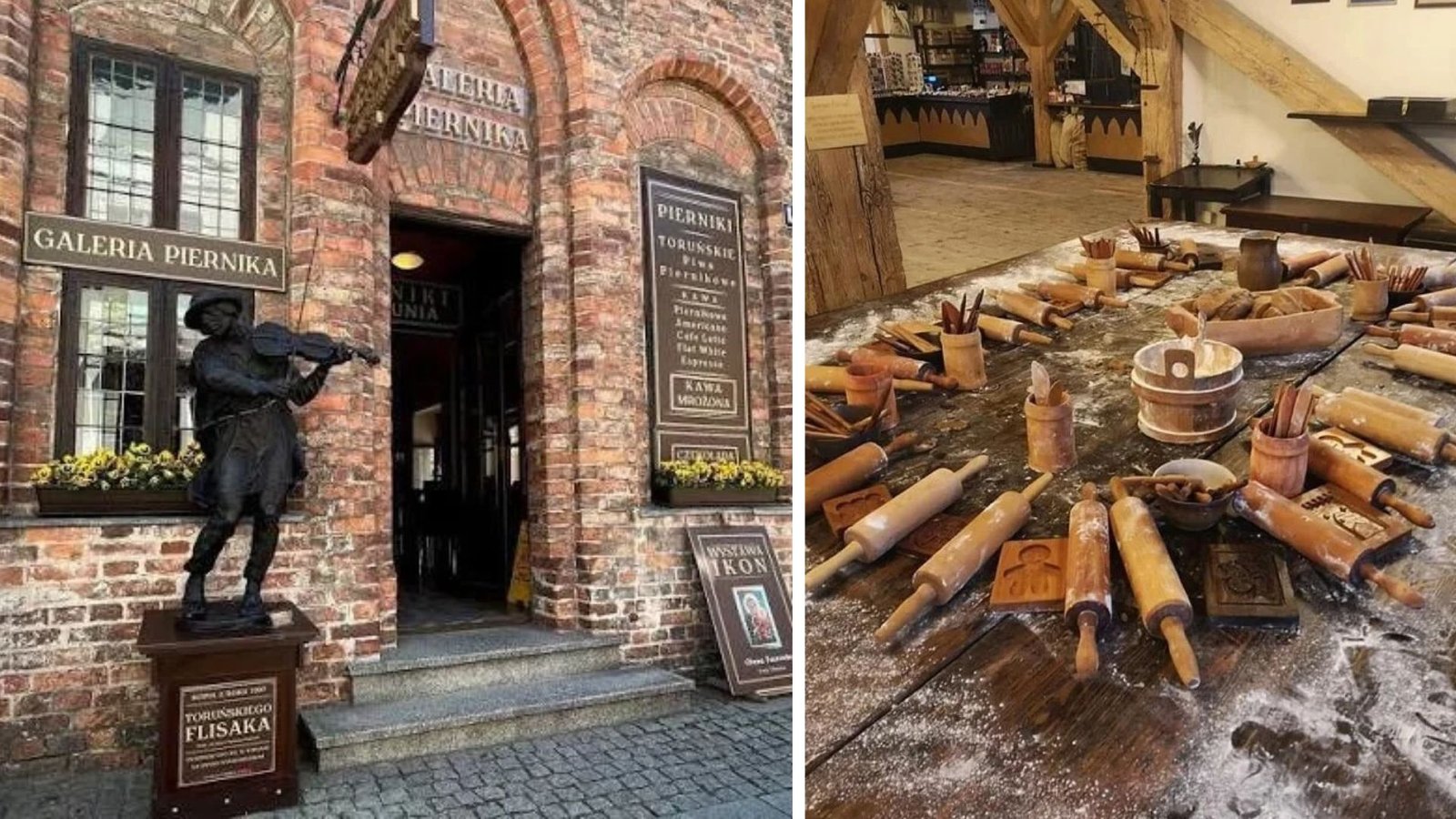
Housed in what was once the oldest European gingerbread factory, the museum takes you through the delicious history of Toruń’s famous pierniki. It is packed with historic wooden moulds, old baking equipment and interactive exhibits that bring the city’s gingerbread-making tradition to life. What I loved most was that you can actually learn how gingerbread was made, try your hand at baking one yourself, and explore exhibits that transport you back to medieval Toruń.

gingerbread museum torun

We were a little short on time, so this was more of a sneak peek than a proper visit. But even the little glimpse was enough to convince me that Toruń takes its gingerbread very seriously — and perhaps leave me wanting to come back for a much bigger bite!

A Walk Around the Old Town Square, Trying Zapiekanki and Heading Back to Poznań

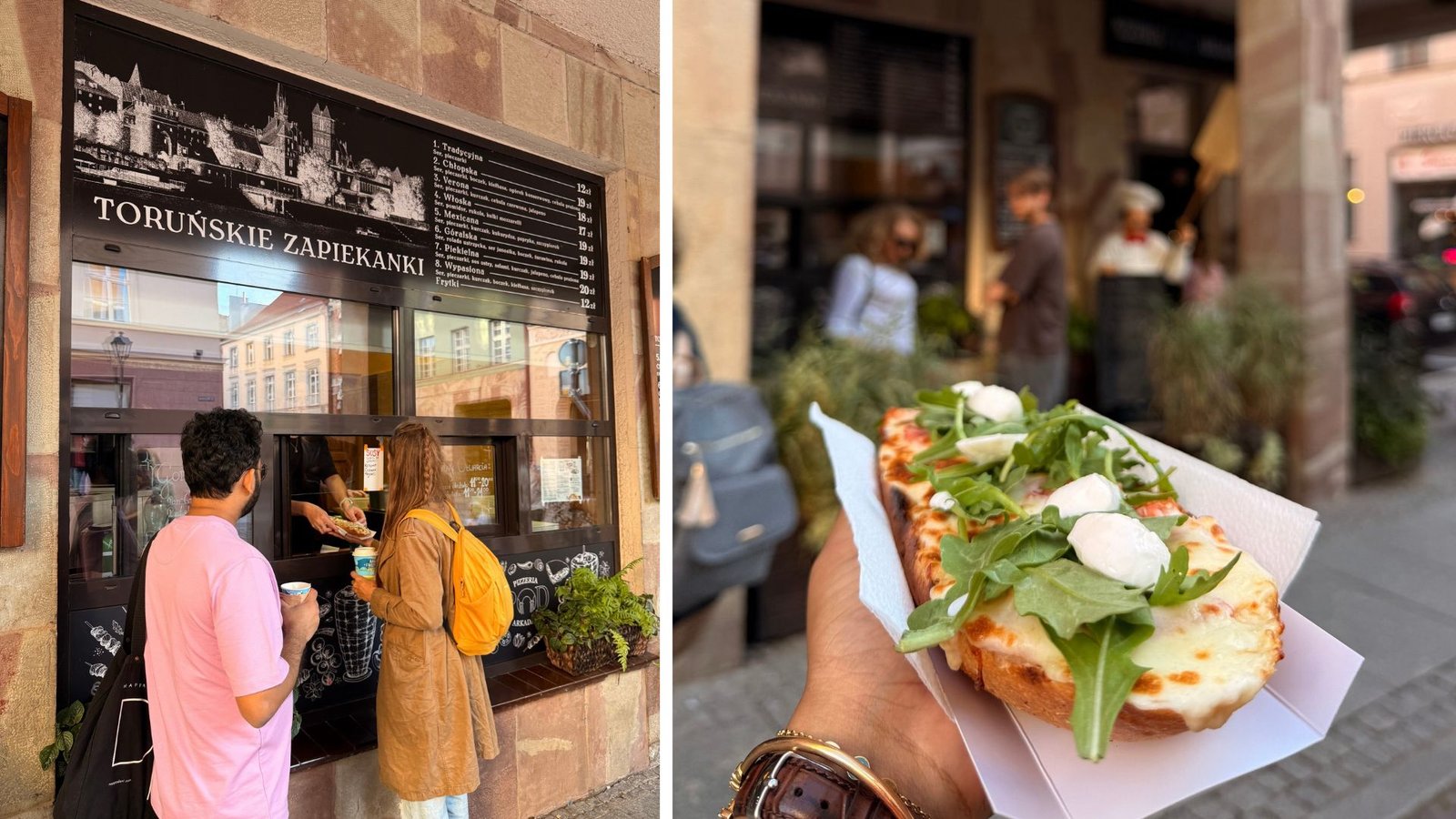
It was almost 5 pm when we walked into a Żabka to grab a coffee before making our way towards the Old Town Square. On the way, Kasia spotted her favourite snack, so we had to try it! “It’s the Polish version of pizza,” she explained, as we ordered our zapiekanki. And honestly, she wasn’t wrong! Crispy bread, melted cheese and toppings — simple, delicious and exactly the kind of snack you want while wandering around a new city.

zapiekanki

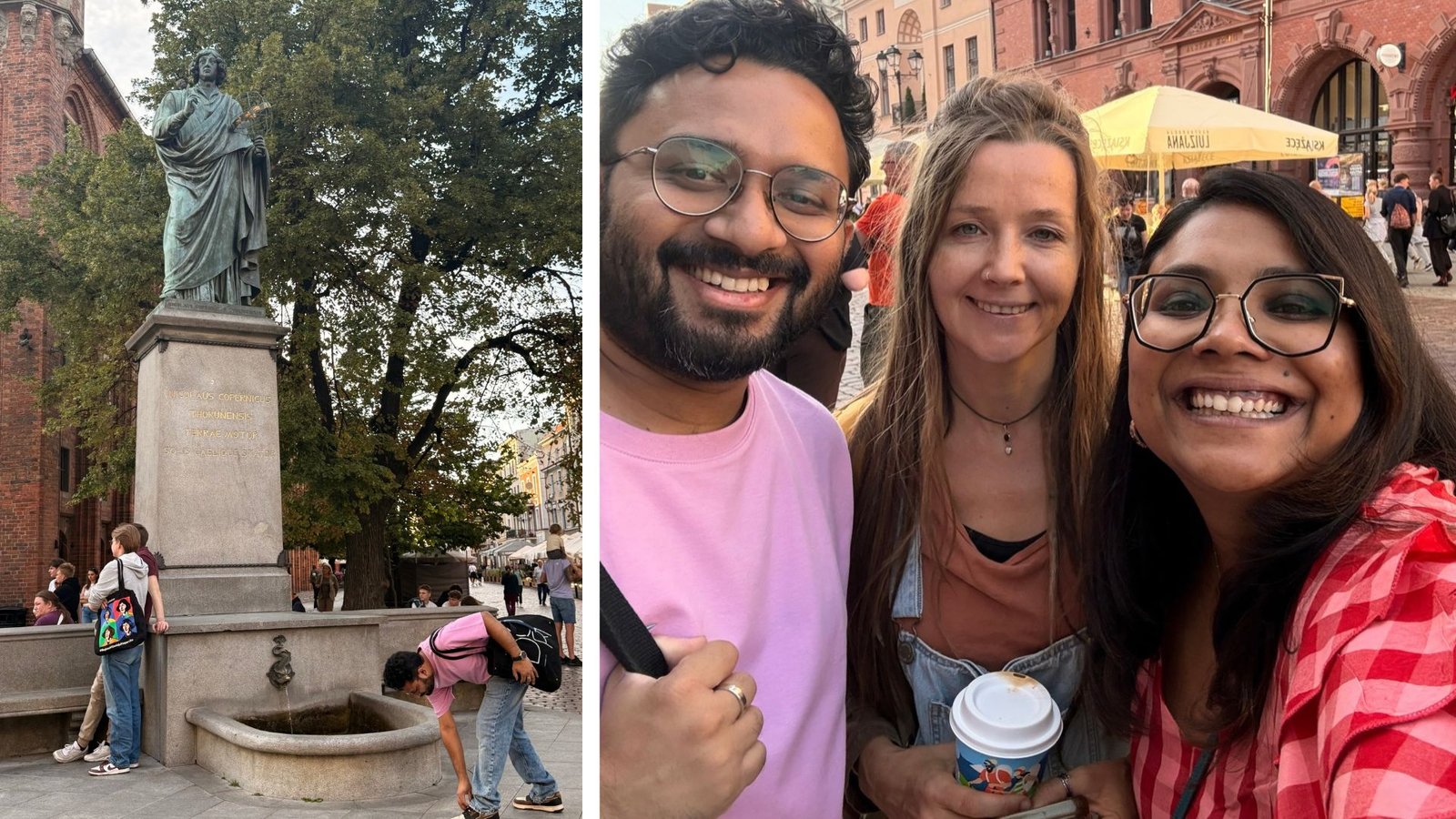
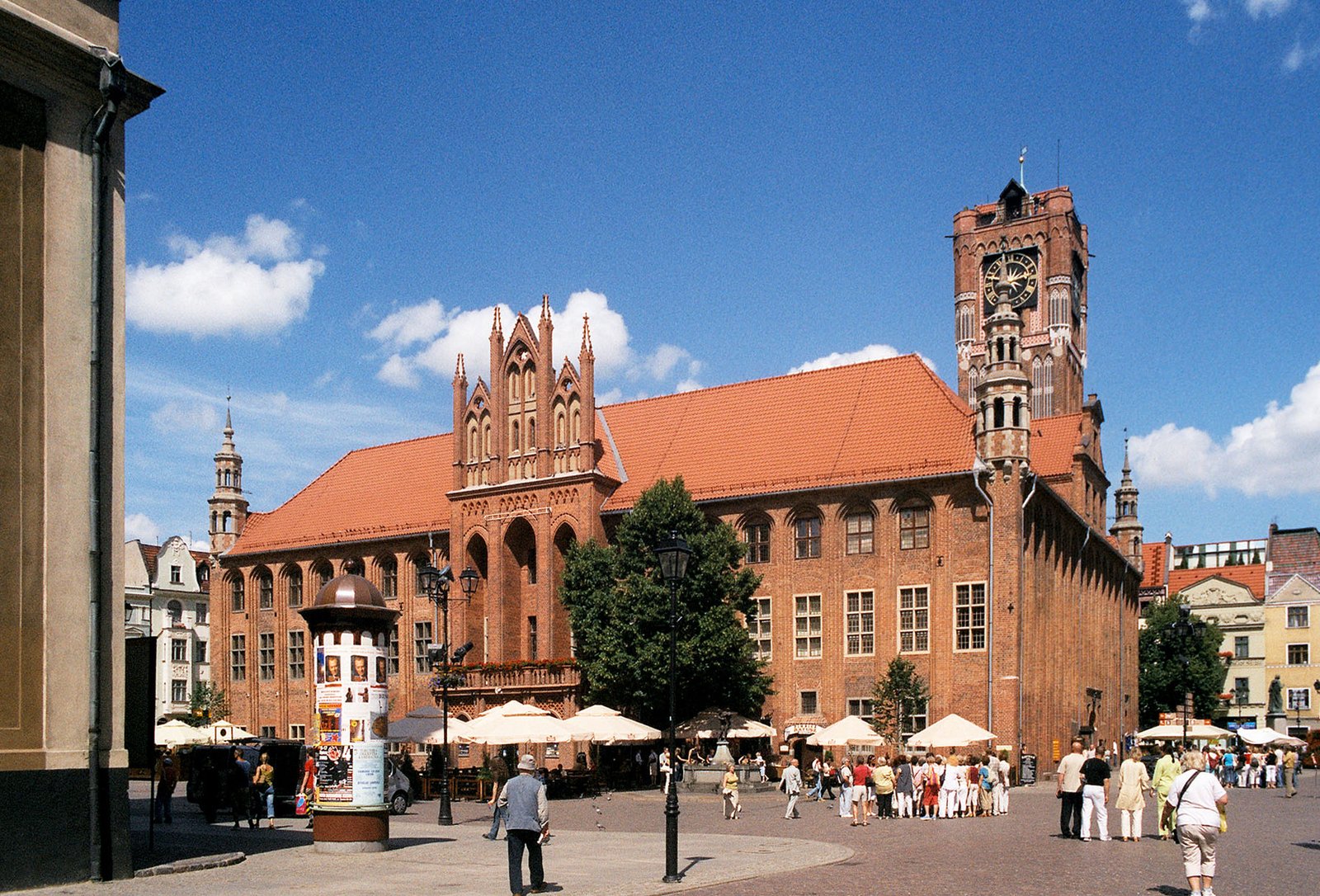
A few minutes later, we found ourselves at Toruń’s Old Town Square. For centuries, this has been the heart of the city, once bustling with trade, tournaments, parades, and public announcements. Today, it is surrounded by some of Toruń’s most impressive landmarks, including the monumental Town Hall, Artus Court, and the beautiful House Under the Star. And here, you can’t miss the monument of Nicolaus Copernicus standing proudly in the square. After spending the day following his story around Toruń, seeing him here felt like a fitting way to end our visit.

a day in torun

By then, it was time to head back to the station. We had a train to catch back to Poznań, but I was leaving with a surprisingly full day in a city I hadn’t even heard of a few weeks earlier.

Why Should You Visit Toruń?

Honestly, I hadn’t even heard of Toruń until a friend casually added it to my Poland itinerary. And I’m so glad she did!

Toruń is the kind of city that doesn’t try too hard to impress you. You have a beautiful medieval Old Town, Gothic architecture, the story of Nicolaus Copernicus, centuries-old gingerbread traditions, charming streets, and plenty of little corners to stumble upon. But what I loved most was the feeling of simply wandering around and letting the day unfold.

It’s historic without feeling overwhelming, charming without being overly touristy, and small enough to explore at your own pace. Add some delicious food, a riverside setting, and the chance to bite into Toruń’s famous gingerbread, and you have plenty of reasons to put this underrated Polish city on your itinerary.

If you’re planning a trip to Poland, don’t just stick to Kraków, Warsaw, and Gdańsk. Leave a little room for the places you may not have heard of yet. Toruń might just surprise you, as it surprised me.

How Much Time Should You Spend Here?

I’d recommend keeping at least one full day for Toruń. That gives you enough time to explore the Old Town, visit the main attractions, stop for some gingerbread, eat well, and wander around without feeling like you’re constantly racing against the clock.

I did Toruń as a day trip from Poznań, and honestly, it worked perfectly for me. However, if you’re travelling from farther cities like Kraków or Warsaw, I’d suggest spending at least one night here. There’s enough to see and do beyond the daytime sights, and quite a few things are happening in the city after dark — something we, unfortunately, didn’t get to experience.

torun

So, Is Toruń Worth Visiting?

Absolutely! In fact, I think Toruń is one of those places that deserve a little more attention from travellers exploring Poland. With its beautiful Gothic architecture, signature red-brick buildings, medieval streets, and the Vistula flowing alongside it, there is something incredibly charming about simply walking around and seeing where the day takes you.

For me, though, the best part was discovering a city I had never even heard of before. I went because Kasia insisted we should, followed her lead, and ended up spending a day walking through the story of Copernicus, eating gingerbread, stumbling upon a beautiful church, and wandering through a city that felt wonderfully unhurried.

If you’re interested in astronomy, history or architecture, Toruń is an easy addition to your Poland itinerary. But even if none of those are particularly your thing, I’d still say: go. Sometimes, the places you don’t plan for end up becoming the ones you remember the most.

Frequently Asked Questions About Toruń: The City Where Nicolaus Copernicus Was Born

1. What are the best things to do in Toruń?
Some of the top things to do include exploring the Old Town, visiting the House of Nicolaus Copernicus, seeing the ruins of the Teutonic Castle, visiting the Museum of Toruń Gingerbread, admiring St. James’s Church, climbing the Old Town Hall Tower, and walking along the Vistula.

2. Is Toruń walkable?
Yes. Most of the major attractions in the historic centre are within walking distance of one another, making the Old Town particularly enjoyable to explore on foot.

3. What is the best time to visit Toruń?
Spring through early autumn is a lovely time to visit, especially if you want to spend time outdoors and enjoy walking around the Old Town. December can also be magical, with the medieval centre taking on a festive atmosphere.

4. Is Toruń expensive to visit?
Compared with many major European tourist cities, Toruń can be relatively affordable. Accommodation, food, public transport, and attractions are generally reasonably priced, although costs depend on the season and your travel style.

5. How do you get to Toruń?
Toruń is well connected by train with several Polish cities, including Poznań, Warsaw, Gdańsk, and Kraków. The city has two main railway stations, with Toruń Główny being the principal station for long-distance trains.

6. Is one day enough for Toruń?
Yes, especially if you’re visiting as a day trip and want to focus on the Old Town and its major attractions. But if you have the time, I’d recommend staying overnight — there’s more to Toruń than you can squeeze into one day.

You can also check out Visit Toruń, the official website, to know more about the place.


Disclaimer: This post contains a few affiliate links. If you click any of them and make a purchase, I might earn a small commission at no extra cost to you. Just know that I truly appreciate your support if you choose to do so.

Leave a Reply

Your email address will not be published. Required fields are marked *

Collaborations & Featured Posts