
7 Best Experiences in Rome That I Loved
From ancient landmarks steeped in history to world-famous art that left me in awe, Rome felt like a living, breathing museum. Unforgettable food, charming streets, and aimless walks added layers of joy to every day. These are the best experiences in Rome I discovered during my 3-day stay in the Eternal City.
It was in November 2025, during my first-ever trip to Europe, that I finally found myself in a city I had been dreaming about for as long as I could remember. Rome had always lived in my imagination through history books, movies, and photographs, but nothing truly prepared me for what it felt like to actually be there. With just three days in hand, I landed in the Eternal City with a mix of excitement and disbelief, wondering how much one could really experience in such a short time.
As it turns out, Rome has a way of completely sweeping you off your feet. In those 72 hours, I walked through ancient ruins that have stood for centuries, admired art that left me speechless, indulged in some of the best food I have ever eaten, and found beauty in the simplest moments, like wandering aimlessly through cobbled streets or sitting by a fountain with a gelato in hand. The city felt alive in a way that is hard to put into words, where the past and present blend so seamlessly that you barely notice the transition.
If Rome is on your bucket list, and trust me, it deserves to be, make sure to bookmark this as your Rome travel checklist (and you can thank me later!).
1. Visit St. Peter’s Basilica and Witness Michelangelo’s Pietà
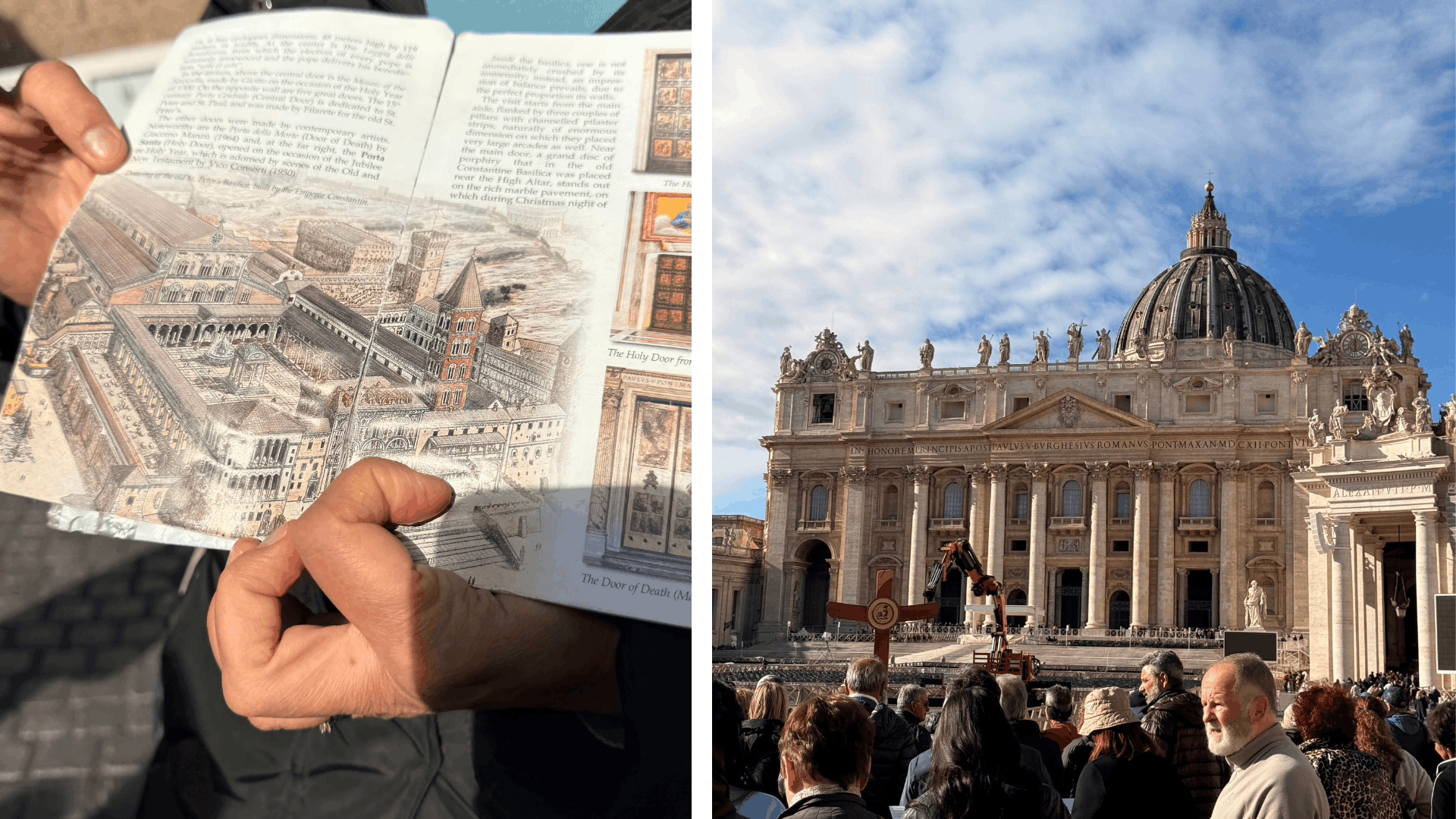
No amount of photos or stories can prepare you for the moment you step into St. Peter’s Basilica. The grandeur is immediate, but what truly strikes you is the atmosphere, a powerful blend of faith, history, and artistic brilliance that quietly commands your attention.
Adding to the significance of our visit was the fact that 2025 is a Holy Year, also known as a Jubilee Year in the Catholic calendar. During this time, the Holy Doors of the four major papal basilicas in Rome are ceremonially opened, symbolising forgiveness, renewal, and spiritual grace. Walking through the Holy Door of St. Peter’s Basilica, as part of the pilgrimage, felt incredibly special even for someone like me, who was experiencing it more as a traveller than a pilgrim. There was a shared sense of purpose in the air, as people from all over the world walked together towards one of the most sacred spaces in Christianity.
Almost immediately after entering, I found myself standing in front of Michelangelo’s Pietà. Seeing it so early into the visit was both unexpected and deeply moving. The delicacy with which grief, love, and calm are carved into marble is hard to put into words. Knowing that Michelangelo sculpted this masterpiece in his early 20s only adds to the awe. I stood there longer than I realised, completely still, taking in every detail of Mary’s expression and the effortless flow of the marble.
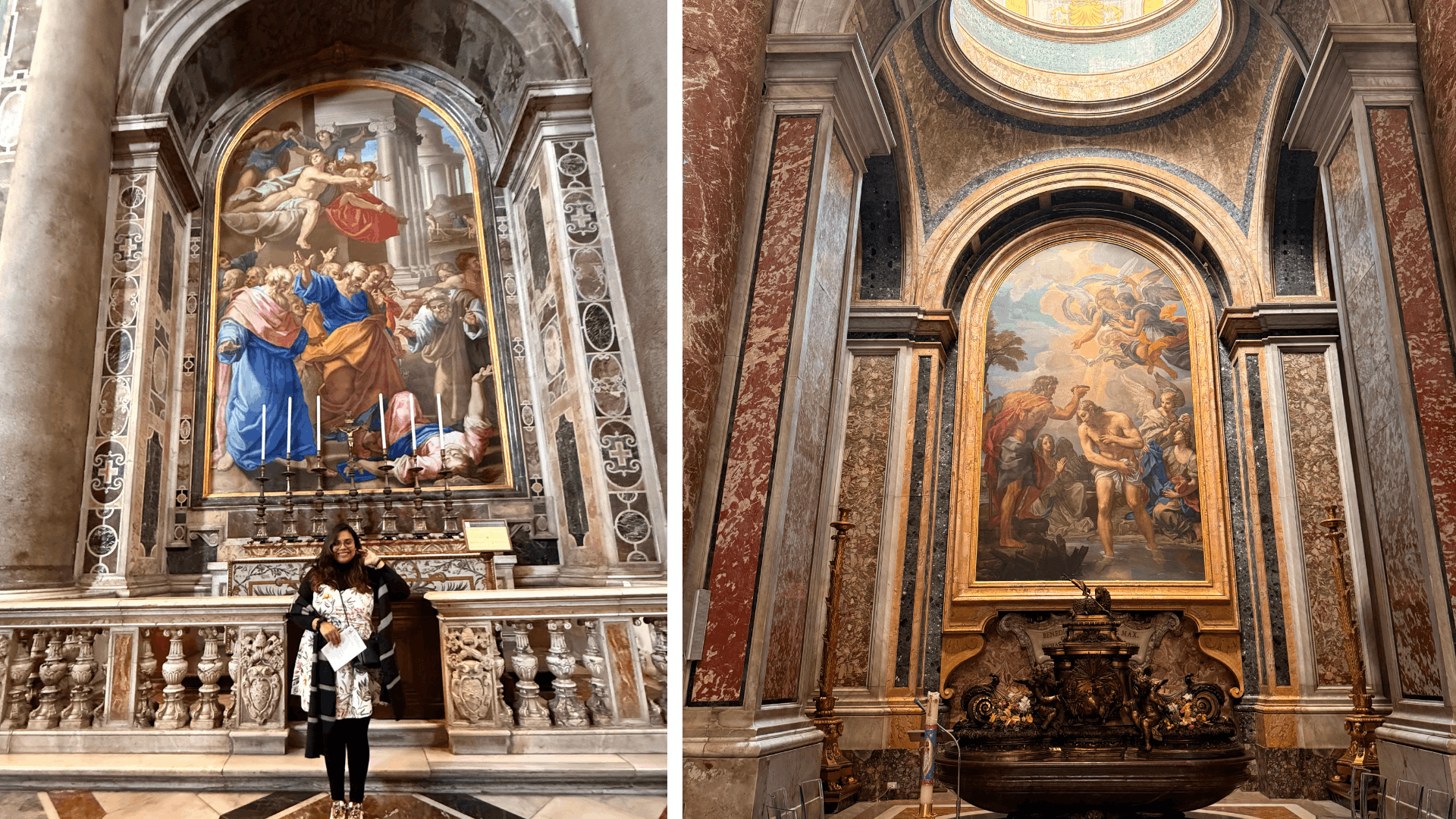
As I continued exploring the basilica, the magnificence unfolded layer by layer. The soaring dome, intricate mosaics, richly decorated chapels, and monumental sculptures came together in perfect harmony. Soft light filtered through the vast interior, highlighting the craftsmanship that defines every corner of this sacred space.
Whether you are religious or not, this experience will definitely stay with you long after you step back out into St. Peter’s Square.
2. Explore Vatican City and the Sistine Chapel
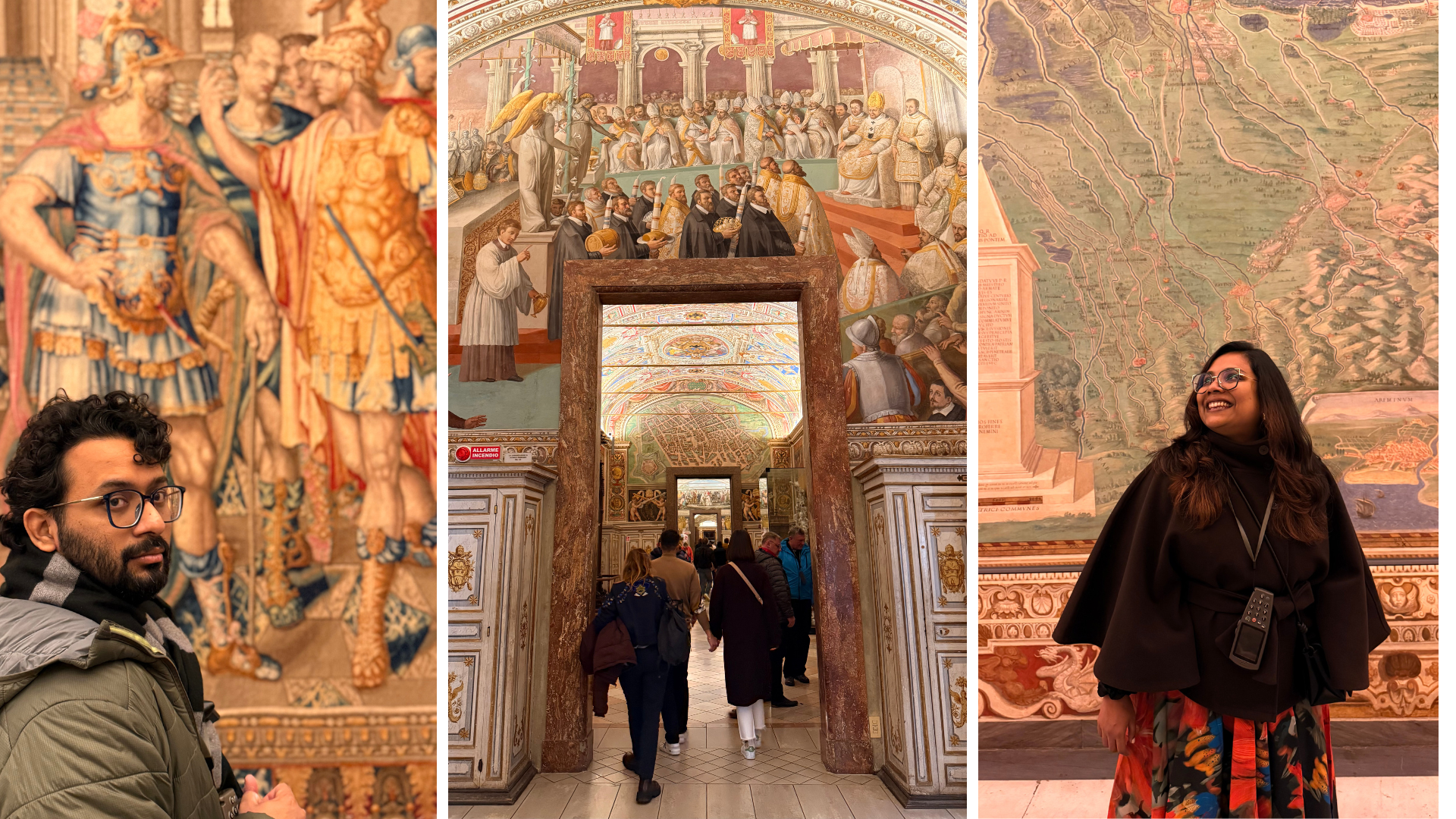
Walking through the Vatican Museums felt like being gently pulled through centuries of human creativity, one gallery at a time. What we initially thought would be a fairly straightforward walk to the Sistine Chapel slowly turned into an experience where every room demanded our attention. Corridor after corridor unfolded with breathtaking artwork, ancient sculptures, detailed frescoes, and ornate ceilings that made it impossible to rush.
One of the spaces that completely stole my heart was the Gallery of Maps. Stretching endlessly with hand-painted cartographic masterpieces, the level of detail in each map was astonishing. These were not just geographical representations, but works of art that reflected how the world was once understood. I remember slowing my pace here, looking up, looking around, and quietly admiring how beautifully science and art had come together.
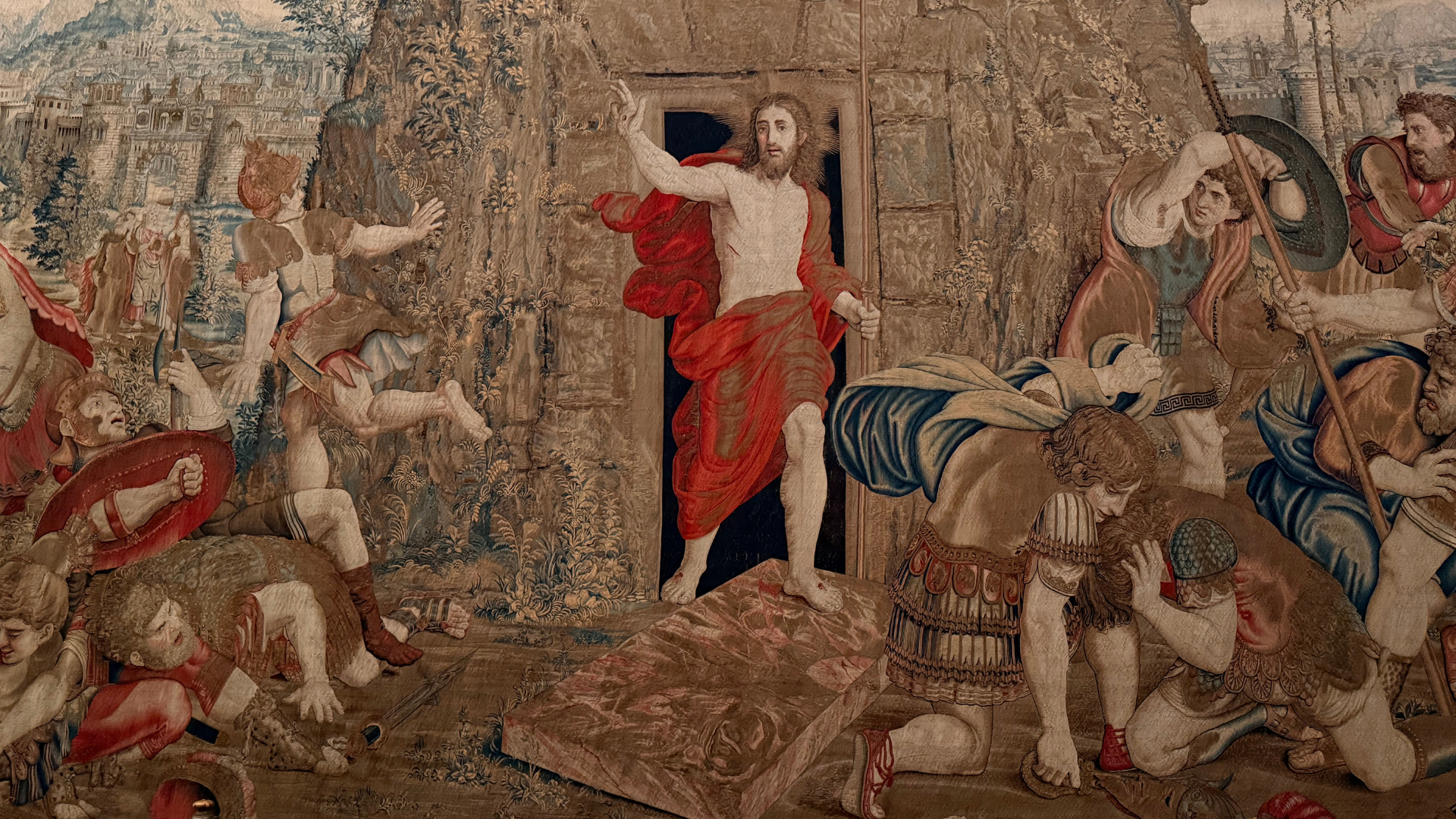
Sourav and I had gone in with the sole intention of reaching the Sistine Chapel, but somewhere along the way, that plan dissolved. Each gallery seemed more enchanting than the last, from the classical sculptures to the richly painted rooms showcasing Raphael’s work. His frescoes, filled with grace, movement, and storytelling, stood out effortlessly. The harmony in his compositions and the way he portrayed human emotion made those rooms feel alive.
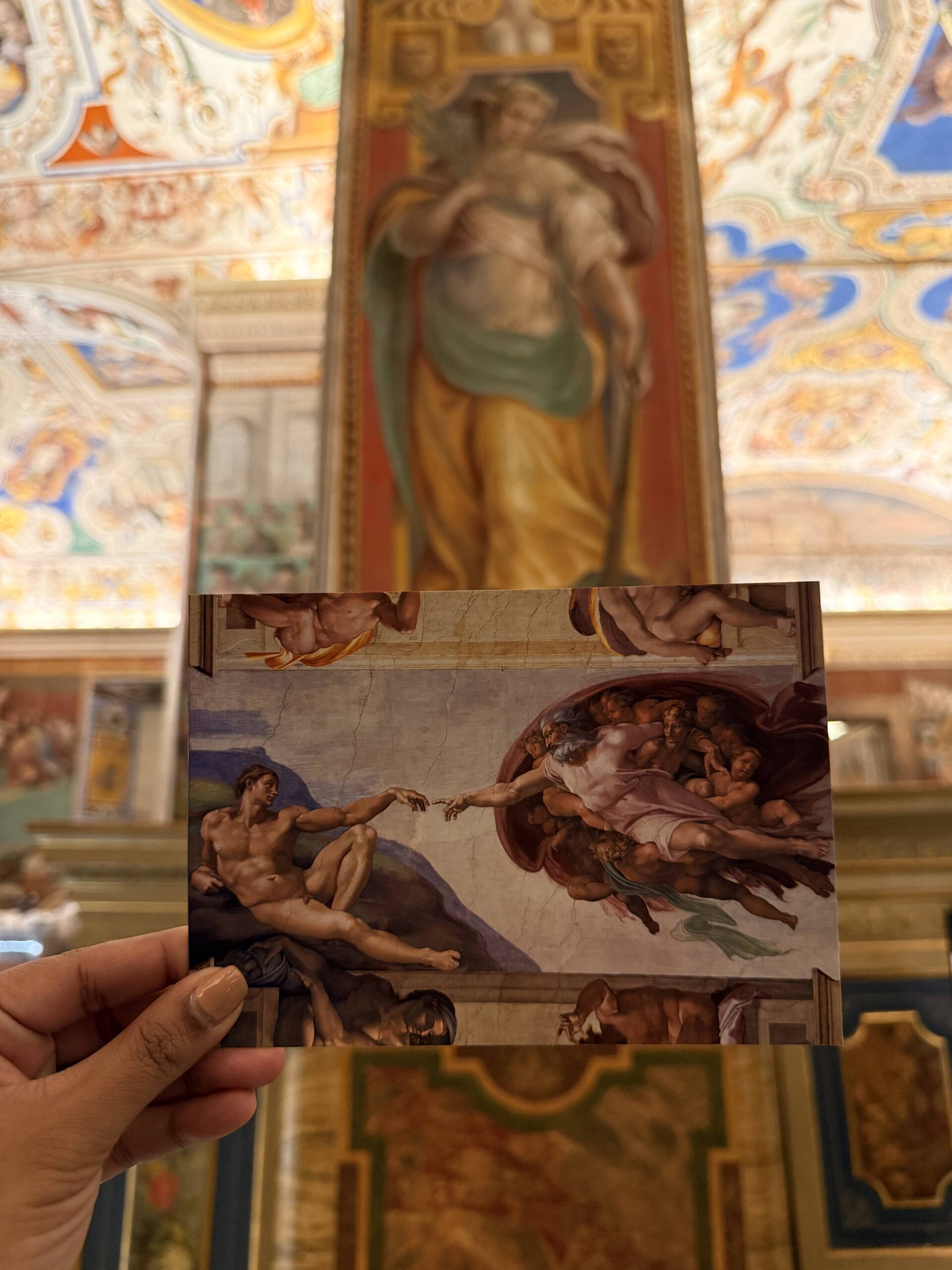
And then, finally, we reached the Sistine Chapel. The moment we stepped inside, everything else faded into the background. Looking up and seeing The Creation of Adam in person was surreal. The silence in the room felt heavy yet peaceful, broken only by quiet murmurs of awe. Standing there, neck craned, eyes fixed on the ceiling, it felt as though time had momentarily paused. It was one of those rare travel moments where you forget where you are, overwhelmed by the sheer brilliance of what humans are capable of creating.
3. Experience the Colosseum by Night and Day
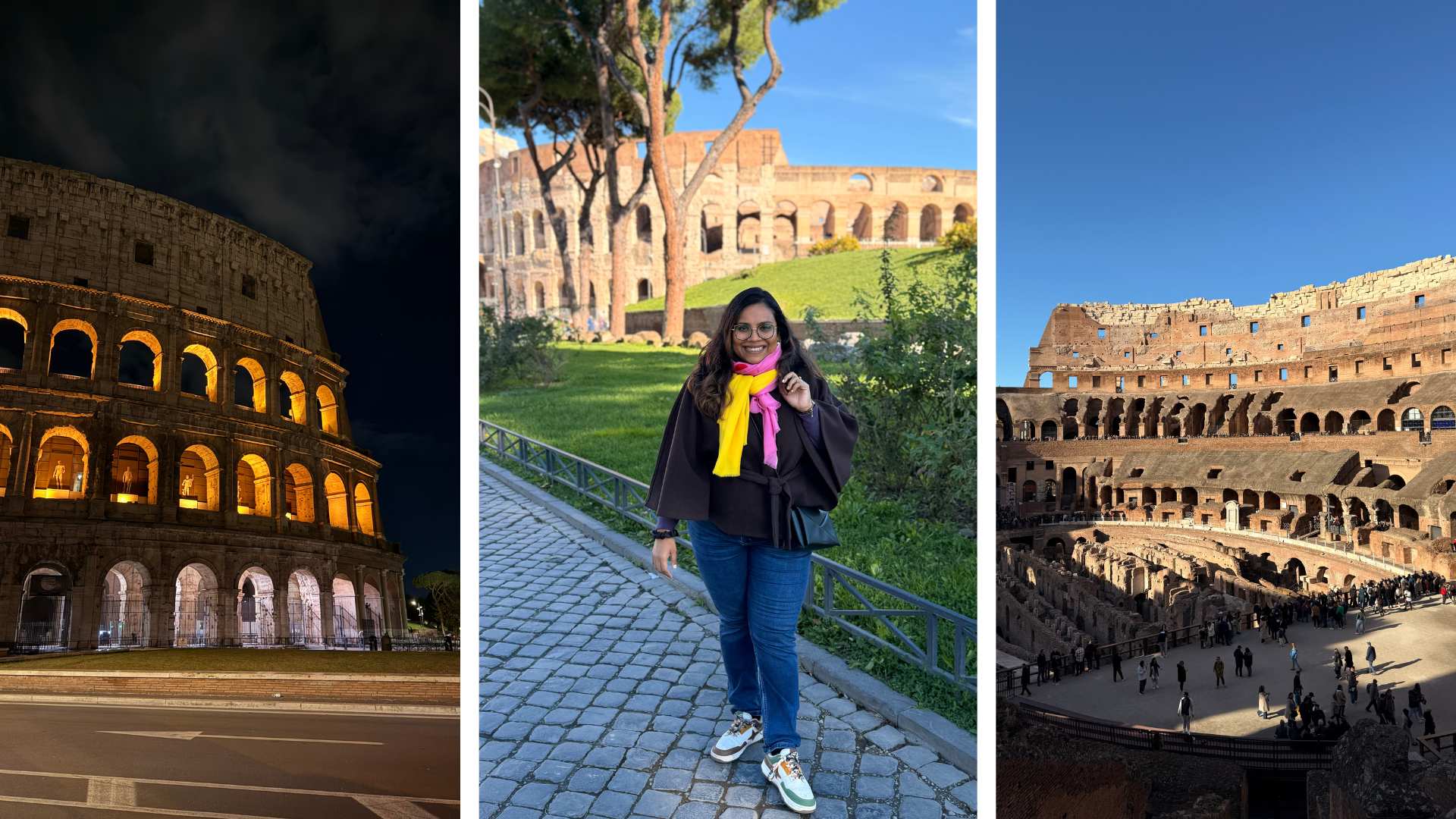
When you think of Rome, the Colosseum is almost always the first image that comes to mind and experiencing it in person makes you understand why. My first glimpse of this iconic monument was at night, from the outside. Soft golden lights illuminated the ancient arches, and against the dark Roman sky, the Colosseum looked both powerful and poetic. With fewer people around and the city slowing down, the moment felt calm and almost intimate. I stood there quietly, taking it all in, completely awestruck.
The following day, we returned to see the Colosseum in daylight, and it felt like discovering it all over again. Under the sun, every detail stood out more clearly. The scars of time, the massive arches, and the sheer scale of the structure made it impossible not to imagine the gladiators, the roaring crowds, and the spectacles that once defined life in ancient Rome. Walking around it during the day gave context and depth to the quiet beauty I had experienced the night before.
Seeing the Colosseum both at night and during the day offered two very different perspectives, and together, they made the experience far more meaningful.
Pro tips for visiting the Colosseum:
- Visit once at night, even if only from the outside, for a quieter, more atmospheric experience.
- If you plan to go inside during the day, book your tickets online in advance to avoid long queues.
- Try visiting early in the morning or closer to closing time to beat the crowds.
- Combine your visit with the Roman Forum and Palatine Hill, as they are right next to each other and often included in the same ticket.
- Wear comfortable shoes, as you will be walking and standing a lot.
4. Hop On a Hop-On Hop-Off Bus Tour
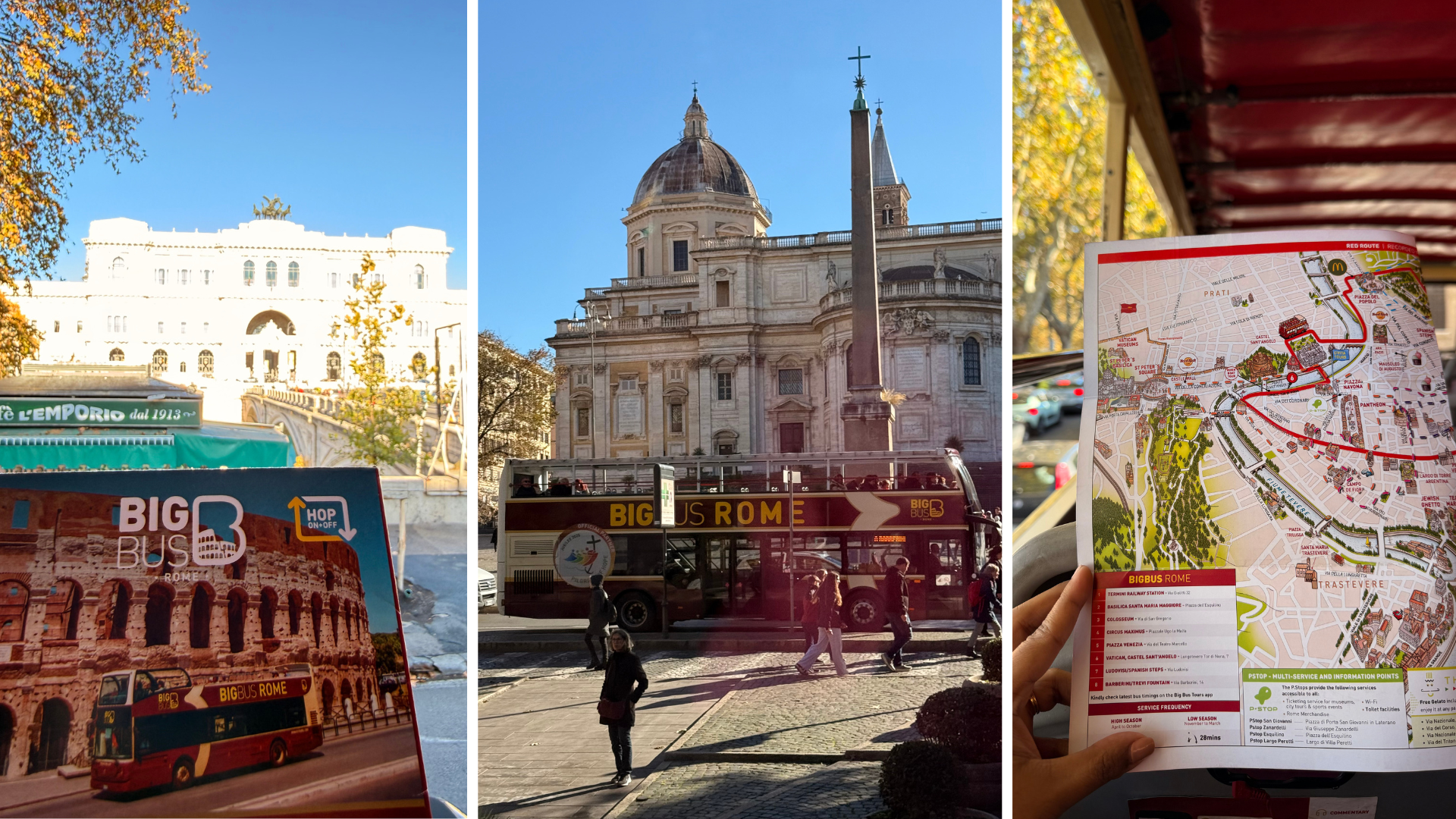
With limited time in Rome, we quickly realised that trying to see everything on foot would be next to impossible. That’s when the Hop-On Hop-Off bus turned out to be an absolute lifesaver. It allowed us to cover a large part of the city comfortably while giving our tired feet a much-needed break between stops.
What I loved most about this experience was how effortless it made sightseeing. As the bus moved through the city, we passed some of Rome’s most iconic landmarks, from Vatican City and the Colosseum to Piazza Venezia and Circus Maximus. The audio guide, available in multiple languages, added immense value to the ride. Listening to stories, historical facts, and little-known details about the places we were passing made the city feel more alive and meaningful, rather than just a collection of beautiful structures.
Being able to hop off whenever something caught our eye and then jump back on the next bus made exploring Rome feel flexible and stress-free. For a first-time visit, it’s an excellent way to understand the city’s layout, decide which spots you want to explore in depth, and still make the most of your time. If you’re short on days but big on curiosity, this is one experience I’d highly recommend adding to your Rome itinerary.
5. Eat Pizza at Piccolo Buco
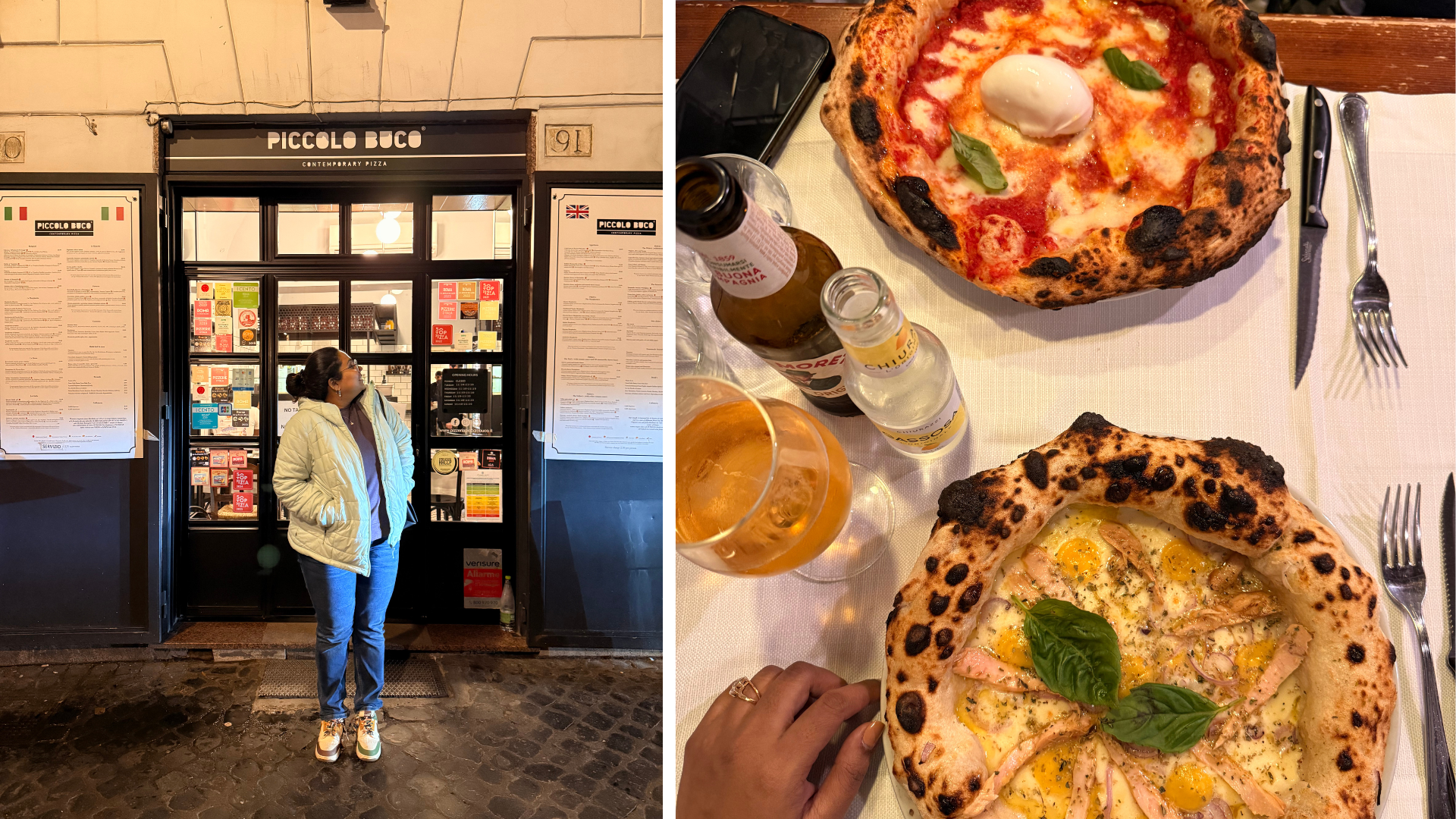
Let me say this loud and clear: pizza in Rome hits different. The night we landed in the city, I did a quick bit of research and decided we would take a leisurely walk around the Trevi Fountain and find a place nearby for dinner.
As we strolled through the narrow lanes, barely a hundred metres away from the fountain, we noticed a long queue outside a tiny pizzeria. The place was small, the crowd was buzzing, and that alone was convincing enough for us to wait.
Stepping inside Piccolo Buco, my senses were instantly awakened. And when the pizza finally arrived, it was nothing short of perfection. A beautifully blistered crust, the cheese melting on top, and flavours that were simple yet incredibly satisfying. No unnecessary toppings, no over-the-top combinations, just honest, soulful Italian pizza done right.
6. Indulge in Endless Gelato
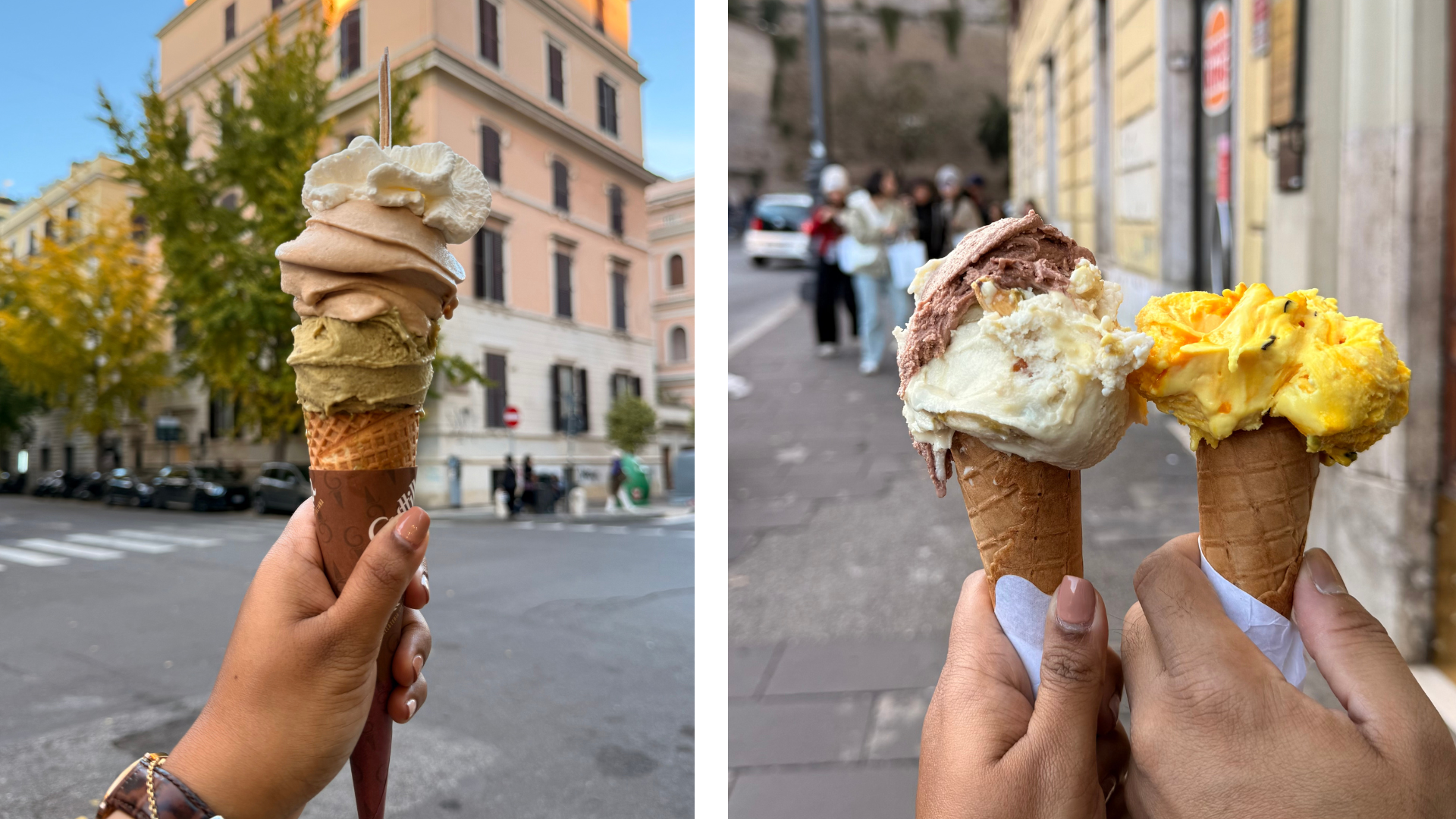
When you’re in Rome, you quickly realise that gelato is not just another ice cream! Somewhere between sightseeing and getting lost in the city, gelato will become a constant companion. From creamy pistachio and classic stracciatella to rich dark chocolate, every scoop felt like pure joy to us.
I stopped counting how many gelatos I had during those three days, but I regret absolutely none of them!
Each gelateria had its own charm, and each flavour tasted better than the last. One little tip I quickly picked up, look for gelaterias where the gelato is stored in covered metal tubs rather than piled high in bright colours. That’s usually where the real magic lies.
7. Walk Aimlessly (Yes, Really)
Trust me when I say this, some of my favourite moments in Rome happened when we stopped following Google Maps. With no fixed plan and no destination in mind, we simply walked and let the city reveal itself to us, one street at a time.
We ended up clocking nearly 20,000 steps each day, but surprisingly, it never felt exhausting. Every turn led to something beautiful, a quiet church tucked away from the crowds, a charming alley lined with warm-toned buildings, a small local bakery filling the air with the smell of fresh bread, or a sudden view that made us pause mid-step. Rome has a way of rewarding curiosity, and the more you wander, the more it gives back.
Sometimes, we would just sit on a random staircase or near a fountain, watching life unfold around us. Observing the city, its people, and its pace became an experience in itself.
If there’s one thing I’d urge you to do in Rome, it’s this: walk without a plan, slow down, and let the city surprise you.
There’s one thing this trip taught me, and it’s the fact that Rome truly deserves time. To explore it properly, to wander without watching the clock, to sit longer at cafés, revisit landmarks at different times of the day, and discover corners beyond the obvious, you need at least 7 to 8 days. This is a city where rushing feels almost disrespectful to its history and charm.
So I have to admit that Rome rewards those who slow down, who look up, who get lost, and who allow themselves to simply be present. And we left knowing we had only scratched the surface, but also with a heart full of gratitude and a strong desire to return.
Frequently Asked Questions About the Best Experiences in Rome
1. What is the best time to visit Rome?
The best time to visit Rome is in spring, from April to May, and again in autumn, from September to November. During these periods, the weather is comfortable for sightseeing, and the city is less crowded compared to peak summer. Summers can be extremely hot, while winters are quieter but cooler, making shoulder seasons ideal for exploring on foot.
2. How many days are enough to explore Rome?
Rome can be briefly explored in 3 days, covering major landmarks such as the Colosseum and the Vatican. However, to truly experience the city at a relaxed pace, including neighbourhoods, local food, and hidden gems, 7 to 8 days are highly recommended.
3. Is Rome a walkable city for tourists?
Yes, Rome is one of the most walkable cities in Europe. Many attractions are located close to each other, and walking allows you to discover charming streets, historic squares, and local cafés along the way. Be prepared to walk a lot; comfortable footwear is essential.
4. Do I need to book tickets in advance for attractions in Rome?
Booking tickets in advance is strongly advised, especially for popular attractions like the Colosseum, Vatican Museums, and Sistine Chapel. Advance bookings help you skip long queues and save valuable time, particularly during peak tourist seasons.
5. Is Rome expensive to travel in?
Rome can suit a range of budgets. While accommodation and attractions may be costly, food can be very affordable if you eat like a local. Bakeries, pizza by the slice, street food, and local trattorias offer excellent meals without breaking the bank.
6. What should I wear while visiting churches in Rome?
When visiting churches and religious sites, including St. Peter’s Basilica, modest clothing is required. Shoulders and knees must be covered. Carrying a light scarf or shawl is a practical solution, especially during warmer months.
7. Is Rome safe for solo travellers?
Rome is generally safe for solo travellers, including women. However, like any major tourist city, petty theft and pickpocketing can occur in crowded areas such as public transport, the Trevi Fountain, and busy squares. Staying alert and keeping belongings secure is advised.
8. What food should I try in Rome?
Rome is a paradise for food lovers. Some must-try dishes include Roman-style pizza, pasta carbonara, cacio e pepe, amatriciana, supplì, and freshly made gelato. Don’t forget to enjoy a cappuccino in the morning and espresso throughout the day.
And if you are keen enough, you can also try to learn how to cook authentic Italian dishes! (Trust me, it would be a lovely experience!).
9. Is public transport easy to use in Rome?
Rome’s public transport system includes buses, trams, and a metro network that connects key areas of the city. While it is convenient for longer distances, walking remains the best way to explore central Rome and soak in the atmosphere. We would suggest you take the day pass (which can be used for all public transport), to make travelling in the city easier.
10. Do I need cash in Rome?
While credit and debit cards are widely accepted in Rome, carrying some cash is useful for small purchases, local cafés, gelaterias, and street markets. ATMs are easily available across the city.
Disclaimer: This post contains a few affiliate links. If you click any of them and make a purchase, I might earn a small commission at no extra cost to you. Just know that I truly appreciate your support if you choose to do so.
Tags:
Share:



About Me
I travel to collect stories, slowly and meaningfully, with an open heart. I wander a little farther for good food, linger longer to understand a place, and write so I can call it “work.” A slow traveller at heart, I believe in experiences over checklists, in moments that unfold at their own pace, and in connections that stay long after the journey ends.
An absolute foodie and die-hard mountain lover, I find my happiest moments in quiet Himalayan towns with a cup of lemon-honey-ginger tea in hand. Over the years, I’ve had the joy of exploring places across India and beyond, each trip teaching me something new about people, cultures, and myself. When I’m not lost in thought or coffee, you’ll find me exploring the world one destination at a time, always looking for places that make me feel something. I love to read and write (give me a book and I’ll love you all the more) and share honest insights, real photos, and thoughtful recommendations from my own travels, so you can experience every place a little deeper, a little slower, and with just the right touch of comfort.
 Pinterest
  Linkedin
  MuckRack
Exploring The World, One Place At a Time!