
A First Time Traveller’s Guide to Wrocław, Poland
In this guide to Wrocław, discover one of Poland’s most enchanting cities, where colourful market squares, charming riverside streets, hidden dwarfs, and centuries of history come together in an unforgettable European getaway.
When most people dream of a European escape, their minds drift to the boulevards of Paris, the ancient ruins of Rome, or the canals of Amsterdam. Poland rarely tops that list, but perhaps that’s exactly what makes it such a rewarding place to explore. Here, medieval towns, resilient history, vibrant culture, and warm hospitality come together without the crowds that often define Europe’s better-known destinations.
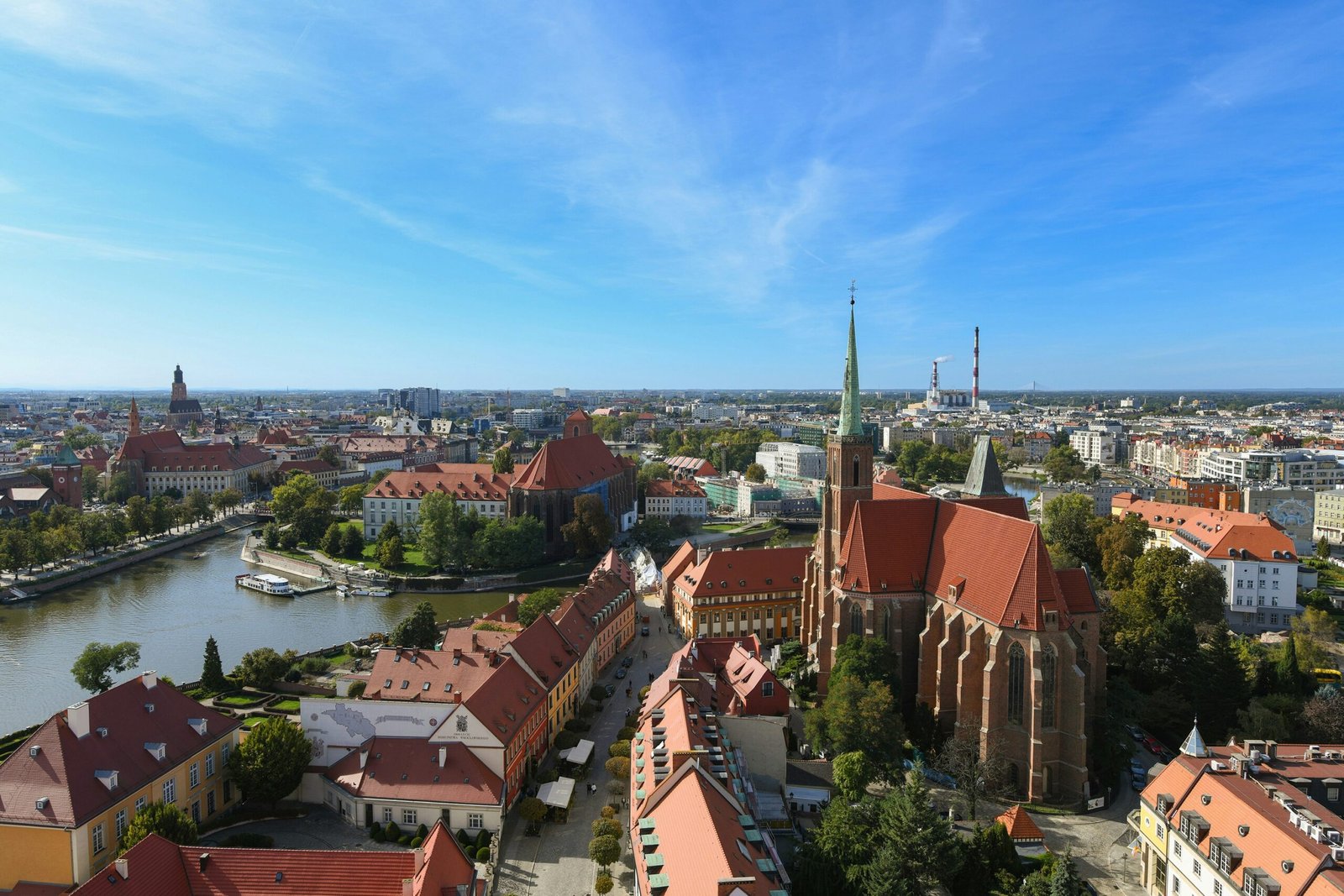
Among its many treasures, Wrocław stands out as one of the country’s most captivating cities. Built on the banks of the Oder River and connected by more than a hundred bridges, it’s a place where Gothic churches, colourful merchant houses, leafy islands, and lively public squares exist in perfect harmony. Around almost every corner, you’ll stumble upon one of the city’s famous bronze dwarfs, adding a playful twist to streets steeped in centuries of history.
But Wrocław’s greatest charm lies in its atmosphere. It’s a city that rewards wandering. Spend an afternoon exploring hidden courtyards, pause for coffee in the heart of Rynek, cross a bridge simply to see where it leads, and you’ll soon understand why Wrocław quietly becomes the highlight of so many trips to Poland.
Also read: A Complete Travel Guide to Poland
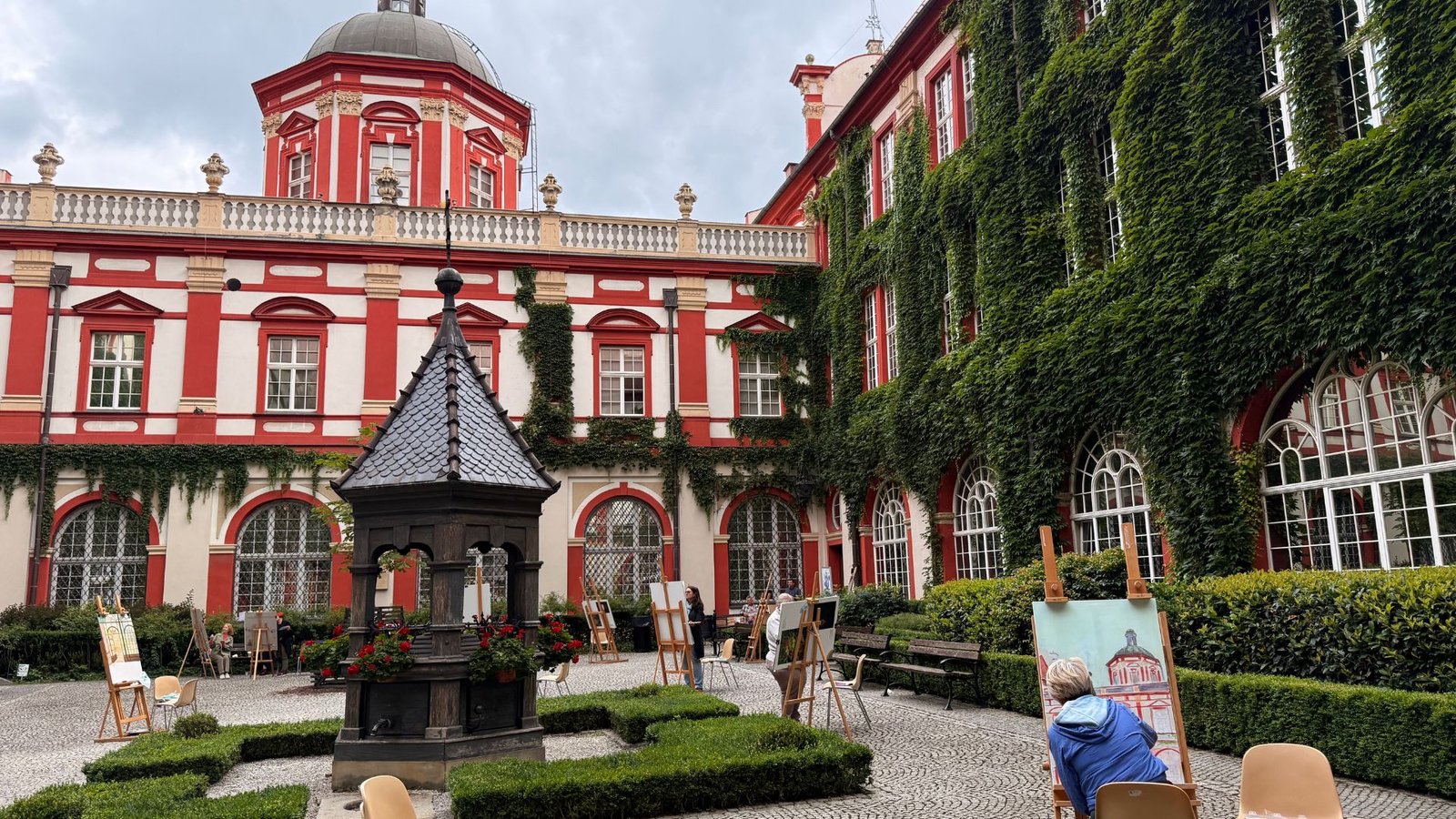
Here’s a first-time traveller’s guide to Wrocław and everything that you need to know about this picturesque town.
Where is Wrocław?
Nestled in the heart of Lower Silesia in southwestern Poland, Wrocław is about 350 km from Warsaw and just a few hours by train from cities like Poznań and Kraków. Its location has long made it a crossroads of Central Europe, with influences from Poland, Bohemia, Austria, and Germany woven into its history and architecture. Built across the banks of the Oder River and connected by more than a hundred bridges, it’s known for its colourful Old Town, picturesque islands, stunning Gothic architecture, and hundreds of tiny bronze dwarf statues hidden throughout the city.
Despite being one of Poland’s largest cities, Wrocław feels incredibly relaxed and easy to explore. Most of its major attractions are within walking distance, making it perfect for travellers who enjoy wandering through charming streets, lingering at cafés, and discovering hidden corners at their own pace.
Note: If you’re travelling through western Poland, Wrocław makes for a fantastic day trip from Poznań. The journey takes around 1 hour 17 minutes by high-speed train, making it easy to explore the city’s highlights even if you’re short on time.
A Glimpse into the History of Wrocław
Few cities in Europe have witnessed as many changes in identity as Wrocław. Over the centuries, it has belonged to the Kingdom of Bohemia, the Habsburg Monarchy, Prussia, the German Empire, and today, Poland. Each era has left behind its own architectural, cultural, and historical imprint, giving the city its unique character.
Situated along the banks of the Oder River, Wrocław flourished as an important trading hub during the Middle Ages. Its strategic location connected Central and Eastern Europe, helping the city grow into a prosperous centre of commerce, education, and culture. The magnificent Market Square, Gothic churches, and elegant townhouses that visitors admire today are reminders of this flourishing past.
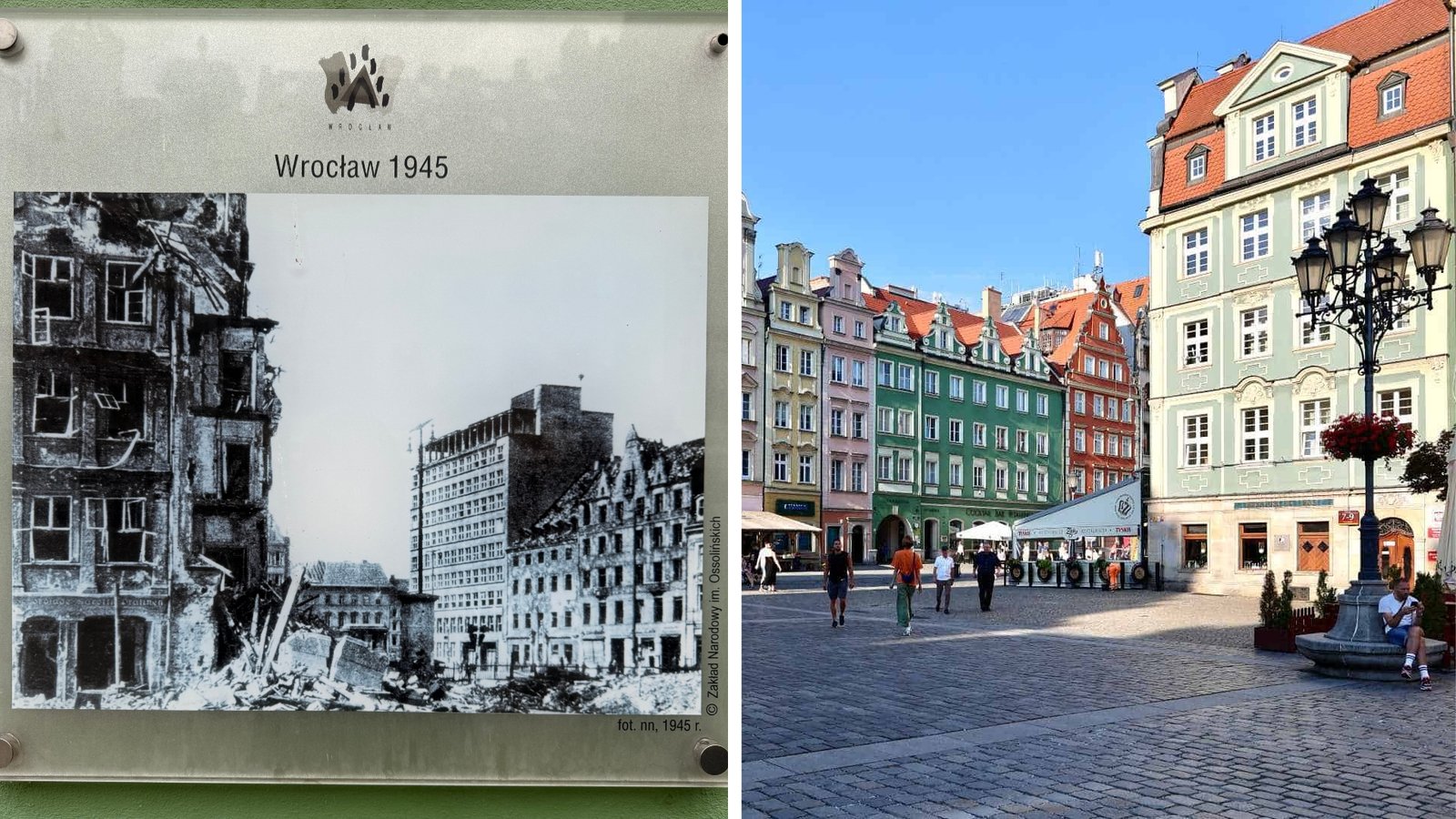
The city’s history took a dramatic turn during the Second World War. Then known by its German name, Breslau, Wrocław was declared a fortress city by Nazi Germany in 1945. The prolonged Siege of Breslau, one of the final major battles of the war, lasted for nearly three months and left almost 70% of the city in ruins. Thousands of civilians lost their lives, and much of Wrocław’s historic centre was reduced to rubble.
After the war, the borders of Europe were redrawn, and Breslau became part of Poland under the decisions made at the Potsdam Conference. The German population was largely expelled, while Polish families, many of whom had themselves been displaced from former eastern territories, settled in the city. Wrocław was, in many ways, rebuilt by people who were starting over, making it a city shaped not only by resilience but also by migration and renewal.
In the decades that followed, painstaking restoration efforts transformed Wrocław into the vibrant city it is today. Historic landmarks such as the Market Square and Town Hall were carefully reconstructed, while the city embraced its multicultural heritage rather than erasing it. Today, Wrocław is celebrated for its thriving university culture, beautiful architecture, and lively arts scene.
In 2016, it was named the European Capital of Culture, a recognition of its remarkable transformation from a war-ravaged city into one of Poland’s most dynamic cultural destinations.
Walking through Wrocław today, it’s hard to imagine the devastation it once endured. Yet beneath its colourful façades and lively cafés lies a story of resilience, reinvention, and hope, making the city far more than just another beautiful stop on a European itinerary.
What are the Best Things to Explore in Wrocław?
Wrocław is the kind of city that quietly grows on you. Beyond its colourful façades, charming bridges, and famous bronze dwarfs lies a city best discovered on foot, where every street seems to have a story of its own.
I had the chance to explore Wrocław with Amit (Whistling Hound), whose deep understanding of the city’s history, culture, and hidden corners brought every neighbourhood to life. Between wandering through medieval squares, crossing the Oder River, and discovering places I would have otherwise walked past, I realised that Wrocław isn’t a city to rush through. It’s one to experience slowly.
1. Wrocław Main Market Square (Rynek)
Every city has a heart, and in Wrocław, it beats inside Rynek!
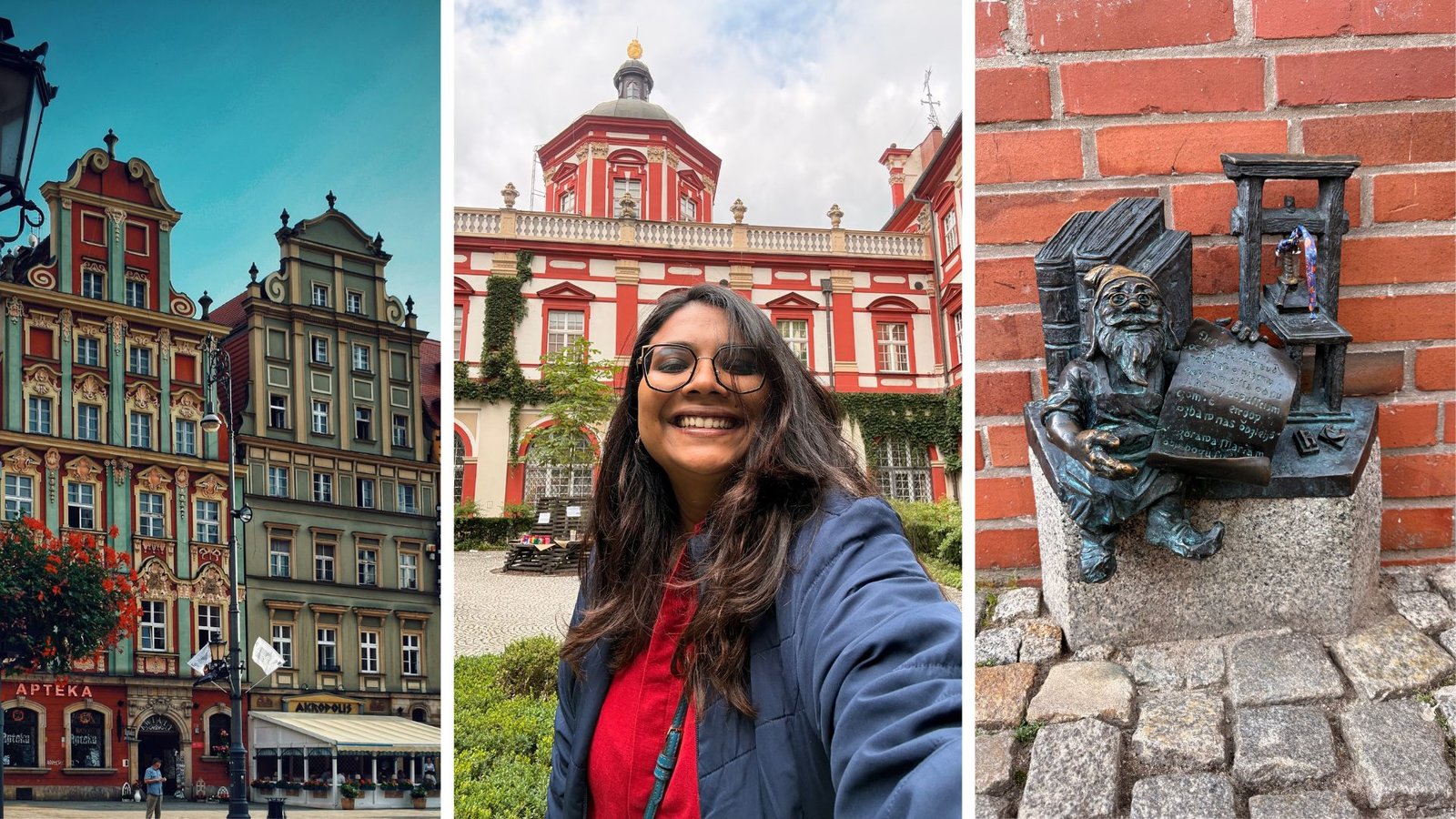
Surrounded by beautifully restored pastel-coloured townhouses, lively cafés, and centuries of history, this is one of Europe’s most spectacular medieval market squares. No matter what time of day I visited, the square always felt alive. Mornings were calm, afternoons buzzed with locals and travellers alike, while evenings brought street musicians, outdoor dining, and a wonderful energy that lingered well into the night.
Standing proudly at the centre is the magnificent Wrocław Town Hall, one of the finest Gothic buildings in Poland and easily one of the square’s biggest highlights.
2. Go Hunting for Wrocław’s Famous Dwarfs
If there’s one thing that makes Wrocław unlike anywhere else in Europe, it’s the city’s tiny bronze dwarfs!
Scattered across streets, bridges, shopfronts, and public squares, these whimsical little sculptures have become one of Wrocław’s most beloved symbols. What began as a political movement in the 1980s has evolved into a city-wide treasure hunt, with hundreds of dwarfs waiting to be discovered.
I thought I’d notice a handful during my visit. Instead, I found myself constantly looking down instead of up, spotting a firefighter dwarf here, a banker there, and even one taking a nap outside a café! It turns exploring Wrocław into an unexpectedly fun adventure.
3. Admire the Wrocław Town Hall
Standing proudly at the heart of Rynek, the Wrocław Town Hall (Ratusz) is one of the city’s most iconic landmarks and among the finest examples of Gothic civic architecture in Europe. Built between the 13th and 16th centuries, it has served many roles over the centuries, from the seat of the city council to a courthouse and administrative centre, making it the historical heart of Wrocław.
Delicate stone carvings, ornate bay windows, colourful coats of arms, pointed Gothic spires, and the beautifully decorated astronomical clock make it a building you can’t appreciate with just a passing glance. And once you step inside, you’ll find the real charm of this place!
Hidden within its historic walls is Piwnica Świdnicka, one of Europe’s oldest restaurants and beer cellars, dating back to the 12th century. Once frequented by merchants and townspeople, it’s now a cosy restaurant and bar where you can enjoy traditional Polish cuisine or sip on a local beer beneath centuries-old vaulted ceilings.
4. Wander Through Cathedral Island (Ostrów Tumski)
Crossing over to Ostrów Tumski, or Cathedral Island, feels like leaving modern Wrocław behind and stepping into its oldest chapter. Once the city’s original settlement, this peaceful quarter is a world away from the lively buzz of Rynek. Cobblestone streets replace busy squares, centuries-old churches rise above red-tiled rooftops, and the gentle flow of the Oder River lends the entire neighbourhood an almost timeless charm.
I visited in the afternoon, wandering through its peaceful lanes and admiring the stunning Cathedral of St. John the Baptist. As we explored, Amit, my guide, pointed out something I would have easily walked past, one of the artillery shells from the Second World War still embedded in the cathedral wall, and it bears the story of the war.
While I didn’t get to experience it myself, I later learnt about one of Wrocław’s most beautiful traditions. Every evening, a lamplighter walks through Ostrów Tumski, lighting the historic gas lamps by hand, just as has been done for generations. It’s one of those timeless rituals that makes me want to return to Wrocław, simply to see the island come alive after sunset.
5. Visit the Cathedral of St. John the Baptist
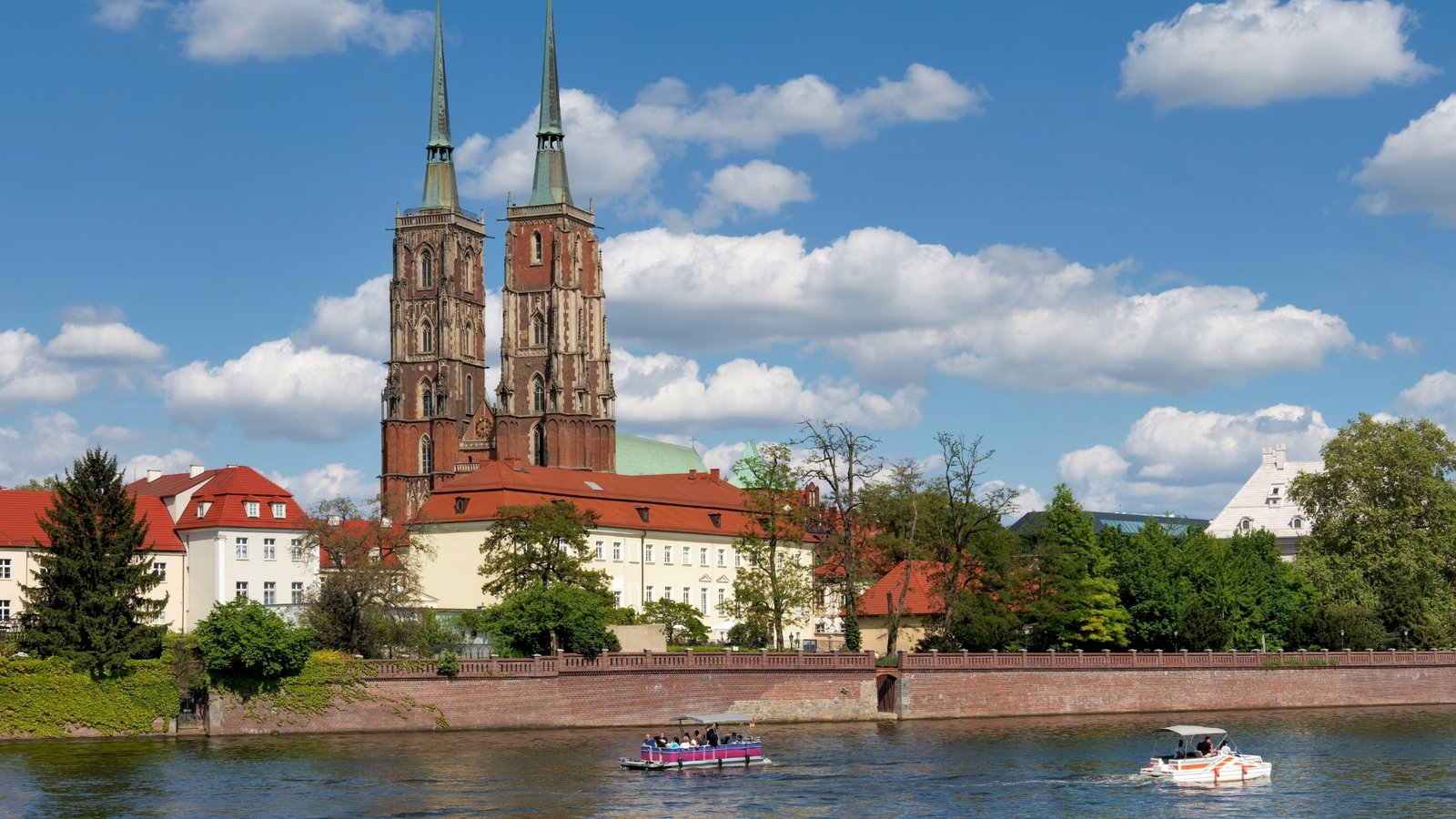
Rising above the rooftops of Ostrów Tumski, the Cathedral of St. John the Baptist is one of Wrocław’s most recognisable landmarks. Its soaring twin spires have watched over the city for centuries, surviving wars, destruction, and painstaking restoration.
Step inside, and you’ll find a striking blend of Gothic architecture, intricate stained-glass windows, and soaring vaulted ceilings that create a space both awe-inspiring and deeply peaceful. The cathedral invites you to slow down, look up, and appreciate the craftsmanship that has endured through the ages.
Before you leave, take the lift to the viewing platform atop one of the towers. From here, you’ll be rewarded with sweeping views of Wrocław’s colourful rooftops, the winding Oder River, Cathedral Island, and the countless bridges that have earned the city its reputation as one of Poland’s most picturesque destinations.
6. Walk Along the Oder River
One of my favourite ways to experience Wrocław was simply by walking along the banks of the Oder River. Flowing through the heart of the city, the river weaves together Wrocław’s islands, bridges, and historic neighbourhoods, offering a completely different perspective of the city.
I found myself crossing one picturesque bridge after another, stopping every now and then to watch boats glide by or admire the reflections of colourful buildings shimmering on the water. There was no destination in mind, just the joy of wandering.
7. Pause for a While at the University of Wrocław
The University of Wrocław is one of those places that deserves more than just a quick photo stop! Founded in 1702, it has long been one of Poland’s most prestigious academic institutions, and its beautiful Baroque architecture makes it a landmark in its own right. And, the university brings a youthful energy to the city, creating a wonderful contrast with Wrocław’s centuries-old streets.
If you have the time, step inside to admire the magnificent Leopoldina Hall, an opulent Baroque ceremonial hall adorned with ornate frescoes, sculptures, and gilded details. You can also climb the Mathematical Tower, where sweeping views of Wrocław’s colourful rooftops, church spires, and the winding Oder River await. It’s easily one of the best viewpoints in the city and a perfect reminder of just how beautifully Wrocław blends history, culture, and everyday life.
8. Discover the Hidden Butchers’ Lane (Stare Jatki)
Tucked away just a few minutes from the bustling Market Square lies one of Wrocław’s most charming hidden corners, Stare Jatki, or the Old Butchers’ Lane.
Dating back to the 13th century, this narrow cobbled street was once home to the city’s medieval butchers, where rows of stalls sold fresh meat to locals. Today, the butcher shops have given way to small art galleries, craft boutiques, and independent studios, making it one of the most atmospheric streets in Wrocław.
As I wandered through the lane, it felt like discovering a secret that many visitors walk right past. At one end stands the poignant Monument to the Slaughter Animals, a series of bronze sculptures of pigs, goats, geese, rabbits, and other farm animals that pays tribute to the street’s historic past. It’s quirky, thought-provoking, and one of those little details that adds another layer to Wrocław’s character.
9. Explore Hala Targowa and Grab a Meal at Bar Mleczny
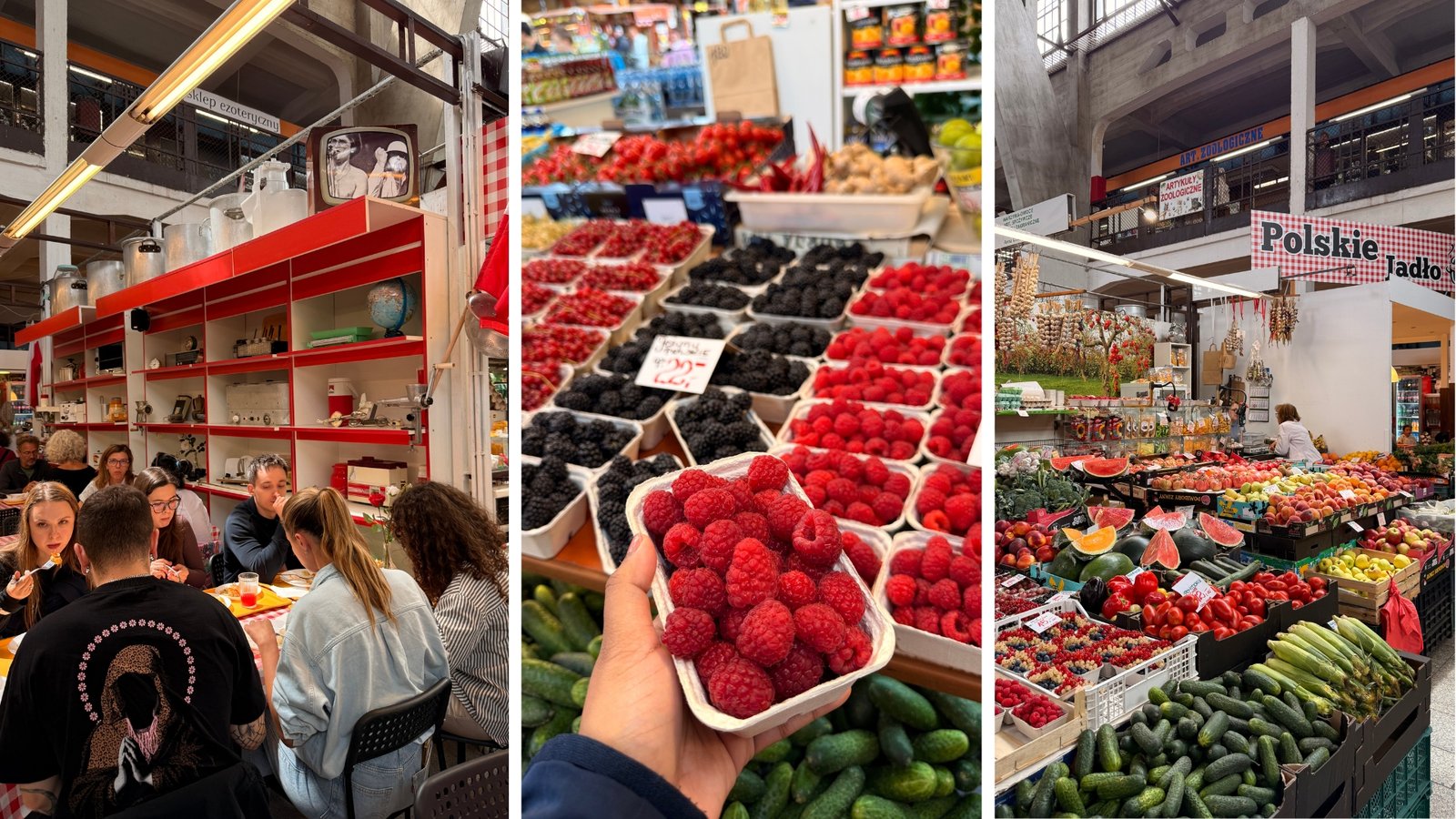
If you want to experience Wrocław beyond its postcard-perfect squares, make your way to Hala Targowa, the city’s historic market hall. Built in 1908, this bustling indoor market has been a part of local life for more than a century and remains one of the best places to see the city through the eyes of its residents.
Inside, you’ll find stalls overflowing with seasonal produce, fragrant flowers, freshly baked bread, artisanal cheeses, cured meats, and local specialities. I loved wandering through the aisles, watching vendors chat with regular customers and soaking in the lively atmosphere.
Before you leave, don’t miss Bar Mleczny, the traditional Polish milk bar located inside the market. These no-frills eateries date back to the communist era and are loved for serving hearty, home-style Polish meals at incredibly affordable prices. It’s the perfect place to try comforting local dishes like pierogi, soups, potato pancakes, or gołąbki, all in a setting that feels authentic, nostalgic, and wonderfully local. Sometimes, the best way to understand a city is simply by eating where its residents do!
What are the Best Places to Stay in Wrocław?
Whether you’re visiting for a weekend or planning a longer stay, Wrocław has accommodation to suit every kind of traveller. From boutique hotels overlooking the colourful Market Square to stylish apartments tucked away in the Old Town and budget-friendly hostels, the city offers plenty of great options.
Here are some of the best places to stay in Wrocław:
- Hotel Altus Palace: If you’re looking to treat yourself, Hotel Altus Palace is one of Wrocław’s finest luxury stays. Housed in a beautifully restored historic palace, it combines elegant interiors with modern comforts. Its location, just a short walk from Rynek, makes it an excellent base for exploring the city’s main attractions while enjoying a touch of old-world grandeur.
- PURO Wrocław Stare Miasto: Stylish, contemporary, and centrally located, PURO Wrocław Stare Miasto is a favourite among design-conscious travellers. It’s within easy walking distance of the Market Square, while its minimalist rooms, cosy common spaces, and excellent restaurant make it a great choice for both leisure and business travellers.
- The Bridge Wrocław – MGallery: Located beside Cathedral Island, The Bridge Wrocław offers a quieter, more refined experience. The hotel blends industrial design with historic surroundings and is just steps away from Ostrów Tumski and the Cathedral of St. John the Baptist. It’s ideal if you want to wake up in one of the city’s most picturesque neighbourhoods.
- Wyndham Wrocław Old Town: Situated close to Rynek, Wyndham Wrocław Old Town offers spacious rooms, modern amenities, and easy access to Wrocław’s cafés, restaurants, and major landmarks. Its central location makes it a convenient choice for first-time visitors who want to explore the city on foot.
- Hotel Monopol Wrocław: One of the city’s most iconic hotels, Hotel Monopol has welcomed guests for more than a century. Overlooking the Old Town, it pairs timeless elegance with modern luxury and is known for its rooftop terrace, spa, and beautifully appointed rooms. If you’re celebrating a special occasion, this is one of the best places to stay in Wrocław.
For first-time visitors, I’d recommend staying around Rynek (Market Square) or the Old Town. Most of Wrocław’s major attractions, including Cathedral Island, the University of Wrocław, and the city’s famous dwarf trail, are within easy walking distance. You’ll also be surrounded by lively cafés, restaurants, and beautiful streets that make exploring the city a joy.
Why Must You Plan a Trip to Wrocław?
Wrocław is one of those rare cities that quietly exceeds every expectation. Often overshadowed by Kraków and Warsaw, it charms you with colourful market squares, riverside walks, centuries of history, and a pace that encourages you to slow down and savour every moment.
Built across the Oder River and linked by more than a hundred bridges, Wrocław is as beautiful as it is fascinating. From the whimsical bronze dwarfs scattered across the city to the timeless charm of Cathedral Island and the stories hidden within its Gothic architecture, there’s something to discover around every corner. Even though I was there just for a day, the city filled my heart, and I know that I’ll have to return someday to explore more of it.
If you’re planning a trip to Poland, I’d say that don’t just pass through Wrocław. Instead, give it the time it deserves, and you’ll discover why it’s one of Europe’s most underrated cities.
FAQs: All You Need to Know About Travelling to Wrocław
1. How many days do you need in Wrocław?
I recommend spending 2 to 3 days in Wrocław. This gives you enough time to explore the Old Town, Cathedral Island, the University of Wrocław, Hala Targowa, and the city’s famous dwarf trail while still leaving room to enjoy its cafés and riverside walks.
2. What is Wrocław famous for?
Wrocław is best known for its colourful Market Square (Rynek), the beautiful Cathedral Island (Ostrów Tumski), its network of over 100 bridges, and the hundreds of tiny bronze dwarf statues scattered throughout the city. It’s also celebrated for its rich multicultural history and vibrant university atmosphere.
3. Can you visit Wrocław as a day trip from Poznań?
Yes. Wrocław is well connected to Poznań by high-speed trains, with the journey taking around 1 hour and 20 minutes. While a day trip is possible, spending at least one night allows you to experience the city’s atmosphere after the crowds have gone.
4. Is Wrocław a walkable city?
Yes, Wrocław is incredibly walkable. Most of the major attractions, including Rynek, Cathedral Island, the University of Wrocław, and Hala Targowa, are within walking distance of each other. The city also has an excellent tram network for longer journeys.
5. What is the best time to visit Wrocław?
Spring (April to June) and autumn (September to October) are ideal, with pleasant weather and fewer crowds. Summer is lively with outdoor cafés and festivals, while winter transforms the city into one of Poland’s most enchanting Christmas destinations.
6. Is Wrocław expensive?
Compared to many other European cities, Wrocław is relatively affordable. Accommodation, public transport, and dining offer excellent value, making it a great destination for budget-conscious travellers without compromising on the experience.
7. What food should you try in Wrocław?
Don’t miss traditional Polish dishes like pierogi (dumplings), żurek (sour rye soup), placki ziemniaczane (potato pancakes), and gołąbki (cabbage rolls). For an authentic local experience, visit a traditional Bar Mleczny (Milk Bar), where you’ll find hearty, home-style meals at affordable prices.
8. Why is Wrocław called the City of Dwarfs?
The bronze dwarf statues originated from the Orange Alternative, an anti-communist movement in the 1980s that used dwarfs as symbols of peaceful resistance. Today, more than 800 dwarf sculptures are scattered across the city, making them one of Wrocław’s most beloved attractions.
9. Is Wrocław safe for solo travellers?
Yes. Wrocław is considered one of the safest cities in Poland and is a great destination for solo travellers. Like any major city, it’s always wise to take normal precautions, but the city is generally welcoming, friendly, and easy to navigate.
10. Is English widely spoken in Wrocław?
Yes. English is commonly spoken in hotels, restaurants, cafés, and most tourist attractions. Younger locals, especially students, generally speak English very well.
11. What currency is used in Wrocław?
Poland uses the Polish Złoty (PLN), not the Euro. Credit and debit cards are widely accepted, although it’s always handy to carry a little cash for local markets or smaller cafés.
12. What souvenirs should I buy in Wrocław?
Popular souvenirs include miniature bronze dwarfs, handcrafted amber jewellery, Bolesławiec pottery, local chocolates, Polish ceramics, and regional food products such as honey, jams, or flavoured vodkas.
13. Can I combine Wrocław with other cities in Poland?
Absolutely. Wrocław fits perfectly into a Poland itinerary and is well connected by train to Poznań, Kraków, Warsaw, Gdańsk, and Katowice. It’s also close to the Czech border, making it easy to combine with a trip to Prague.
Disclaimer: This post contains a few affiliate links. If you click any of them and make a purchase, I might earn a small commission at no extra cost to you. Just know that I truly appreciate your support if you choose to do so.
Tags:
Share:


About Me
I travel to collect stories, slowly and meaningfully, with an open heart. I wander a little farther for good food, linger longer to understand a place, and write so I can call it “work.” A slow traveller at heart, I believe in experiences over checklists, in moments that unfold at their own pace, and in connections that stay long after the journey ends.
An absolute foodie and die-hard mountain lover, I find my happiest moments in quiet Himalayan towns with a cup of lemon-honey-ginger tea in hand. Over the years, I’ve had the joy of exploring places across India and beyond, each trip teaching me something new about people, cultures, and myself. When I’m not lost in thought or coffee, you’ll find me exploring the world one destination at a time, always looking for places that make me feel something. I love to read and write (give me a book and I’ll love you all the more) and share honest insights, real photos, and thoughtful recommendations from my own travels, so you can experience every place a little deeper, a little slower, and with just the right touch of comfort.
 Pinterest
  Linkedin
  MuckRack
Exploring The World, One Place At a Time!