
Home Exchange is Changing the Way We Think About Travel and Accommodation
“Too good to be true!” — that’s exactly what I thought when I first heard about Home Exchange. The idea of staying in someone’s home, often without paying directly for the accommodation, sounded almost unreal. But after exploring Berlin and Prague through this platform and experiencing the accommodations firsthand, I began to see Home Exchange differently. And here’s my honest opinion!
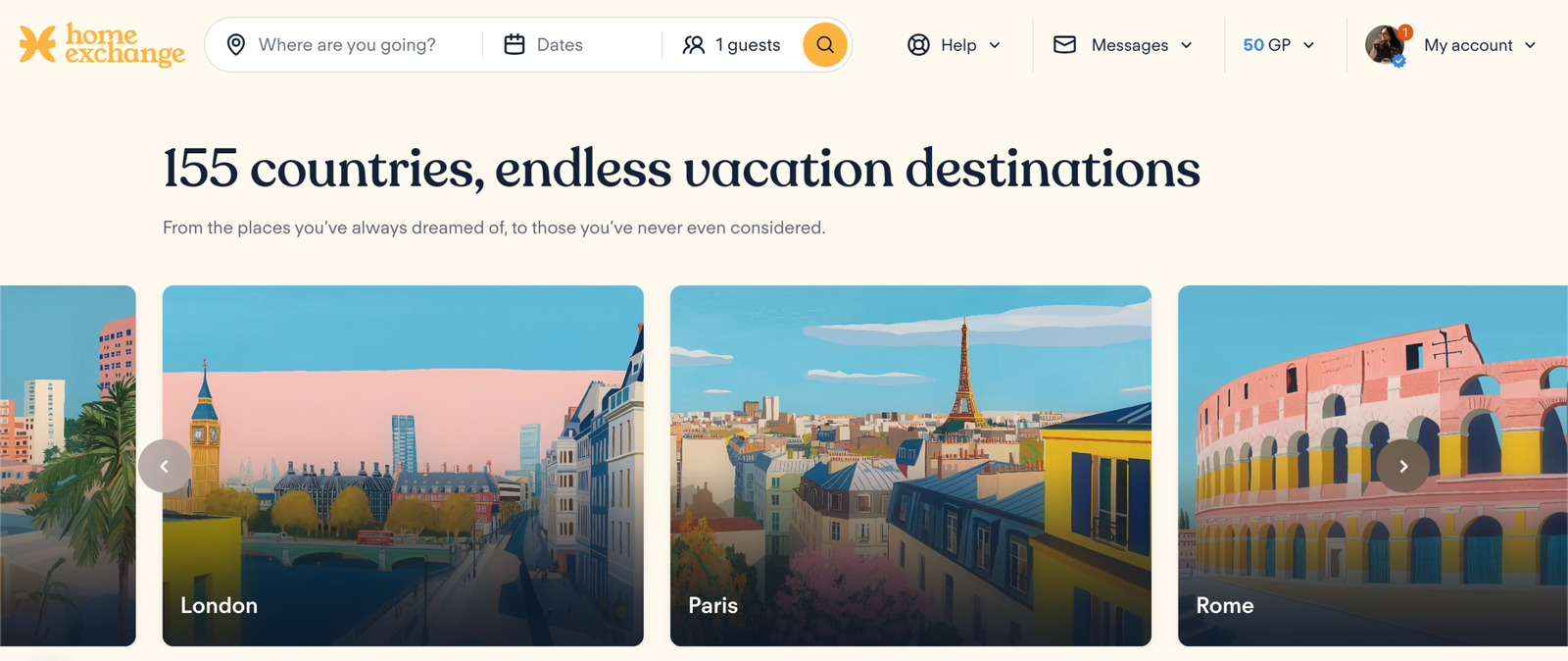
Last month, my husband had a work trip to Poznań, Poland, and we decided to use the opportunity to spend a weekend in Berlin, Germany (that’s just a three-hour train journey away!). As usual, I started looking up Airbnbs in Berlin when I suddenly remembered Home Exchange, something that I had come across in a WhatsApp group.
I headed to the Home Exchange website, where I found a detailed step-by-step explanation of how the platform works, from signing up, paying a subscription fee, creating a profile, to swapping homes. At first, the sheer amount of information and the process felt a little overwhelming. But once I understood how it actually worked, my first reaction was: “It’s too good to be true!” I kept wondering how you could actually stay in someone else’s home without paying for traditional accommodation.
Soon, I went down the rabbit hole and spent half a day researching everything I could find about Home Exchange. Not just because I could potentially save a considerable amount of money on accommodation, but because the whole idea genuinely fascinated me. But I wanted to know everything!
“Who are these people opening their homes to strangers?”
“What happens when something goes wrong?”
“And, most importantly, does this actually work?”
There were too many questions on my mind! I even scrolled on Instagram, looking for Indian travellers who had used the platform and could share their experiences. And, because a little reassurance never hurts, I eventually texted Forum, a traveller-friend, and asked her the most obvious question: “Is this actually legit?”
Her answer was reassuringly affirmative. She mentioned that she had stayed in accommodations arranged through Home Exchange and confirmed that the platform was genuine. She did give me one small disclaimer: that sometimes, a stay may not be exactly as it appears in the listing. But, according to her, that was a rare occurrence.
After that brief conversation with her, I discussed it with my husband, and we decided to take the plunge and signed up!
And that’s where my Home Exchange experience began!
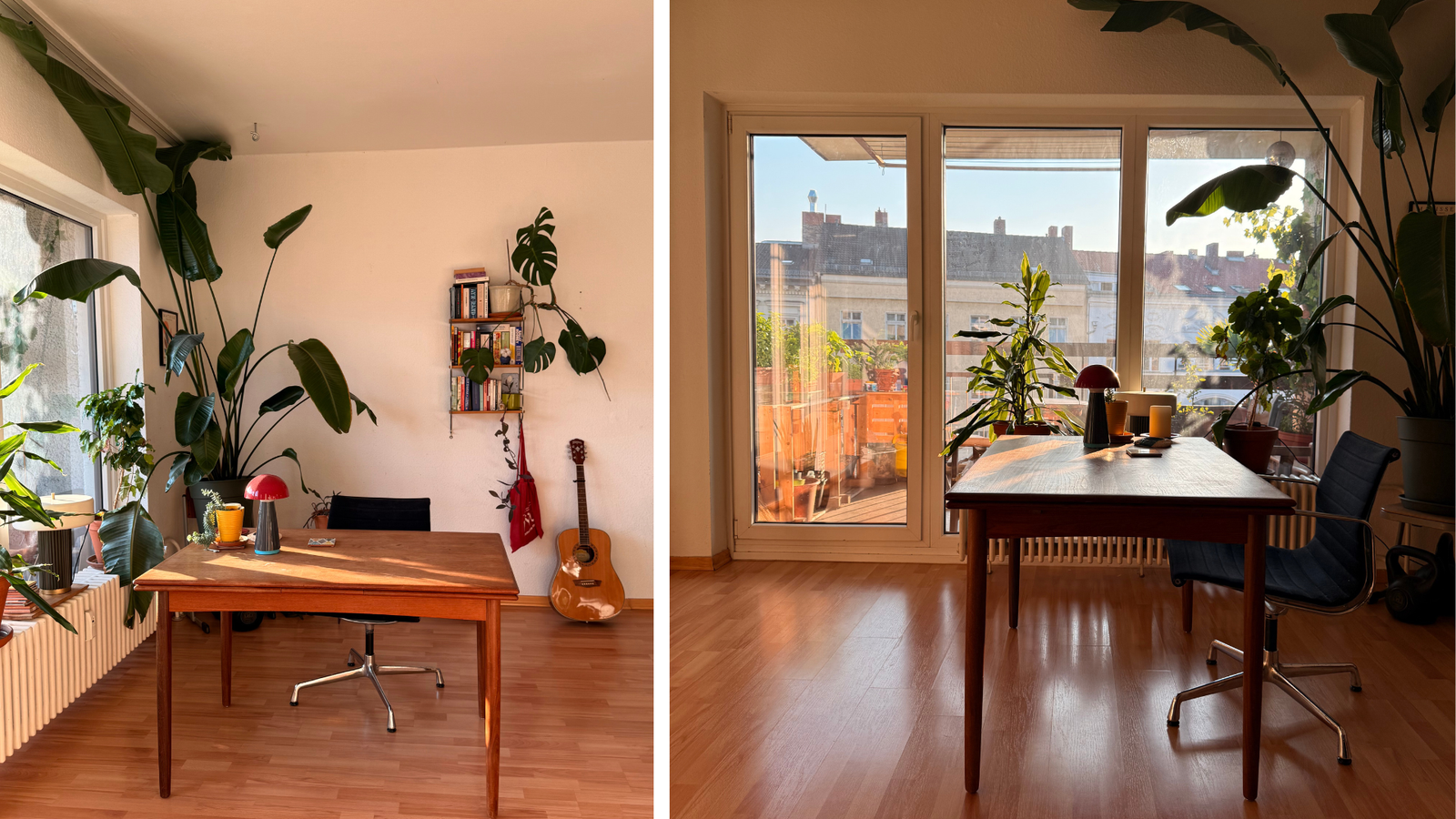
The beautiful apartment where we stayed in Berlin.
How Does Home Exchange Work?
Okay, so here’s where things get interesting! Before discovering Home Exchange, I had always assumed that a home swap meant one very simple thing: “I stay at your home, you stay at mine”. Same dates, same time, end of story!
But in this case, things are a little more flexible, and that’s what makes the concept so interesting.
At its core, Home Exchange is built around a simple idea: people open up their homes to other travellers, and in return, they get the opportunity to stay in someone else’s home. Instead of spending money on hotels or holiday rentals, you become part of a community where homes are exchanged through a system of stays and GuestPoints.
You begin by creating a profile and adding your home to the platform. You can share details about your place, add photographs, mention the dates when you’re available to host, and give potential guests an idea of what staying there would be like.
Then comes the fun part — finding a home! You can search for homes in the destination you’re planning to visit, check the available dates, and send a request to the host through the platform. If they accept, you have your stay sorted.
And the best part is that you don’t necessarily have to exchange homes with the same person.
The traditional idea of home swapping can be quite restrictive. Imagine I want to visit Paris in October, while someone in Paris wants to visit Gurgaon in December. We both have homes to offer, but our travel dates don’t match. A direct swap simply wouldn’t work!
That’s where GuestPoints come in. Instead of having to find someone who wants to travel to your city at exactly the same time you want to travel to theirs, you can host other Home Exchange members and earn GuestPoints. You can then use those points when you travel and stay in someone else’s home.
So, essentially, you host someone, earn points, and use those points to stay somewhere else.
More importantly, GuestPoints can also be earned in different ways on the platform: (1) by completing your profile, (2) by adding information about your home, (3) by hosting members, and (4) through referrals.
And you don’t simply arrive at a stranger’s house and hope for the best! The platform allows members to communicate, discuss the stay, and make other necessary arrangements before an exchange takes place. That, really, is the beauty of the concept. Instead of simply booking an accommodation, you become part of a community where homes, hospitality and travel are shared. And once I understood that, the whole concept started making a lot more sense.
How to Get Started with Home Exchange?
One of the things I found interesting about Home Exchange is that you can sign up for free and explore the platform, browse homes, and get a feel for how everything works. However, if you actually want to exchange homes or stay at someone else’s place, you’ll need a paid membership.
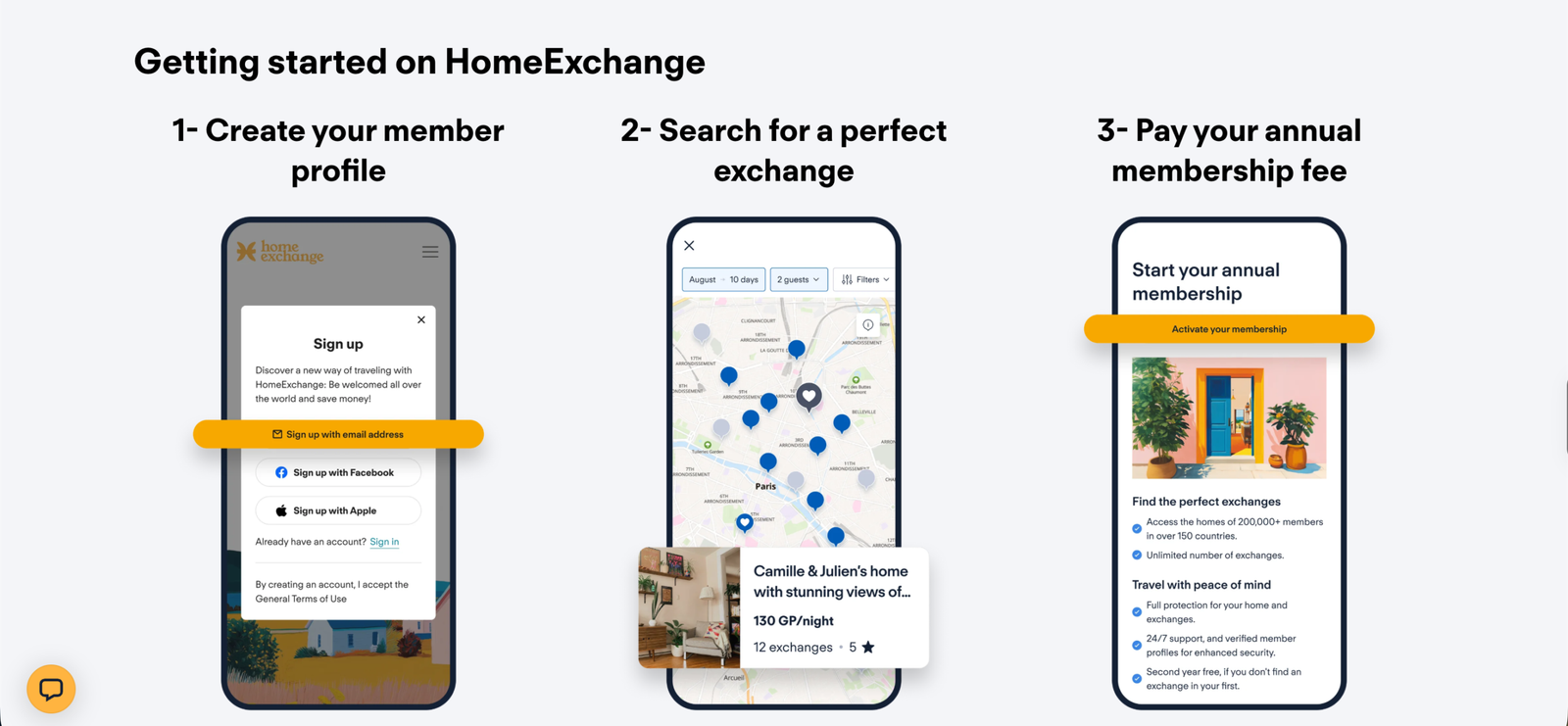
Here’s how to get started:
- Create your account: Sign up on Home Exchange and complete your profile with some basic information about yourself. If you’d like, you can use my referral code riyanka-70d81 to receive 250 extra GuestPoints.
- List your home: Add photographs and a description of your home. This gives other members an idea of who you are and what they can expect if they choose to stay at your place.
- Get a membership: The annual membership currently costs INR 7,500, which gives you access to the exchange system.
- Verify your profile: You’ll need to upload documents that establish your connection to the property, such as property documents, a rental agreement, or any utility/phone bill. Verification generally takes around 24–48 hours.
- Collect your GuestPoints: Once you complete and verify your profile and pay for the membership, you can receive GuestPoints. At the time I signed up, I received 1,250 points for completing the relevant steps (750 GP for paying the annual subscription and 500 GP for updating my documents). You can get 250 additional points through my referral (riyanka-70d81). The exact points and offers can change, so check the platform when you sign up.
- Start searching: Once your profile is verified, you can look for homes in the destinations you’re travelling to. Many hosts accept GuestPoints, while some are also open to direct swaps.
Drop a message to your host, reach out to them, and skip the ‘booking’ mentality! This was perhaps the biggest takeaway for me while using Home Exchange.
Unlike Airbnb, where you can simply find a place you like, click Book Now, pay, and move on, Home Exchange is much more personal. Here, you’re not booking a property; you’re asking someone if you can stay in their home. You find a place that feels right, check the dates, and send the host a message. And then, there’s a human connection behind what would otherwise be just another accommodation booking! You’re entering someone’s lived-in space, after all, so trust, warmth and a genuine conversation matter just as much as the photographs and location.
And if you’re a first-time user like I was, don’t underestimate the importance of that first message. Since I didn’t have reviews yet, I found it helpful to introduce myself properly — where I’m from, what I do, why I’m visiting, and why I particularly liked their home.
Once the host accepts your request and the exchange is confirmed, you can use your GuestPoints for the stay. From what I found in my search, many homes cost around 200–250 GuestPoints per night, which means your accumulated points could cover 7 – 8 nights without paying separately for the accommodation.
Experiencing Berlin Differently, Through Home Exchange
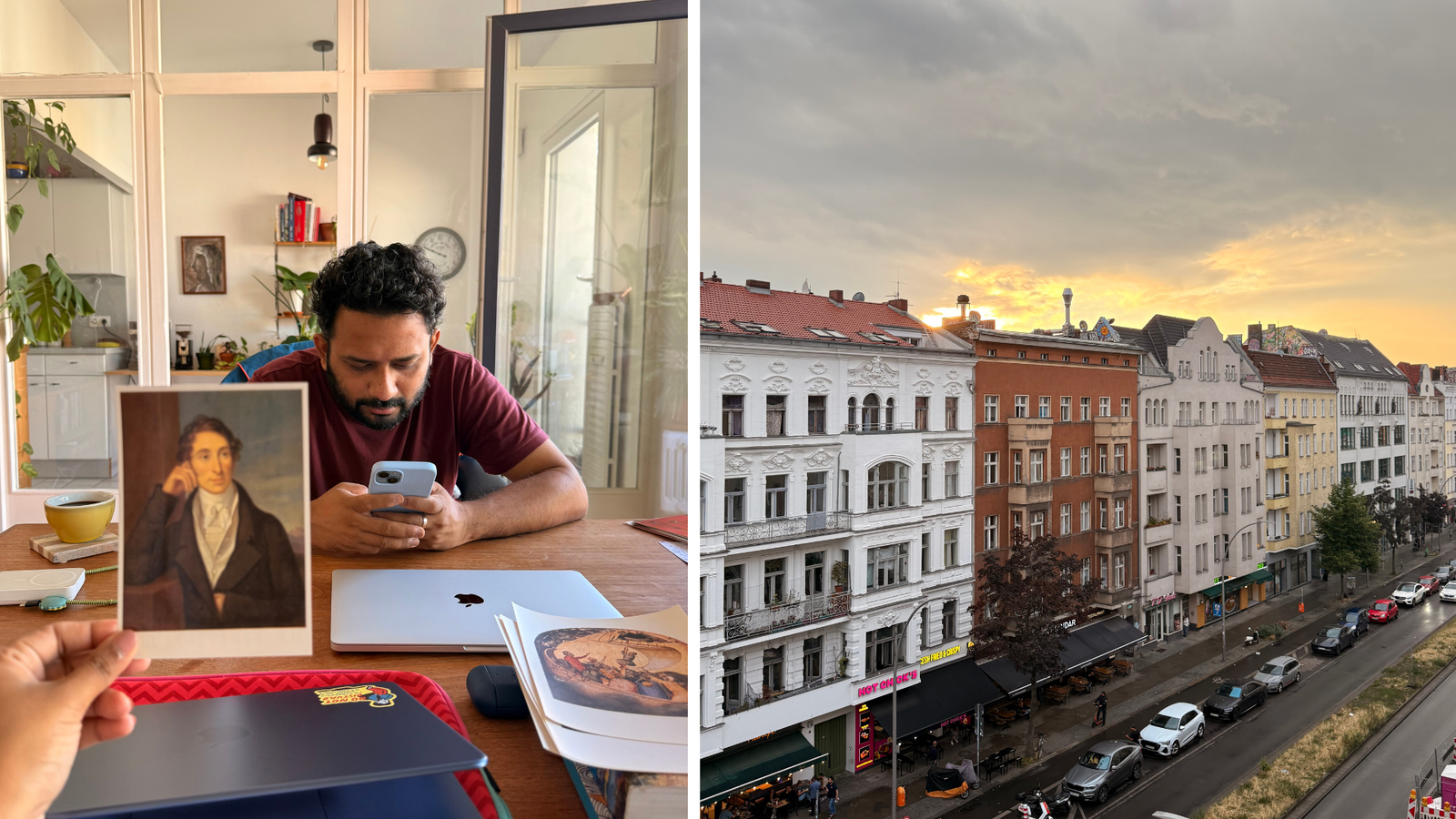
After a lovely conversation with my host, we exchanged WhatsApp numbers, and on the day we arrived in Berlin, he sent us a map with clear directions to his apartment. He also put together a thoughtful little PDF with everything we might need during our stay, from instructions for using the appliances to recommendations for grocery stores, restaurants and his favourite spots in the neighbourhood.
It was such a small gesture, but it immediately made the whole experience feel more personal.
Then we reached the apartment, and that’s when it finally sank in. We were actually inside a stranger’s apartment, and not a hotel or Airbnb!
It was a cosy one-room apartment with a huge living area flooded with sunlight, but the real star was the balcony overlooking the city. There was something wonderfully warm about the place. And the sweetest part was the fact that our host asked if we could water his plants while he was away. He had dozens of them — and, unexpectedly, this became one of my favourite parts of the stay. Every morning, my husband and I would make our coffee, step out onto the balcony, and water the plants together. It was such an ordinary little routine, but somehow, it made us feel connected to the home we were staying in.
Of course, we spent our days exploring Berlin, ticking off places, walking around neighbourhoods, and soaking in the city. But when I look back at that weekend, strangely enough, it feels like the best part of the Berlin trip was the stay!
Finding Another Cosy Stay in Prague
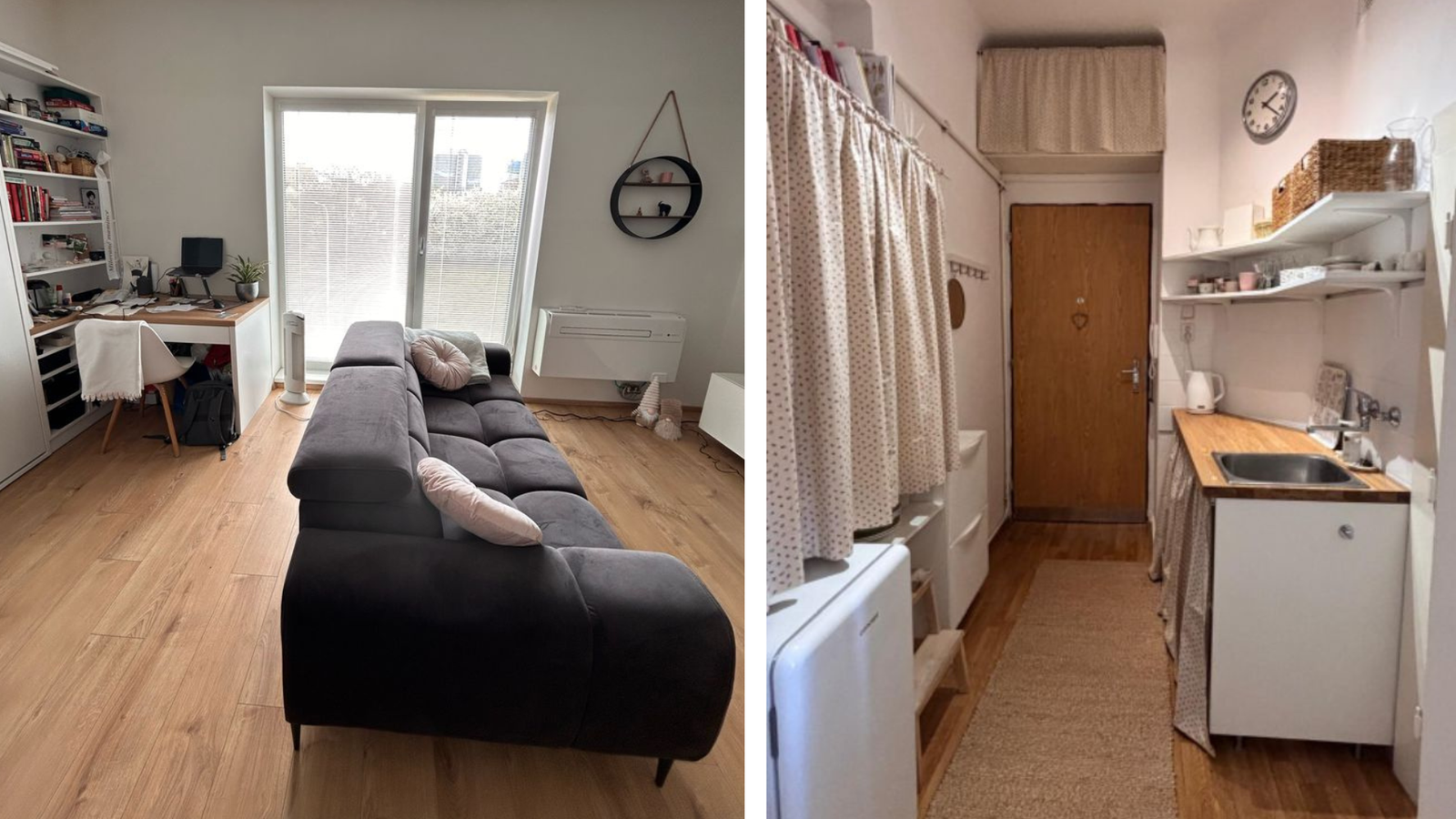
When we were planning another short trip, instead of looking for hotels or Airbnbs, I started browsing homes in the city through Home Exchange. I found a few that caught my eye, wrote to a couple of hosts, and eventually, we found our place.
Our host happened to be travelling herself at that time, so she arranged for a friend to meet us and hand over the keys. She stayed in touch with us constantly over WhatsApp, making sure we knew exactly what to do and where to go. And, just like clockwork, her friend arrived right on time.
The apartment was a little away from Prague’s city centre, but our host had thought that through too. She sent us a list of buses and trams that would take us to the popular spots around the city, along with some of her personal recommendations for places to eat, explore, and wander around. It was these little details that I was beginning to appreciate about Home Exchange.
And because there weren’t many shops nearby, she had thoughtfully stocked the apartment with milk, bread, fresh fruit and, of course, plenty of sweets for us. It was such a simple gesture, but it made us feel incredibly cared for — like we were staying at a friend’s home rather than a stranger’s apartment.
It also made me realise that the accommodation is only one part of the experience; it’s the warmth, generosity and thoughtfulness of the people behind these homes that truly make it special.
When you choose a stay, you aren’t simply handed a set of keys and left to figure things out on your own. There’s always someone on the other side, genuinely invested in making you feel comfortable, welcome and at home in their city.
Is Home Exchange Worth It?
I’ll be honest, I was initially very confused and hesitant to pay and sign up. But after actually using Home Exchange, I can confidently say that I got more than my money’s worth.
Here’s why I think Home Exchange is worth considering:
- The savings can be significant: Accommodation in popular European cities can easily cost €80–€150 (roughly INR 8,000 – 15,000) per night for a comfortable stay. With Home Exchange, my annual membership costs me around INR 7,500, and that alone could cover the cost of just one night in some European cities. If you travel regularly, the savings can add up quickly.
- You can get several nights out of your membership: With the GuestPoints I accumulated, I could potentially cover around 8–10 nights of accommodation, depending on the homes and their GuestPoint requirements. And as you host, complete your profile, and participate on the platform, you can continue accumulating points and increasing your opportunities for future exchanges.
- You experience a destination like a local: This, for me, was perhaps the biggest advantage. Staying in a real home, waking up in a residential neighbourhood, and shopping at the local grocery store feel very different from staying in a hotel surrounded by tourists.
- You become part of a neighbourhood, even though temporarily: In Berlin and Prague, even though we were only guests for a few days, we got to experience what everyday life there felt like. We knew where the neighbourhood shops were, figured out the local transport, and even had little morning routines. It made the destination feel more personal.
- There’s a human connection: Unlike a conventional accommodation booking, there is usually a person behind the home. Our hosts shared recommendations, helped us navigate the neighbourhood, and thought about little things that would make our stay comfortable. That warmth is something you simply can’t put a price on.
- It makes travel feel less transactional: Perhaps this is what stayed with me the most. You aren’t just paying for a room and checking out a few days later. There’s an element of trust, generosity and reciprocity involved. Someone is sharing their home with you, and you become part of a larger community of people who believe in sharing their spaces with fellow travellers.
- You get to see another side of a city: Staying away from the usual tourist zones can be a blessing. You might discover a neighbourhood café, a local bakery, a quiet park, or a local store you would probably never have encountered while staying in a hotel.
- It changes how you think about accommodation: After experiencing Home Exchange, I realised that accommodation doesn’t always have to be about finding the fanciest hotel or the best-rated Airbnb. Sometimes, a warm, lived-in home in an ordinary neighbourhood can make a trip far more memorable.
So, now if you ask me whether Home Exchange is worth it or not, I would say it absolutely is! The money I saved was a great starting point, but it wasn’t what made me a convert. The real value was being able to travel differently — to slow down, live like a local, connect with people and feel, even briefly, that I belonged somewhere far from home.
And perhaps that’s the best kind of travel after all.
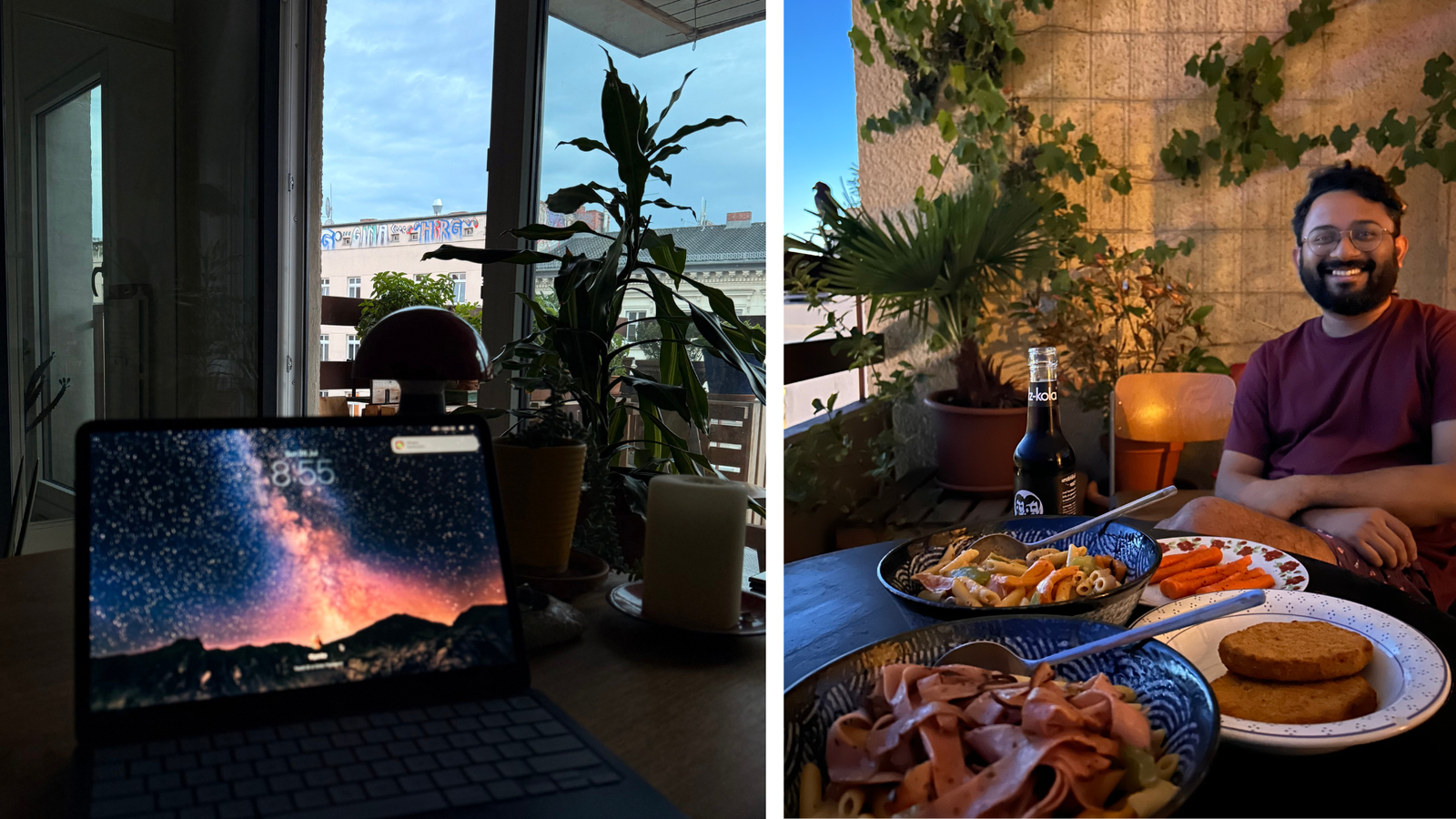
If you enjoy slow days, plan to work a bit while travelling, and prefer to enjoy some home-cooked meals, then Home Exchange would be ideal for you!
Is Home Exchange for Everyone?
A conversation with a friend a few days ago made me realise that Home Exchange can be a fantastic way to travel, but it isn’t necessarily for everyone. And that’s okay!
If you’re wondering whether Home Exchange would work for you, it helps to look beyond the savings and the excitement of staying in someone else’s home. The experience comes with a certain mindset, and some of its biggest advantages can also be the very things that make someone hesitate.
Here are a few things to think about before you take the plunge:
1. You want a spotless hotel and room service at your fingertips.
If your idea of a holiday involves a perfectly made bed, fresh towels every day, and calling reception whenever you need something, Home Exchange may not be for you.
This is more of a ‘home away from home’ experience than a hotel. You’ll make your own coffee, prepare breakfast, make your bed, and generally go about your day as you would at home. And there’s also a certain responsibility that comes with staying in someone else’s house. When you leave, you’re expected to leave the place more or less the way you found it — take out the rubbish, clean up after yourself, and make sure you haven’t left the home in a mess.
For me, that’s perfectly reasonable. But if you’re looking for a completely hands-off holiday, it might feel like an extra responsibility.
2. You’re travelling with young children and need kid-friendly facilities.
Travelling with children often comes with its own set of requirements. You might want a play area, a kids’ pool, a safe outdoor space, or simply a home that is designed with children in mind. With Home Exchange, you’ll need to look for the right home rather than expect these facilities as a given. I’d also recommend looking for hosts who have children themselves, as their homes may naturally be better equipped for families.
That said, if you find the right host and the right home, this can actually become a wonderful experience, especially if there are toys, books, or a child-friendly neighbourhood around.
3. You need complete flexibility.
Home Exchange involves several rounds of conversations and honest communication. You have to find a suitable home, check the dates, message the host, and wait for them to accept your request. Unlike a hotel booking, you can’t always decide at the last minute and expect a confirmation instantly. So, if you’re someone who loves spontaneous trips and last-minute bookings, you may find the process a little restrictive.
4. You’re not comfortable staying in someone else’s home.
This is perhaps the most important one. Even though the home is available for your stay, it is still someone’s personal space. There may be family photographs, books, plants, personal belongings, and all those little signs that someone actually lives there. If that feels intrusive or makes you uncomfortable, a hotel or conventional holiday rental may simply be a better fit.
5. You don’t want to host or share your own home.
Home Exchange works on the idea of reciprocity and community. While you don’t necessarily have to make a direct one-to-one swap, being willing to host others is an important part of the ecosystem. So before joining, ask yourself whether you’d genuinely be comfortable opening your own home to another traveller.
6. You expect every stay to look exactly like the photographs.
A Home Exchange property is not a hotel room, styled for photographs. It’s someone’s real home, which means it may have quirks, lived-in spaces and imperfections. That’s part of the charm, but it may not appeal to someone looking for a polished, predictable experience every single time.
So, if you want hotel-like service, complete predictability, and someone else taking care of every little thing, Home Exchange probably isn’t the right choice. But if you enjoy the idea of living like a local, having your own space, discovering neighbourhoods beyond the tourist centre and becoming part of a community of travellers, then Home Exchange could be a wonderful fit.
Frequently Asked Questions About Home Exchange
If you’re still wondering whether Home Exchange is really as simple as it sounds, here are some of the questions I had before trying it, along with what I learnt along the way.
1. Does Home Exchange only work through reciprocal exchanges?
Not really! Home Exchange uses GuestPoints, which makes things much more flexible. You can host someone, earn GuestPoints, and then use those points to stay at another member’s home. So, you don’t necessarily have to exchange homes with the same person.
I’ve listed my own home on the platform too, although I haven’t hosted anyone yet.
2. Why do I have to pay an annual membership fee?
The annual fee gives you access to the exchange system and, in my opinion, also creates a certain level of commitment within the community.
Think of it less as paying for accommodation and more as paying for access to a network of homes and travellers. Once you start comparing the membership fee with what you would normally spend on accommodation, especially in expensive cities, the economics become quite interesting.
3. Does Home Exchange only work in Europe?
No! They have homes listed across the world, including India. That said, Europe has a particularly large and active community, so you’ll find a huge number of options across European cities. There are also plenty of listings across destinations in Southeast and East Asia, including Thailand, Vietnam, Singapore, Hong Kong, and the Philippines. The availability will, of course, depend on your destination and travel dates.
4. Is Home Exchange the same as Airbnb?
Well, Airbnb is primarily a marketplace where you book accommodation, often from hosts who operate properties specifically for short-term rentals. With Home Exchange, you’re generally staying in someone’s actual home while they’re away or hosting you as part of the exchange community.
That means you may have fewer choices and less last-minute availability, but you also get a lived-in, well-equipped home in a real neighbourhood.
5. Can I use Home Exchange without listing my own home?
You can explore the platform before becoming a member, but to participate in exchanges, you’ll need to create a profile and list your home.
You’ll typically need to add photographs and information about your home and complete the platform’s verification process using documents that establish your connection to the property.
At first, I wondered why this was necessary. But it makes sense when you think about the model — everyone is part of the same community, and there needs to be some level of verification and accountability.
6. How early should I plan my Home Exchange stay?
The earlier, the better! Since you’re communicating directly with another person rather than instantly booking a hotel room, it’s useful to give both yourself and the host enough time to coordinate.
I actually finalised my Home Exchange stays only a couple of weeks before travelling. Thankfully, everything worked out beautifully, but I wouldn’t recommend leaving it that late if you have fixed dates or a specific location in mind.
7. Do I need to pay extra for cleaning?
Usually, the expectation is that you’ll leave the home clean and tidy, much like you would leave a friend’s house.
Before checking out, the basics include washing or putting used bed linen where the host has requested, taking out the rubbish, cleaning the dishes and utensils you’ve used, and leaving the bathroom in a clean condition. It’s always best to ask your host if they have any specific instructions — especially about laundry and waste disposal.
If a host expects you to pay a separate cleaning fee, make sure this is clearly communicated and agreed upon before the exchange is confirmed. There shouldn’t be any unpleasant surprises at checkout.
8. What if the home isn’t exactly what I expected?
This is where having realistic expectations helps! Remember, you’re staying in a real home, not a hotel room prepared specifically for paying guests. There may be personal belongings, quirks, or small imperfections. Before confirming an exchange, I’d recommend reading the listing carefully, looking at all the photographs and, most importantly, having a conversation with the host if you have any specific expectations or concerns.
9. Do I need to meet the host in person?
Not necessarily. Sometimes the host will meet you and hand over the keys; in other cases, a friend, neighbour or family member might help with check-in. Some homes may also have their own arrangements for accessing the property.
What matters is that you discuss the check-in process with your host beforehand so you know exactly what to expect when you arrive.
10. What if I’m a first-time member with no reviews?
Everyone has to start somewhere! When I was looking for my first stay, I made an effort to write thoughtful messages to hosts, introduce myself, explain why we were travelling, and tell them why I liked their home. Remember, you’re asking someone to trust you with their home. A genuine introduction can go a long way in making that first connection.
11. Is Home Exchange safe?
There is always some level of trust involved when you stay in another person’s home, and that’s precisely why communication and verification matter. Take the time to read the listing carefully, look at the host’s profile, communicate through the platform, and clarify anything that makes you uncomfortable before confirming a stay.
And perhaps most importantly, trust your instincts. If something doesn’t feel right, you don’t have to go ahead with the exchange.
12. Can I cancel an exchange after confirming it?
Plans can change, but cancellation policies and what happens to GuestPoints can depend on the circumstances and the platform’s current rules. So, before confirming an exchange, it’s worth understanding the applicable cancellation terms.
I’d also recommend having a backup plan if you’re travelling somewhere where alternative accommodation is expensive or difficult to find.
13. What should I remember before my first Home Exchange stay?
For me, it comes down to three things: communicate, respect, and manage your expectations.
Communicate with your host before you arrive. Respect the fact that you’re staying in someone’s personal space. And remember that Home Exchange isn’t designed to replicate a five-star hotel experience. It’s something quite different. You’re being welcomed into someone’s home, getting a glimpse of everyday life in another place and, hopefully, leaving with more than just a few nights of free accommodation.
Tags:
Share:



About Me
I travel to collect stories, slowly and meaningfully, with an open heart. I wander a little farther for good food, linger longer to understand a place, and write so I can call it “work.” A slow traveller at heart, I believe in experiences over checklists, in moments that unfold at their own pace, and in connections that stay long after the journey ends.
An absolute foodie and die-hard mountain lover, I find my happiest moments in quiet Himalayan towns with a cup of lemon-honey-ginger tea in hand. Over the years, I’ve had the joy of exploring places across India and beyond, each trip teaching me something new about people, cultures, and myself. When I’m not lost in thought or coffee, you’ll find me exploring the world one destination at a time, always looking for places that make me feel something. I love to read and write (give me a book and I’ll love you all the more) and share honest insights, real photos, and thoughtful recommendations from my own travels, so you can experience every place a little deeper, a little slower, and with just the right touch of comfort.
 Pinterest
  Linkedin
  MuckRack
Exploring The World, One Place At a Time!