72 Hours in Cairo, Egypt: A Travel Guide
72 Hours in Cairo can be surprisingly enriching, offering a deep dive into one of the world’s oldest and most captivating cities. In just three days, you can explore ancient wonders, wander through historic neighbourhoods, experience daily life along the Nile, and connect with a culture that feels both intense and welcoming.
Egypt has been on my bucket list for as long as I can remember. I was in the 4th standard when I first read about the pyramids and the pharaohs, and ever since then, Egypt has existed in my imagination as a land of sand, secrets, and ancient wonders. But when Sourav and I finally landed in Cairo, I realised how right Aldous Huxley was when he said, “To travel is to discover that everyone is wrong about other countries.”
Cairo turned out to be so much more than just the pyramids. It was layered, loud, soulful, and endlessly surprising. Every corner of the city seemed to hold a story, sometimes whispered through ancient walls, sometimes shouted over honking cars and bustling streets. It was magically chaotic and intensely packed, yet somehow deeply alive.
We had 72 hours in Cairo before flying onward to Aswan, and instead of rushing through a checklist of ‘things to do in Cairo’, we chose to slow down and truly soak in the beauty that lingered around us. Well, I have to admit that this trip became one of those rare experiences where everything, from culture, food, sunsets, and even Uber rides, felt like an essential part of the story we were living.
72 Hours in Cairo: Here’s how we spent 3 days exploring the Egyptian capital city
Day 1: Arrival in Cairo, Unwinding & Exploring Khan Al-Khalili Bazaar
It was afternoon when we landed in Cairo and took an Uber straight to our Airbnb in Zamalek. We chose to stay here, and it immediately felt like the right decision. Zamalek sits quietly in the middle of the Nile, away from the constant rush of the city. The streets are lined with trees, old villas, embassies, and small cafés. It is calm, walkable, and gives you room to breathe, which felt especially comforting after a long flight.
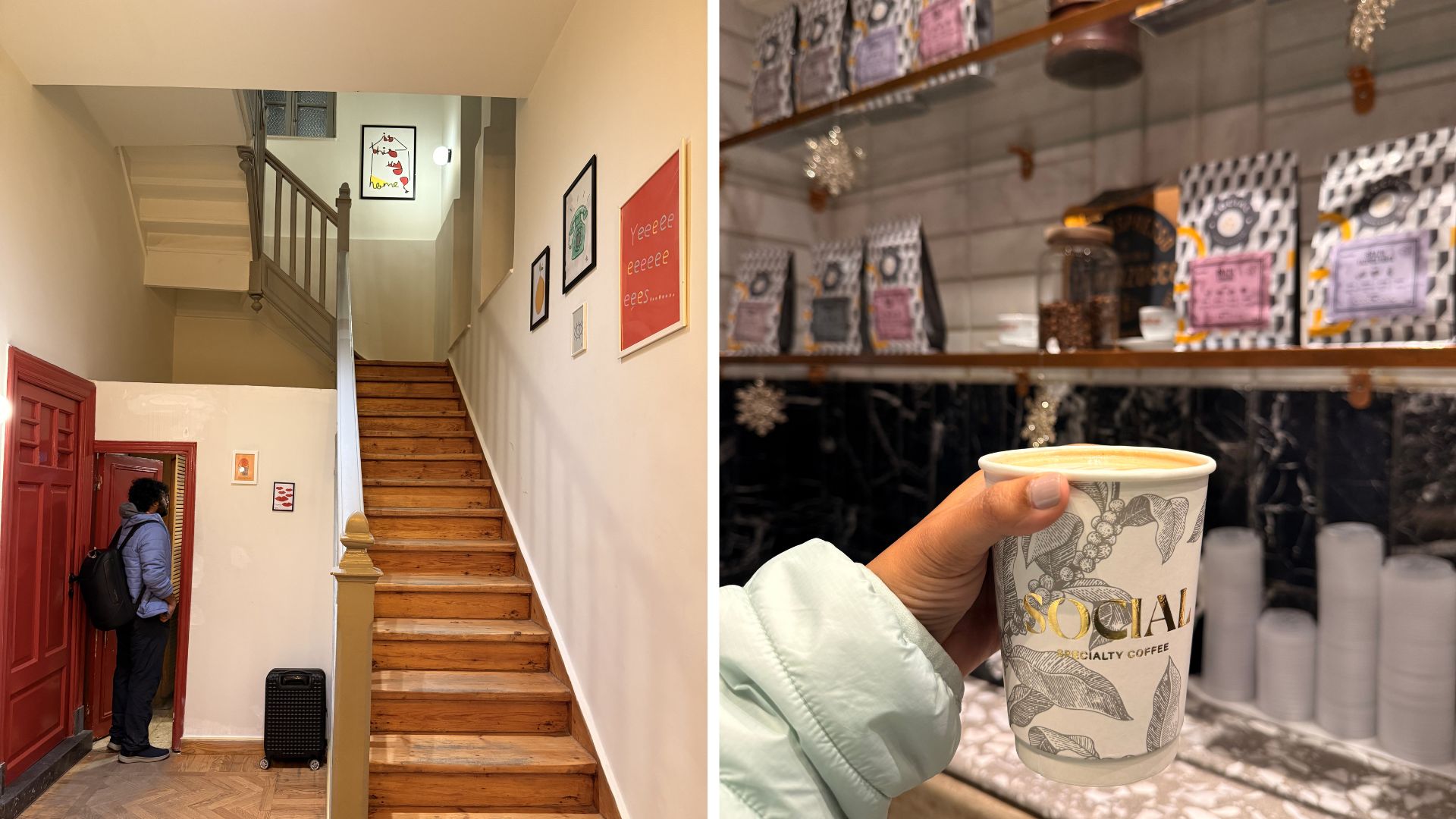
After dropping our bags, we headed straight to Social Coffee for a much-needed caffeine revival. As the sun began to set, we decided to take a short walk around the neighbourhood. Sitting at the café, sipping my hazelnut latte, Sourav looked up and found a guided walking tour hosted by GuruWalks. We decided to join it. After all, what better way to begin the trip than by exploring the city with a local?
We met Kamal, our guide, near Tahrir Square, a place that has witnessed some of Egypt’s most important moments in recent history. Known across the world for the 2011 revolution, the square today stands as a symbol of resilience and change, always alive with movement and stories.

From there, we walked towards Qasr El Nil Bridge, the first bridge built over the Nile. It was constructed between 1869 and 1871 and opened to the public in 1872. At one point, one of us asked Kamal how a civilisation that dates back more than 7,000 years never built a bridge before the 19th century, when colonisers arrived. He laughed and replied, “The Egyptians never needed a bridge. They could sail from the East Bank to the West Bank.”
The walk ended at the Nile Corniche, where we sat at a riverside café and simply slowed down. We reflected on the stories Kamal had shared, watching the river flow by and letting the city sink in.
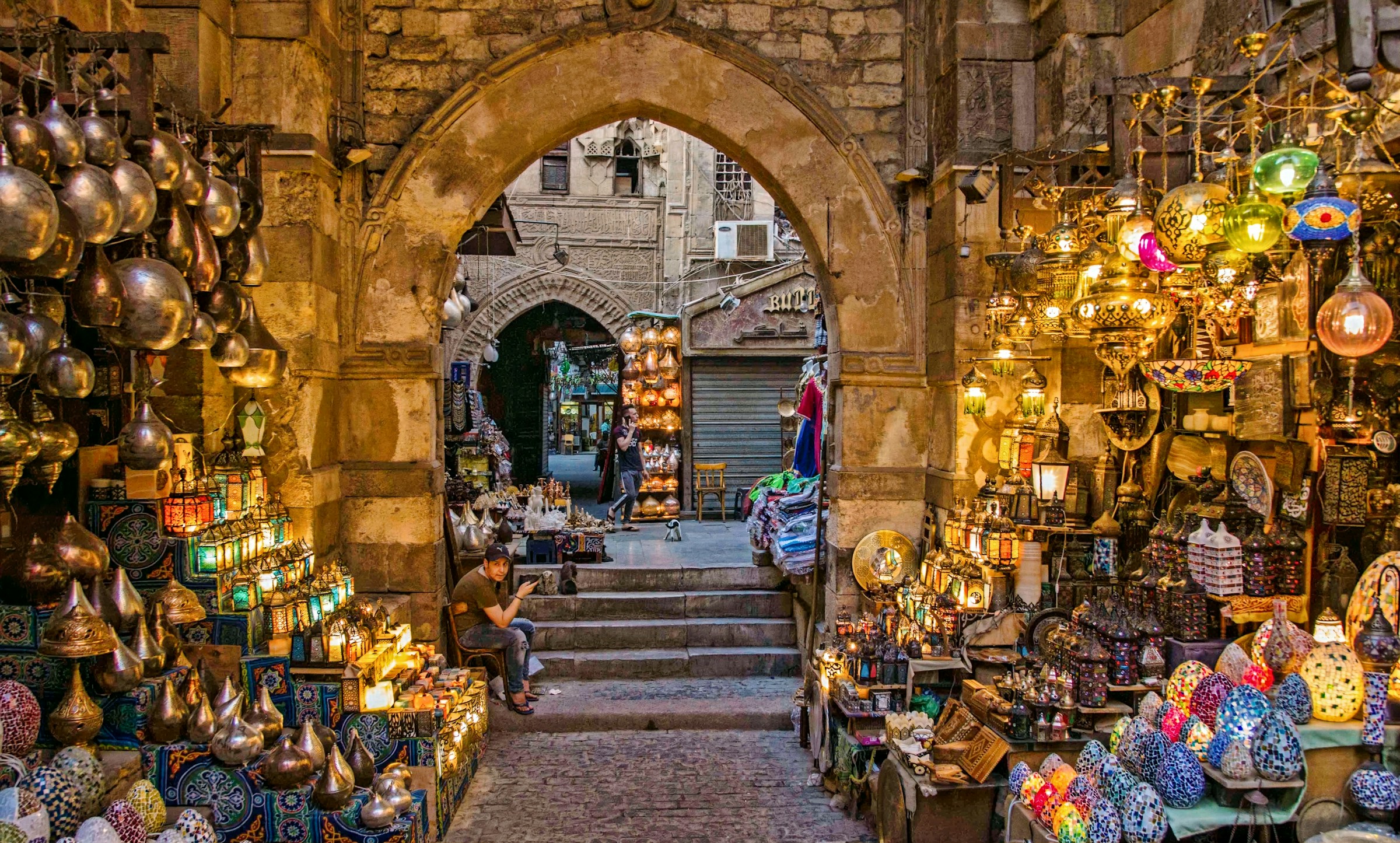
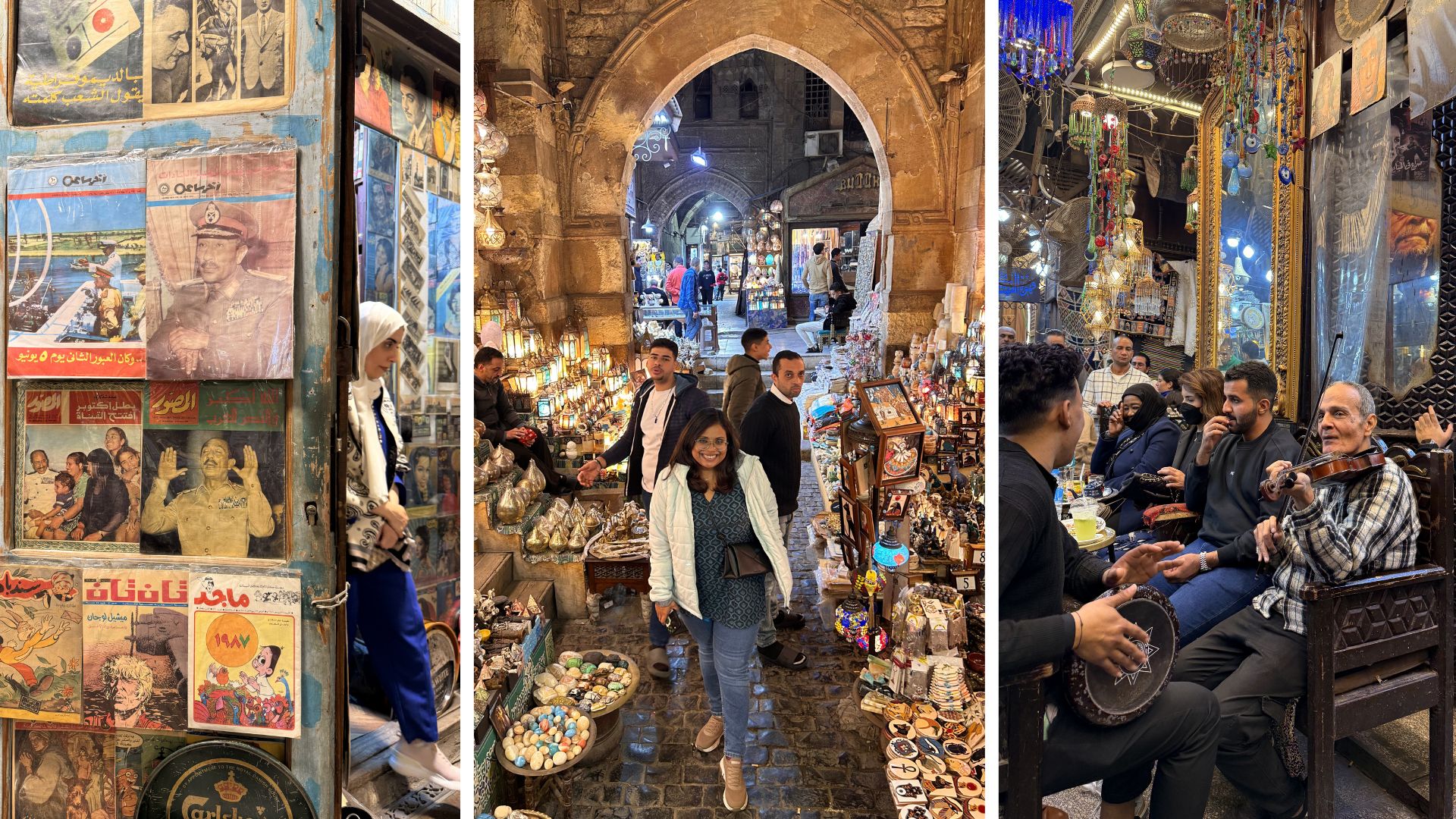
Later that night, we took an Uber to Khan Al-Khalili, one of the most bustling and popular bazaars in Cairo. It is a paradise for souvenir shopping, but we were not in the mood to shop on our first day. Instead, we wandered through the narrow lanes, admired the old shops, and soaked in the atmosphere. We stopped at the iconic Al Fishawy Café, where Sourav ended up joining the local musicians for a spontaneous jam session.
We grabbed a few snacks on the way back to the Airbnb around 11 PM. Cairo was still wide awake and buzzing, as if it were only early evening. By the end of the day, we realised that despite carrying thousands of years of history, this city is very much alive, energetic, and young at heart.
Day 2: Slow Mornings, Sacred Spaces, and Stories of Civilisation
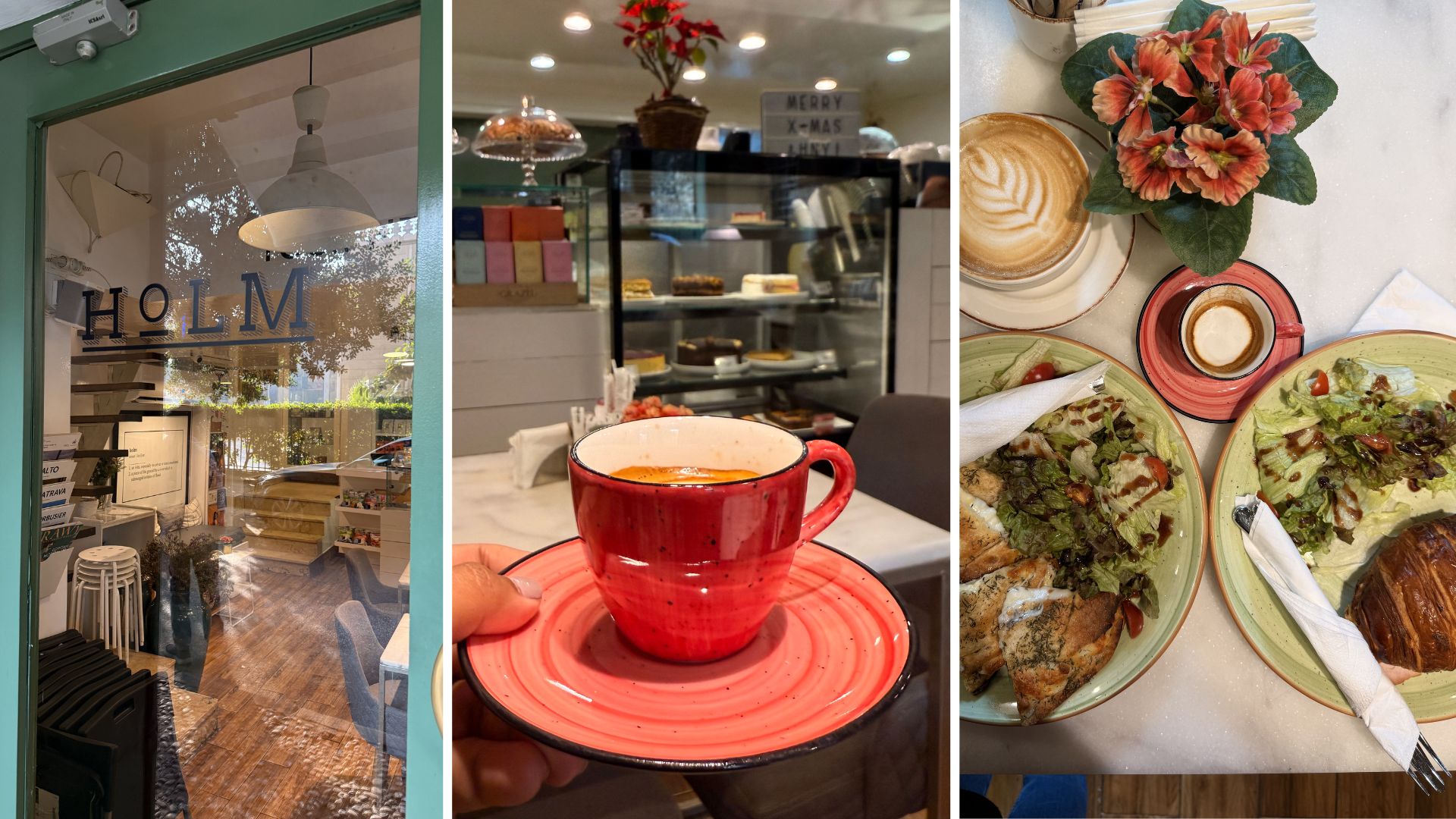
We started the day on a quiet note, walking through the lanes of Zamalek while the neighbourhood was still waking up. Shops were opening their shutters, cafés were setting up tables, and the streets felt unhurried. We stumbled upon a small, cosy spot called Holm Café and walked in for coffee. But once we looked at the menu, we were sold. What was meant to be a quick caffeine stop turned into a leisurely breakfast, and honestly, it was the perfect way to begin the day.
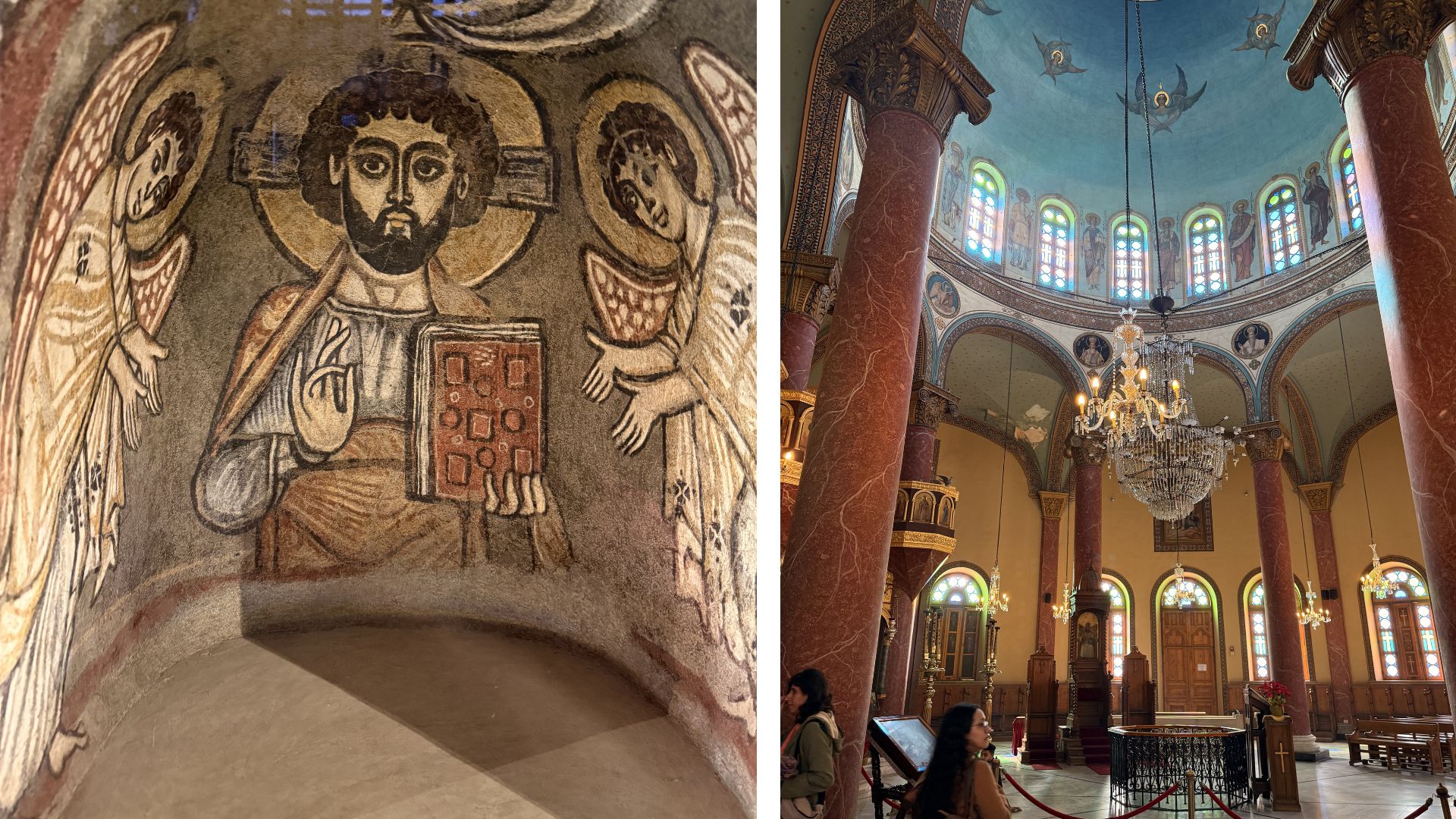
After a hearty meal, we headed to Coptic Cairo, one of the oldest and most spiritually rich parts of the city. Walking through this area feels very different from the rest of Cairo. The pace slows down, the streets narrow, and history feels close. What struck me most was how naturally Christianity is woven into Egypt’s story. Despite Egypt being a predominantly Islamic nation today, its Christian roots run deep. Churches, monasteries, and sacred sites have stood here for centuries, quietly preserving stories as old and meaningful as they are.
Here’s everything we explored, and I would recommend doing it in this order:
1. The Hanging Church
One of Egypt’s oldest churches, the Hanging Church, immediately feels special. Inside, you will notice beautiful wooden ceilings, ancient icons, and a sense of calm you do not expect in a city this loud. The church is built above the gate of a Roman fortress, which is exactly how it got its name.
2. Church of St. Sergius and Bacchus
This church truly moved us. It is believed to be the place where the Holy Family sheltered during their escape into Egypt. Inside, you walk down into a small crypt with low ceilings and soft light. The atmosphere feels deeply sacred, even if you are not religious.
3. Ben Ezra Synagogue
A beautifully restored synagogue with intricate details and a quiet presence. According to tradition, this is where baby Moses was found. It is a small space, but it speaks volumes about Cairo’s layered history and how different cultures and faiths have coexisted here.
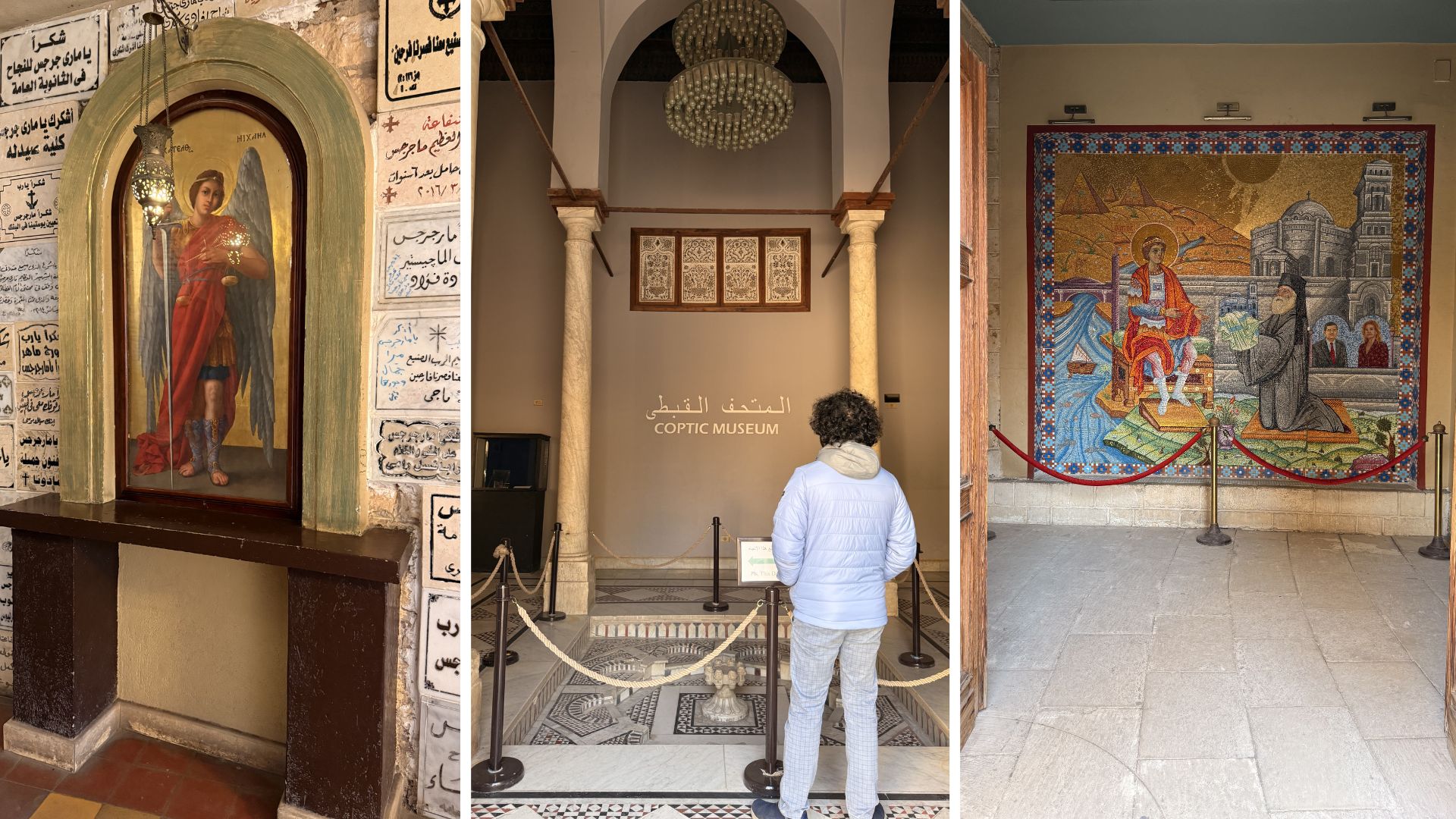
4. The Coptic Museum
The museum feels calm and unhurried, almost like a hidden retreat. It is filled with ancient manuscripts, art, textiles, carvings, and thoughtfully displayed artefacts. If you enjoy symbolism, history, or quiet museums, this place will resonate with you.
We spent several hours wandering through Coptic Cairo, taking in its timeless beauty and the feeling that history here has simply paused rather than passed. The area may be compact, but it is incredibly rich in stories, layers, and lived history, making it a beautiful and meaningful introduction to Cairo’s multicultural identity.
By the time we finished, we were starving. We headed straight to Koshary Abou Tarek, an absolute Cairo classic. Loud, crowded, and unapologetically authentic. We ordered their signature koshary, a comforting mix of rice, pasta, lentils, chickpeas, fried onions, spicy tomato sauce, and garlic vinegar. The best way to eat, as they told us, was to mix everything together and eat it all at once! It is simple, filling, and hits differently when you are this hungry!
Travel tip: This is a must-eat, but go with an empty stomach!
After lunch, we made our way to the National Museum of Egyptian Civilisation (NMEC). It is one of the best museums in Cairo, especially for those who want to get a glimpse of the history of this country over the centuries! Well, what stood out for me the most was the Royal Mummies Hall. You walk down into a dim, hushed space, and suddenly, you are face-to-face with history in the most real way possible.
I never imagined I would actually stand there, looking at the mummies of Ramses II, Hatshepsut, and others, not in a textbook or a documentary, but in real life. Learning about the entire mummification process while being so close to these figures made the experience even more powerful. It was quiet, humbling, and deeply surreal, one of those moments that stays with you long after you leave the room.
The Civilisation Galleries take you through Egyptian history chronologically, from prehistoric tools to pottery, jewellery, textiles, and objects from daily life. The museum is modern, clean, and thoughtfully curated, making it far less overwhelming than many other museums in the city.
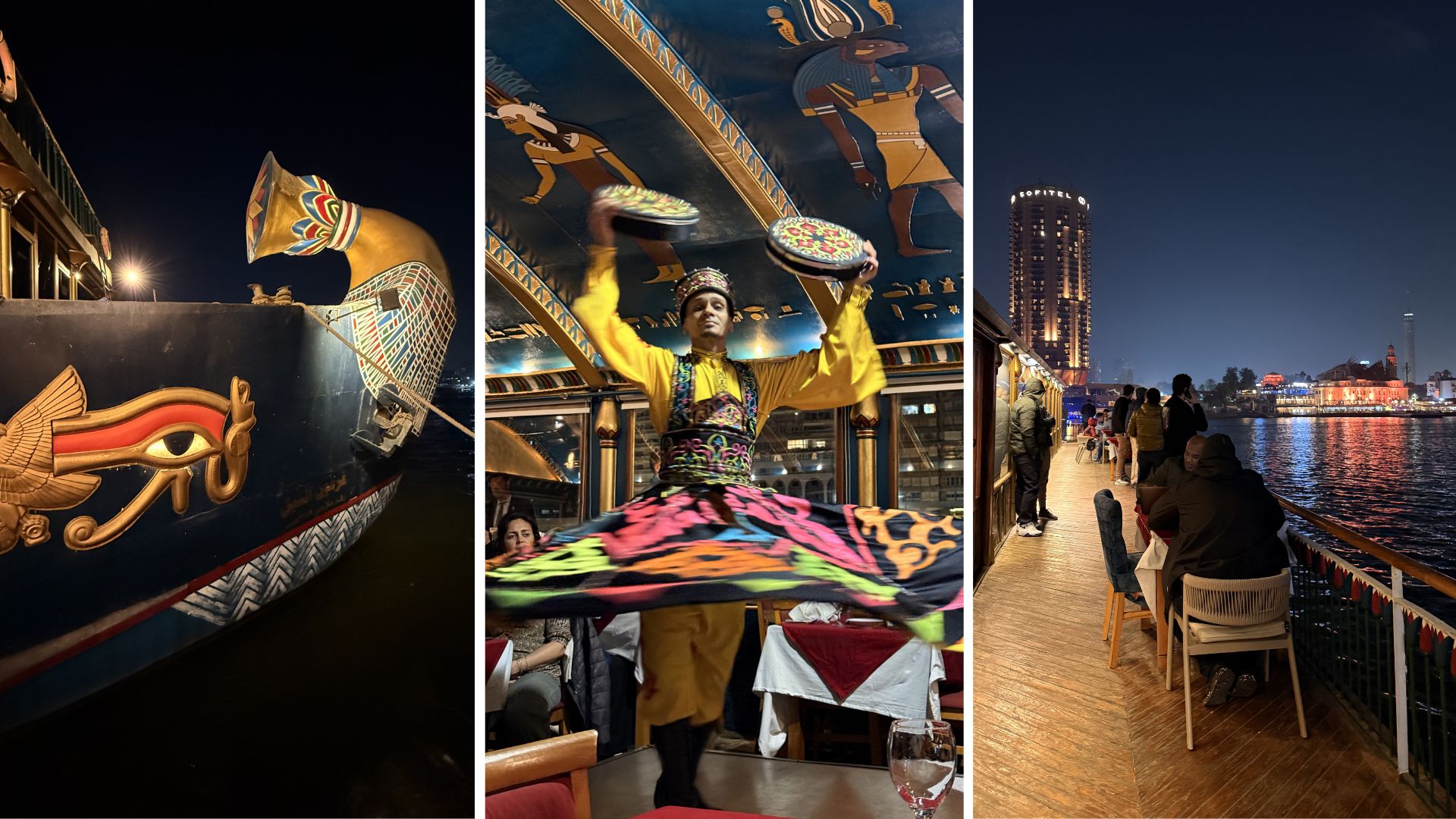
We ended the day with a Nile dinner cruise, which turned out to be incredibly relaxing. Watching Cairo glow at night as the boat slowly moved along the river felt almost magical. The cruise was organised for us by EgyptAir. It was an absolute delight, and the perfect way to end the day. The food was genuinely good, with plenty of variety, and the whole experience felt incredibly soothing after hours of walking and exploring. As the boat glided along the river, the breeze on the deck, the lights of the city, and the gentle rhythm of the Nile made everything slow down.
It was exactly what we needed after a full day of wandering, a calm and beautiful pause before calling it a night.
Day 3: The Grand Egyptian Museum and the Pyramids of Giza
And finally, it was time for us to explore GEM, the Grand Egyptian Museum, known as the largest museum in the world dedicated to a single civilisation. Walking into the museum, you immediately feel the scale of it. Everything is vast, thoughtfully designed, and intentional. Built on the Giza Plateau, the museum sits right on the edge of ancient history, almost as if it is meant to gently lead you from the modern world into the ancient one.
The idea for the Grand Egyptian Museum was first announced in the early 1990s, and the foundation was laid in 2002. It has been a long, ambitious project, and being there in person made me appreciate just how monumental it is. The museum is part of a larger vision to transform the entire Giza area and make it more accessible to travellers, while still respecting its historical significance. Even though not all galleries were open when we visited, the experience already felt world-class. It is designed to hold millions of visitors every year, yet the spaces feel open, calm, and never overwhelming.
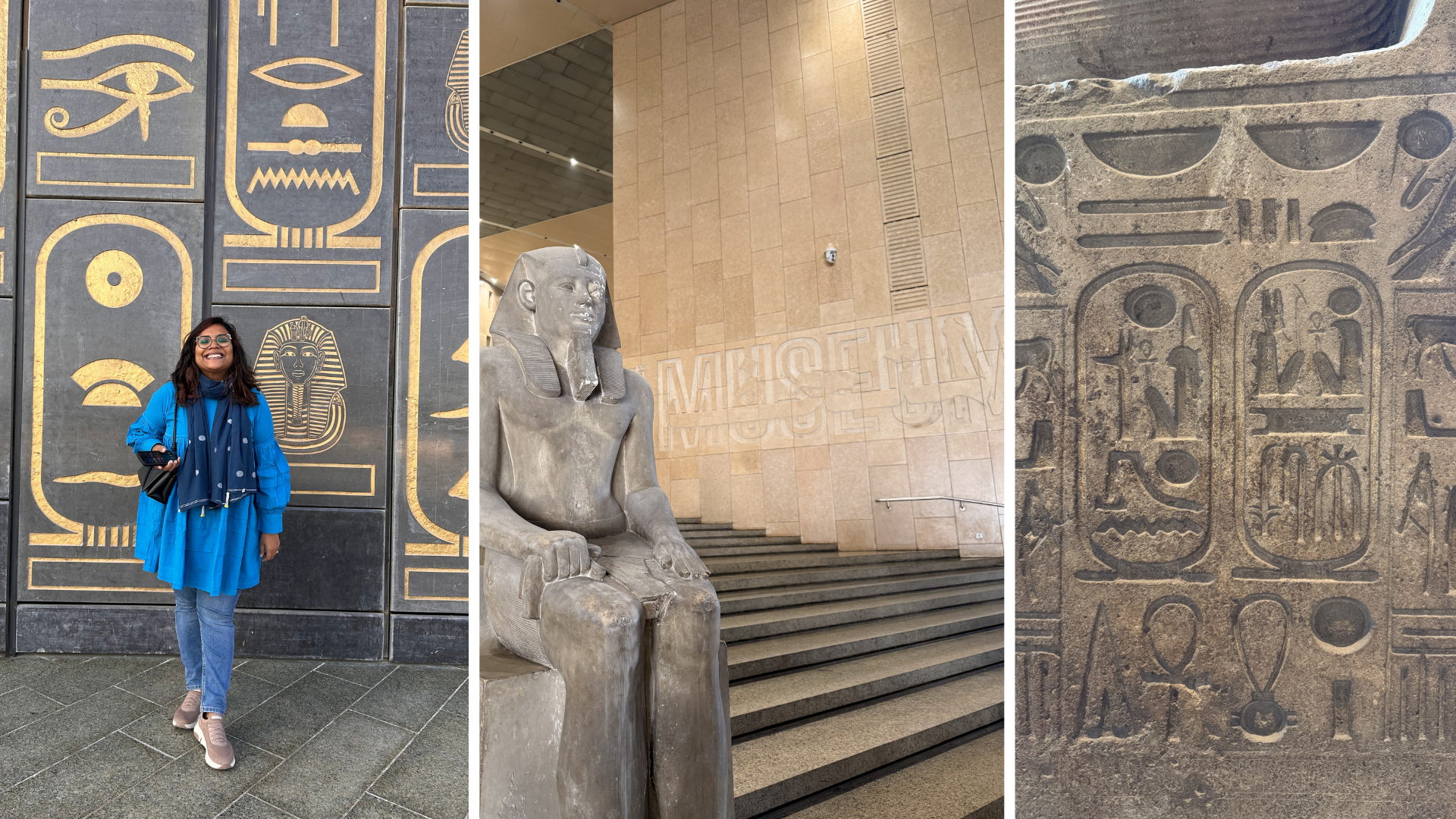

While walking from one section to another inside the museum, I suddenly took a pause. Through the glass, I could see them! The Pyramids of Giza, standing quietly in the distance!
It was my first real glimpse of them. Everything I had read about in history books as a child suddenly became real, and I found myself giggling like a very happy kid. It was one of those moments that catches you completely off guard.
It took us nearly 4 hours to explore GEM, even though not all the galleries were yet functional. After that, we headed to the food court and grabbed a meal from Zooba, which I would absolutely recommend. Zooba is known for giving a modern twist to Egyptian street food, without losing its soul. From taameya and koshary-inspired bowls to fresh breads and flavorful dips, everything felt familiar yet elevated. It was delicious, filling, and exactly what we needed before heading out again.
Note: The entry ticket to GEM costs 1200 EGP for international adults and 600 EGP with a valid student ID.
From GEM, we took a cab straight to the Pyramids of Giza. Even while sitting in the car, we could see the towering structures from a distance, slowly growing larger as we got closer. And then suddenly, we were there. Built more than 4,500 years ago, the pyramids are the only surviving wonder of the ancient world. Standing in front of them, and looking up, is something no words can truly capture! They are massive, silent, and powerful, and they make you feel incredibly small in the best possible way.
We walked around the complex, taking in the Great Pyramid of Khufu, the Pyramid of Khafre, and the Pyramid of Menkaure, before making our way to the Sphinx. Seeing it in person was absolutely surreal. Weathered by time yet still commanding, the Sphinx feels like a quiet guardian, watching over the plateau as it has for thousands of years.
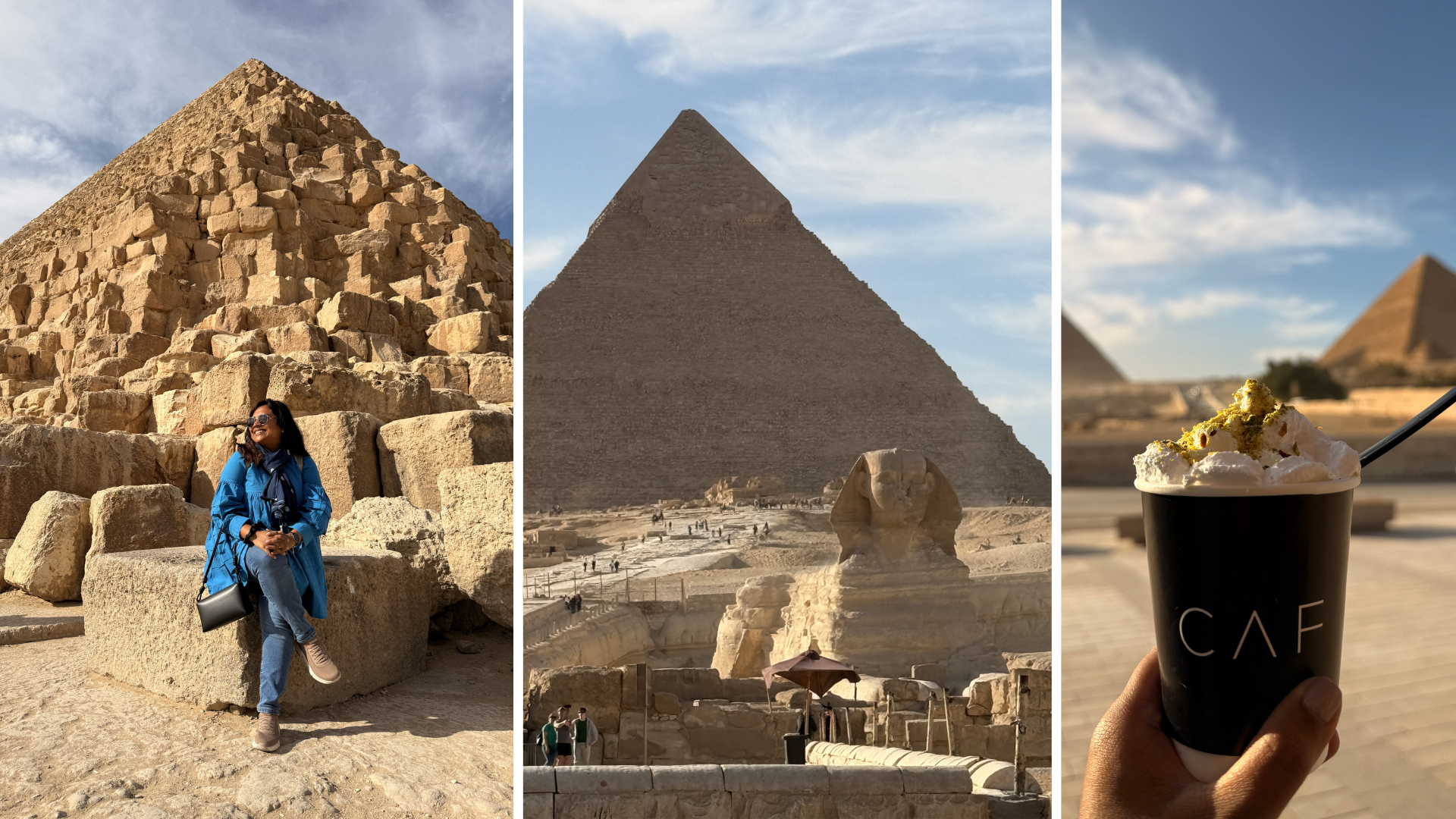
By the time we finished exploring, it was around five in the evening. While exiting, I noticed a crowded café near the gate, and we decided to walk in. I am so glad we did, because that is where I had one of the most delicious drinks I have ever tasted. It was a pistachio sahlab, a warm, milk-based drink popular in Egypt. Comforting, rich, and unforgettable.
Note: The café is called CAF, and if you are visiting the pyramids, you must stop and try it.
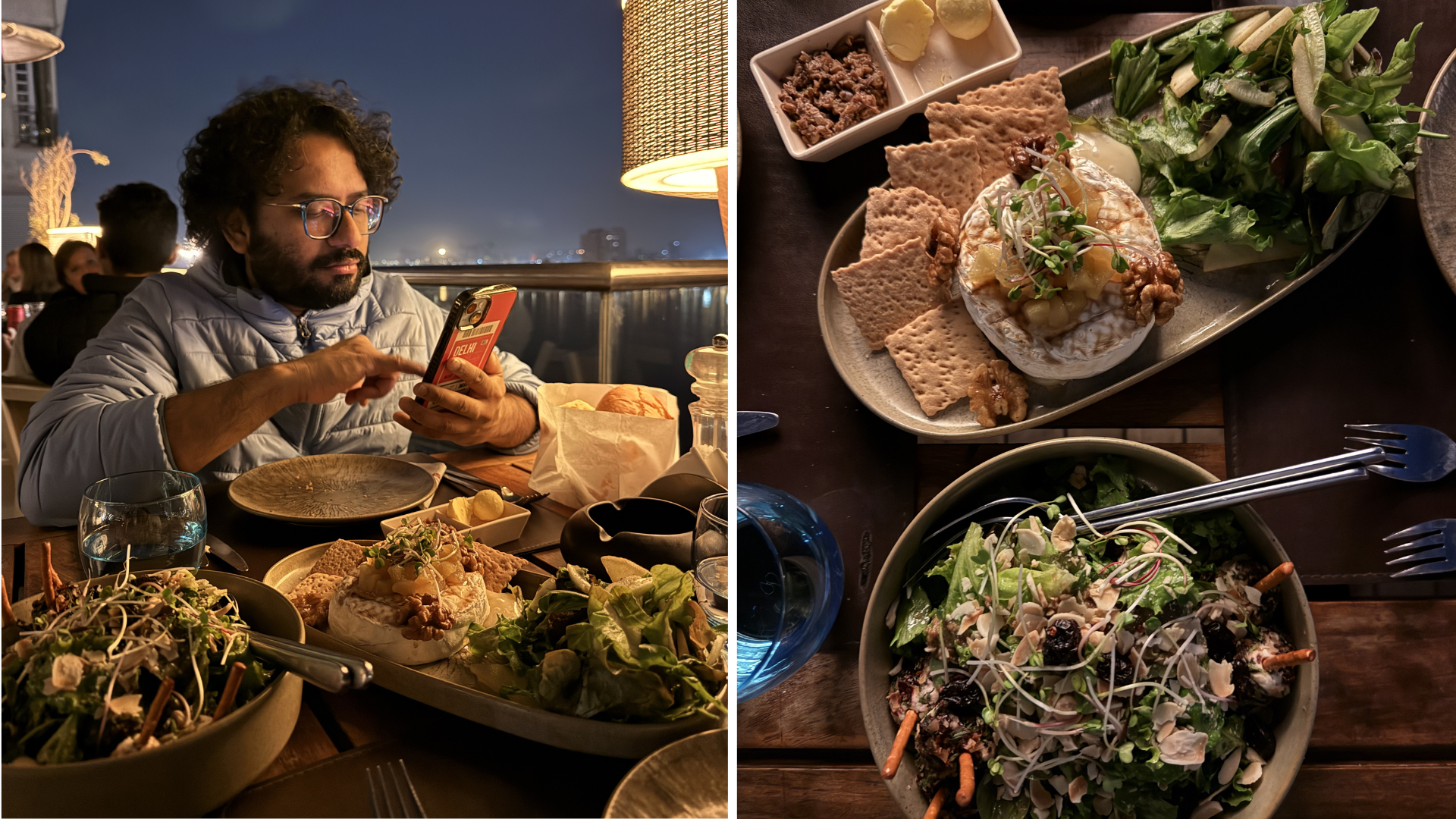
We took an Uber back to Zamalek as the city lights slowly came on. For our final dinner in Cairo, we headed to Crimson Bar and Grill, a beautiful rooftop restaurant overlooking the Nile. Great food, soft lighting, and breathtaking views of the river made it the perfect way to end our time in the city.
The Last Leg Before Flying Off to Aswan
We had an afternoon flight to Aswan, which meant the morning was still ours. We stepped out for a walk, and this time, the lanes of Zamalek felt familiar, almost comforting. What had felt new and unknown just a couple of days ago now felt like a neighbourhood we knew!
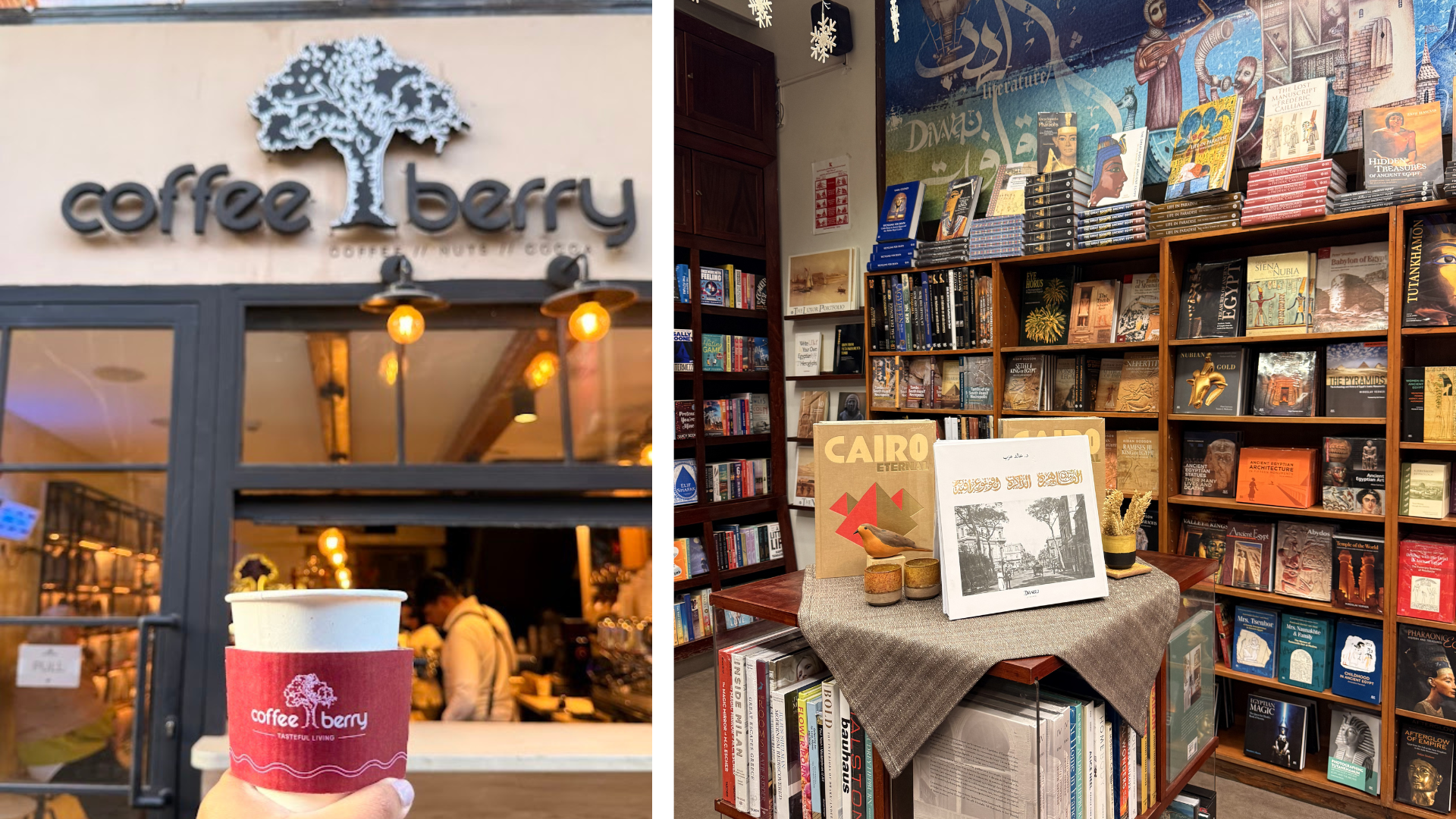
We stopped at Coffee Berry for coffee and took our time there, soaking in the slow morning. Just across the road, we noticed a beautiful bookstore and naturally walked in. We spent a while browsing through shelves, discovering books by local authors and flipping through titles that told stories of Egypt beyond the tourist lens.
Note: If you are a book lover, Diwa in Zamalek is a place you absolutely must visit.
Soon enough, it was time to head to the airport. As we made our way there, it hit us how quickly the last 72 hours in Cairo had flown by. We knew Cairo would be fascinating, but we never imagined just how much it had to offer. Once again, Aldous Huxley’s words felt true. There was so much left unseen, so many museums and stories waiting.
As we left the city, I already knew I wanted to come back and spend more time uncovering everything we had missed.
Frequently Asked Questions About Travelling to Cairo
1. Is Cairo safe for tourists?
Yes, Cairo is generally safe for tourists, especially in popular areas like Zamalek, Downtown Cairo, Giza, and Islamic Cairo. We relied on Uber for getting around and felt comfortable throughout our stay. As with any large city, staying aware of your surroundings and keeping personal belongings secure in crowded areas is important.
Also Read: Is Egypt Safe to Travel? Here’s All You Need To Know About Travelling to Egypt
2. When is the best time to visit Cairo?
The best time to visit Cairo is between October and April, when temperatures are cooler and ideal for sightseeing. This period is perfect for exploring outdoor sites like the pyramids and for spending long hours inside museums.
3. How many days are enough for Cairo?
To experience Cairo properly, plan for at least 3 to 4 days. We spent around 72 hours and covered the highlights, but the city offers far more, especially for museum lovers. But I would definitely recommend spending around 6 days in Cairo, if possible.
4. What are the best areas to stay in Cairo?
Some of the best neighbourhoods to stay in Cairo include:
Zamalek, because it’s quiet, green, and centrally located
Downtown Cairo is ideal for history lovers and budget travellers
Giza is best for pyramid views and proximity
We stayed in Zamalek, which is particularly great for first-time visitors.
5. What are the best museums to visit in Cairo?
Cairo has one of the richest museum scenes in the world. Some of the best museums to visit include:
The Egyptian Museum in Tahrir Square
The Coptic Museum
Museum of Islamic Art, one of the most important Islamic art collections globally
Gayer-Anderson Museum, a beautifully preserved historic house near Ibn Tulun Mosque
Abdeen Palace Museum, showcasing royal collections and Egypt’s modern history
Manial Palace Museum, offering insight into royal life with stunning architecture
If you are short on time, GEM and NMEC should be your top priorities.
6. Is the Grand Egyptian Museum worth visiting?
Yes, absolutely! The Grand Egyptian Museum is one of the world’s largest museums dedicated to a single civilisation. Even when some galleries are not fully open, the scale, architecture, and exhibits make it a must-visit.
7. Do you need a guide to explore Cairo?
While it is not mandatory, having a guide can greatly enhance your understanding of Cairo’s layered history. Walking tours and museum guides offer valuable cultural context.
If you are planning a trip to Egypt, I’ve created a complete itinerary to help you make the most of your time and create incredible memories. You can download the Egypt itinerary for FREE, and thank me later!
Disclaimer: This post contains a few affiliate links. If you click any of them and make a purchase, I might earn a small commission at no extra cost to you. Just know that I truly appreciate your support if you choose to do so.
Tags:
Share:


About Me
I travel to collect stories, slowly and meaningfully, with an open heart. I wander a little farther for good food, linger longer to understand a place, and write so I can call it “work.” A slow traveller at heart, I believe in experiences over checklists, in moments that unfold at their own pace, and in connections that stay long after the journey ends.
An absolute foodie and die-hard mountain lover, I find my happiest moments in quiet Himalayan towns with a cup of lemon-honey-ginger tea in hand. Over the years, I’ve had the joy of exploring places across India and beyond, each trip teaching me something new about people, cultures, and myself. When I’m not lost in thought or coffee, you’ll find me exploring the world one destination at a time, always looking for places that make me feel something. I love to read and write (give me a book and I’ll love you all the more) and share honest insights, real photos, and thoughtful recommendations from my own travels, so you can experience every place a little deeper, a little slower, and with just the right touch of comfort.
 Pinterest
  Linkedin
  MuckRack
Exploring The World, One Place At a Time!