
An Honest Travel Guide to Poland For Indian Travellers
Poland might not be your first choice when planning a trip to Europe, but if you’ve already explored countries like France, the Netherlands, Italy, Spain, and Switzerland, perhaps it’s time to consider Poland too. I find it to be one of the most underrated countries on the continent, and this travel guide to Poland has everything you’ll need to plan your trip.
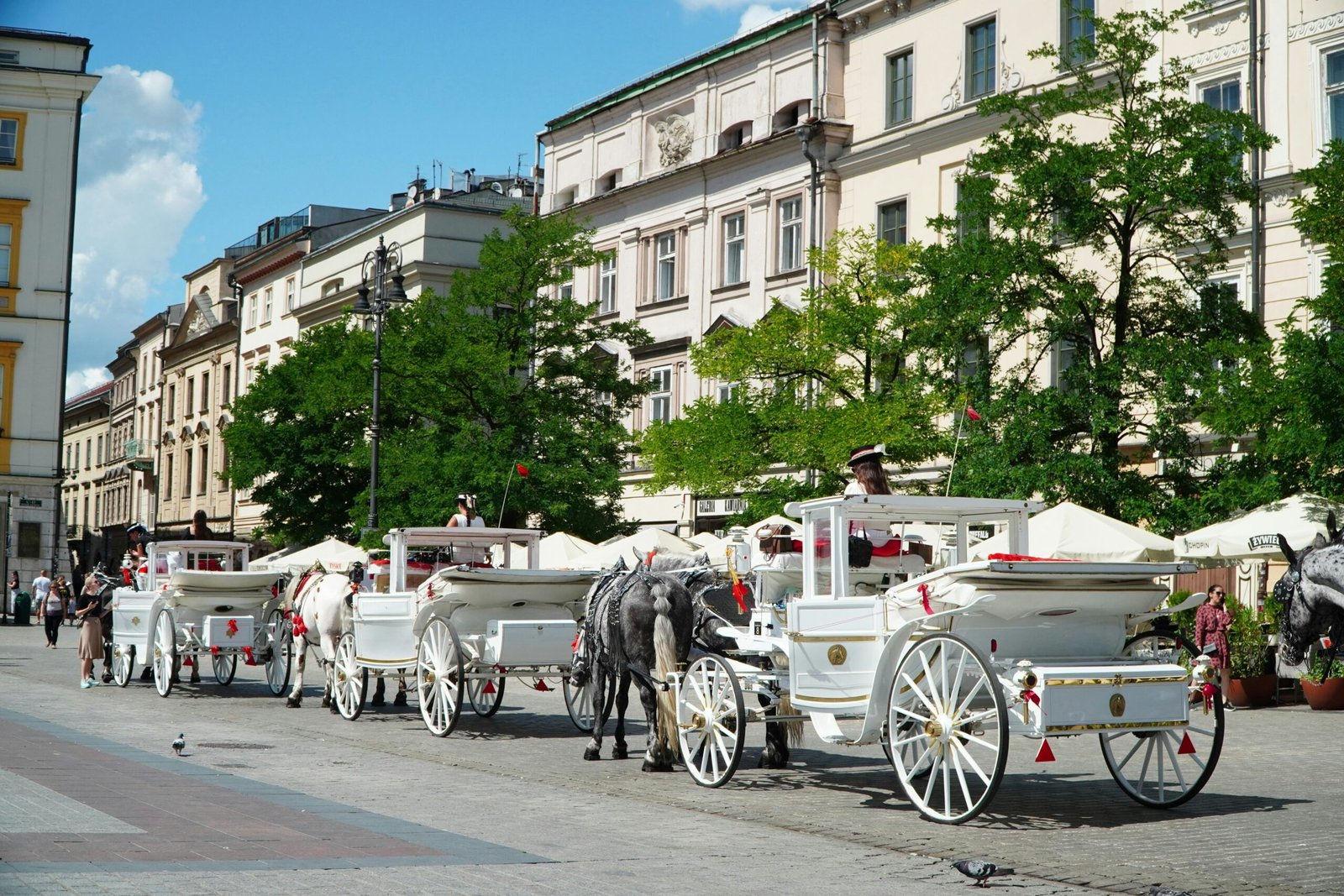
A summer afternoon in the Old Town of Kraków, Poland.
From the colourful medieval squares of Kraków and Wrocław to the grand streets of Warsaw, the Baltic charm of Gdańsk, the charming squares of Poznań, and the mountains of Zakopane, Poland brings together centuries of history, beautiful architecture, hearty food, lively cities, and landscapes that deserve far more attention. There is also something wonderfully unpolished about travelling through Poland, as you can move beyond the obvious sights and still find plenty of stories waiting around the corner.
Having travelled through Poland, I found myself wondering why it doesn’t feature more often on European itineraries. Perhaps that’s exactly what makes it so appealing. If you’ve already ticked off some of Europe’s more obvious destinations, or simply want to experience a side of Europe that feels a little less predictable, Poland is well worth adding to your list.
How to get a visa to travel to Poland?
Poland is part of the Schengen Area, so Indian travellers need a Schengen short-stay visa (Type C) for tourism. Applications are submitted through VFS Global, the official visa application partner of the Embassy of Poland in India. You can apply up to six months before your planned trip.
For a tourist visa, you’ll generally need:
- A valid passport with at least two blank pages and validity extending at least three months beyond your intended departure from the Schengen Area
- Completed and signed Schengen visa application form
- Recent passport-sized photograph
- Cover letter explaining the purpose and duration of your trip
- Proof of accommodation
- Flight itinerary and, where applicable, internal travel reservations
- Travel medical insurance with minimum coverage of €30,000
- Proof of sufficient funds, including recent bank statements and income-tax documents
- Proof of employment or other evidence of professional status
- A clear travel itinerary showing your plans in Poland and other Schengen countries, if applicable
You will also need to submit your application in person and provide biometric data, unless you qualify for an applicable exemption. The standard processing time is 15 calendar days, although it can take up to 45 days in some cases.
Tip: Don’t wait until the last minute to apply. Visa appointments and processing times can vary, so it’s best to start the process well ahead of your planned trip.
How many days do you need to see Poland?
If you’re travelling to Poland from India, I’d recommend keeping at least 7–10 days to get a feel for the country. That gives you enough time to combine two or three cities without spending your entire trip rushing from one train station to another. A week could work well for Warsaw and Kraków, with a day trip thrown in, while 10 days or more allows you to explore a little deeper.
I spent two weeks in Poland, travelling through five cities: Poznań, Wrocław, Toruń, Kraków, and Warsaw. It was a fairly packed itinerary, but it also gave me a glimpse of how wonderfully different each city can be. From Poznań’s charming old town and Wrocław’s colourful architecture to the medieval streets of Toruń, the historic heart of Kraków and the modern energy of Warsaw, two weeks felt like a good introduction to the country.
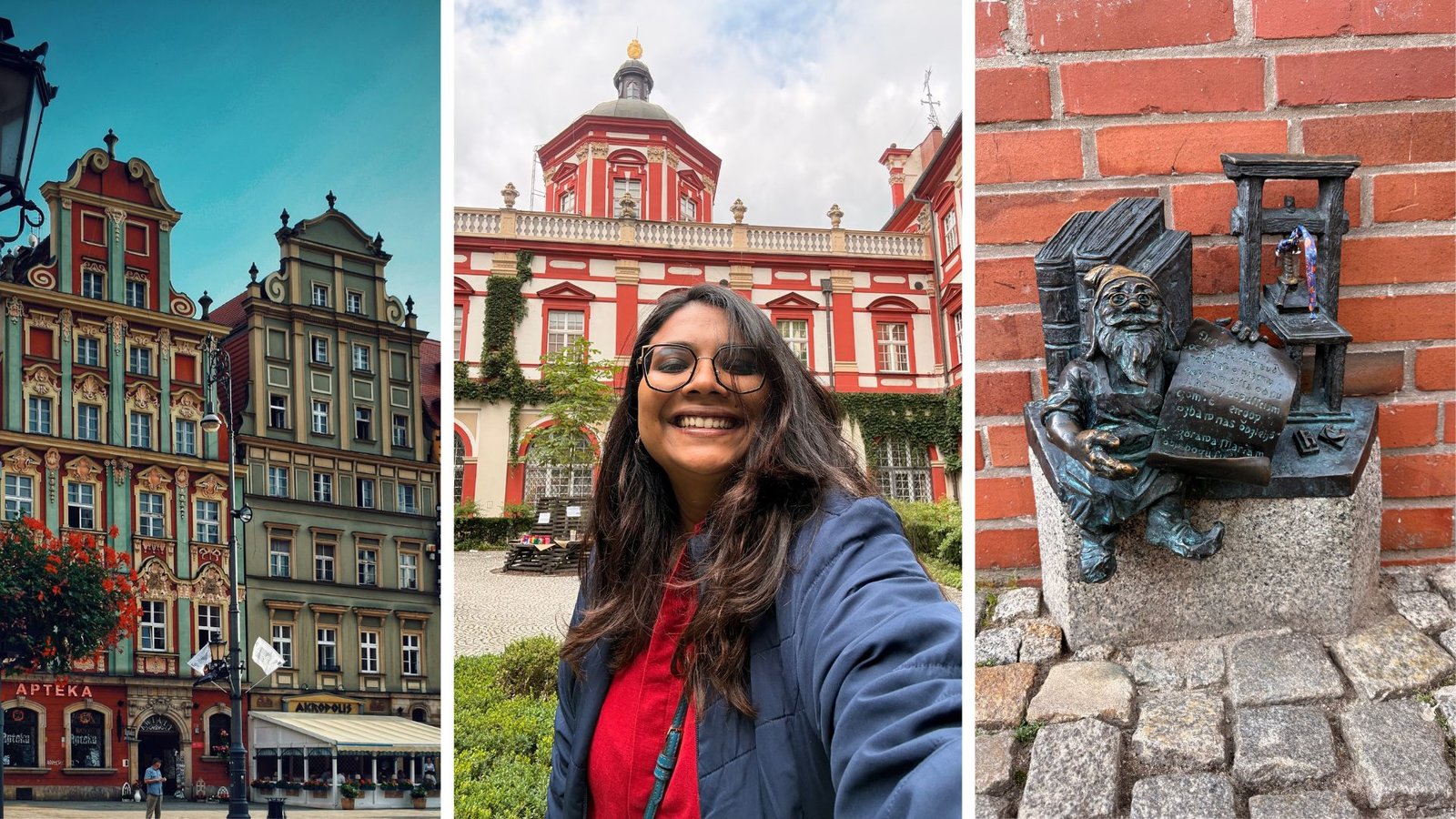
Exploring Wrocław.
If it’s your first trip to Poland and you’re short on time, I’d suggest starting with Kraków and Warsaw. But if you have two weeks or more, don’t be afraid to venture beyond the usual tourist trail. Poland rewards slow travel, whether that means heading into the Tatra Mountains, exploring the Masurian Lake District, or making your way north to the Baltic coast and cities like Gdańsk. And honestly, however many days you spend here, Poland will probably leave you with a list of places for your next trip, like it did to me!
What is the best time to visit Poland?
The best time to visit Poland is between May and September, when the days are longer, the weather is pleasant, and you can comfortably explore the country’s cities and countryside. July and August are the warmest months and also the busiest, but they are a great time for sightseeing, outdoor activities, and exploring Poland’s Baltic coast.
I visited Poland in July, and found the weather particularly lovely. The days were warm and bright without being unbearably hot, while the evenings were noticeably cooler and pleasantly comfortable. It was perfect for spending long days wandering through old towns, sitting at outdoor cafés, and exploring the cities on foot.
That said, Poland experiences all four seasons, and each has its own charm. Spring (April–May) brings milder temperatures and blooming parks and gardens, although rain is common. Autumn (September–October) is a beautiful shoulder season, with fewer crowds and cooler weather, while winter (December–February) brings Christmas markets, snow and skiing in the mountains.
If you’re travelling from India, I’d personally recommend May–June or September for a good balance of comfortable weather, fewer crowds and potentially better prices. But if you enjoy long summer days as I do, July is a wonderful time to experience Poland.
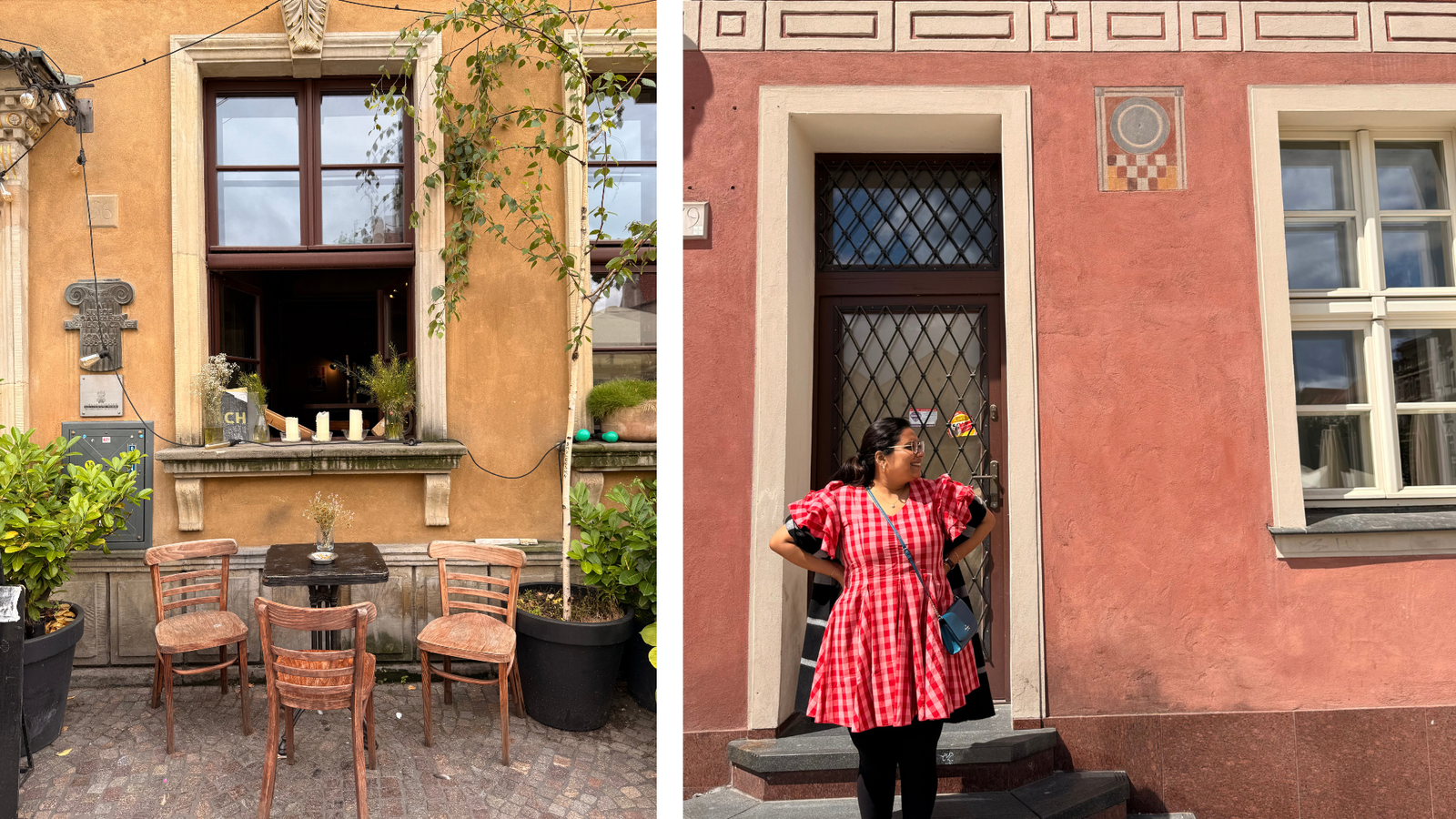
The gorgeous walls of Poznań!
Which cities should you consider while planning a trip to Poland?
One of the things I loved about travelling through Poland was discovering how different its cities feel from one another. While Kraków and Warsaw are usually the first names that come up when planning a trip to Poland, there is so much more to explore beyond these two.
If you’re planning your first trip, here are some of the best cities to add to your Poland itinerary:
- Kraków: Well, I think Kraków is perhaps Poland’s most atmospheric city, where medieval architecture, centuries-old history and a lively café culture come together beautifully. The UNESCO-listed Old Town revolves around the magnificent Rynek Główny, one of Europe’s largest medieval squares, while the imposing Wawel Castle rises above the Vistula River nearby. Spend an afternoon wandering through Kazimierz (the city’s historic Jewish quarter), where synagogues, atmospheric courtyards, independent cafés, bars and restaurants tell stories of Kraków’s rich and complex past. Kraków is also an excellent base for exploring some of southern Poland’s most significant attractions, including the Auschwitz-Birkenau Memorial and Museum and the Wieliczka Salt Mine.
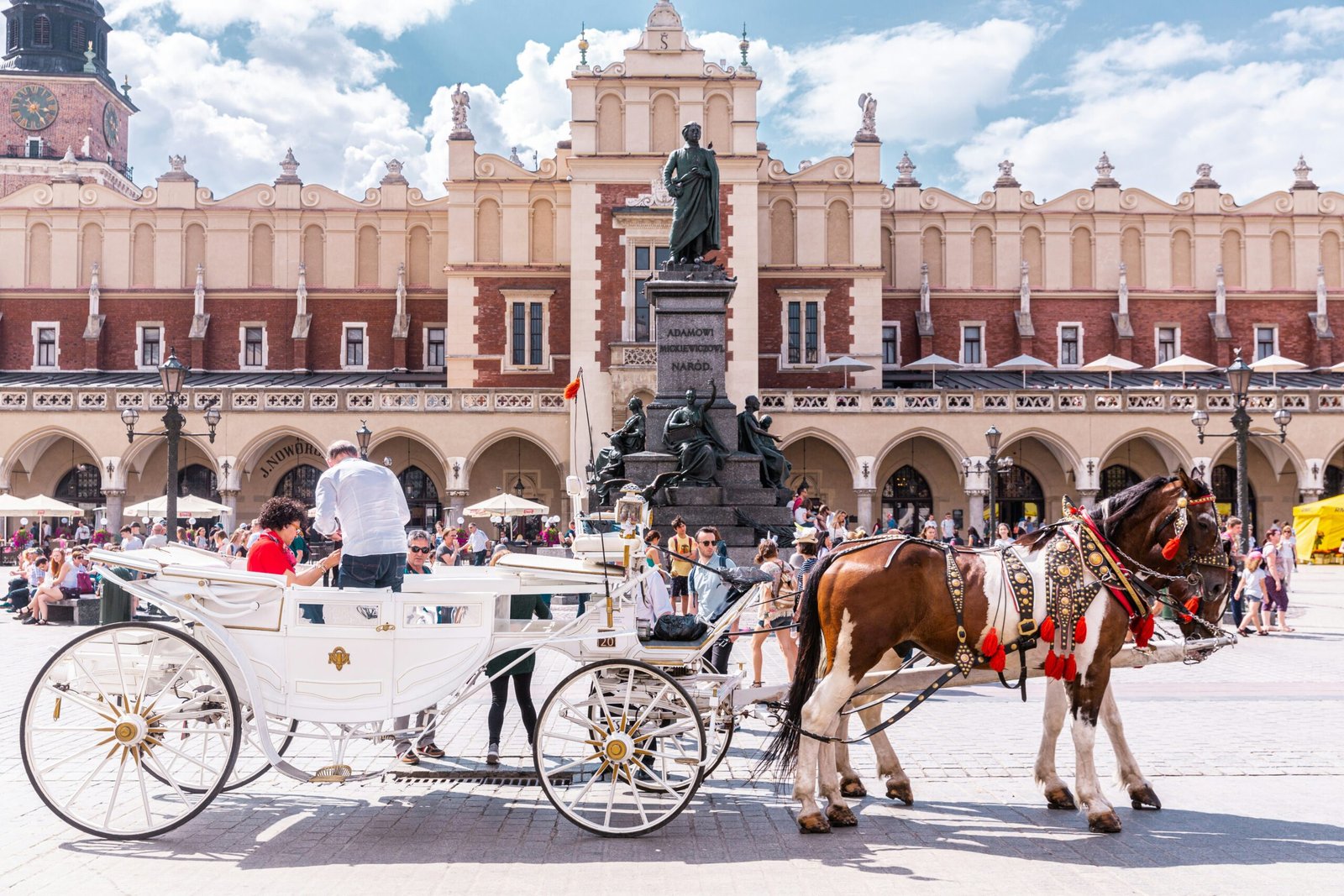
Another day in the Old Town of Kraków, Poland. - Warsaw: Warsaw, Poland’s energetic capital, is a city where the past and present exist side by side. Its beautifully reconstructed Old Town, with colourful townhouses, cobbled streets and the impressive Royal Castle, offers a glimpse into the city’s historic heart, while modern skyscrapers and contemporary neighbourhoods reflect Warsaw’s remarkable transformation. Spend time exploring its excellent museums, leafy parks, riverside promenades and lively cafés and restaurants. What makes Warsaw particularly fascinating is the story behind its reconstruction – the city was almost completely destroyed during World War II and rebuilt with remarkable attention to its historic character.
- Wrocław: Wrocław was one of my favourite stops in Poland, and it’s the kind of city that rewards you for slowing down and simply wandering. Its beautiful Market Square (Rynek) is lined with colourful historic buildings, cafés and restaurants, while the city’s many bridges and islands give it a wonderfully picturesque setting along the Oder River. But perhaps the most charming thing about Wrocław is its famous dwarfs, hundreds of tiny bronze figures tucked away on pavements, outside shops, and around unexpected corners. Hunting for them almost becomes a little treasure hunt as you explore the city. Beyond the main sights, Wrocław has a relaxed, youthful energy, with leafy parks, riverside walks and a lively café and food scene. I’d recommend giving yourself at least a couple of days here and leaving some time to explore without a plan, you never know what you’ll stumble upon!
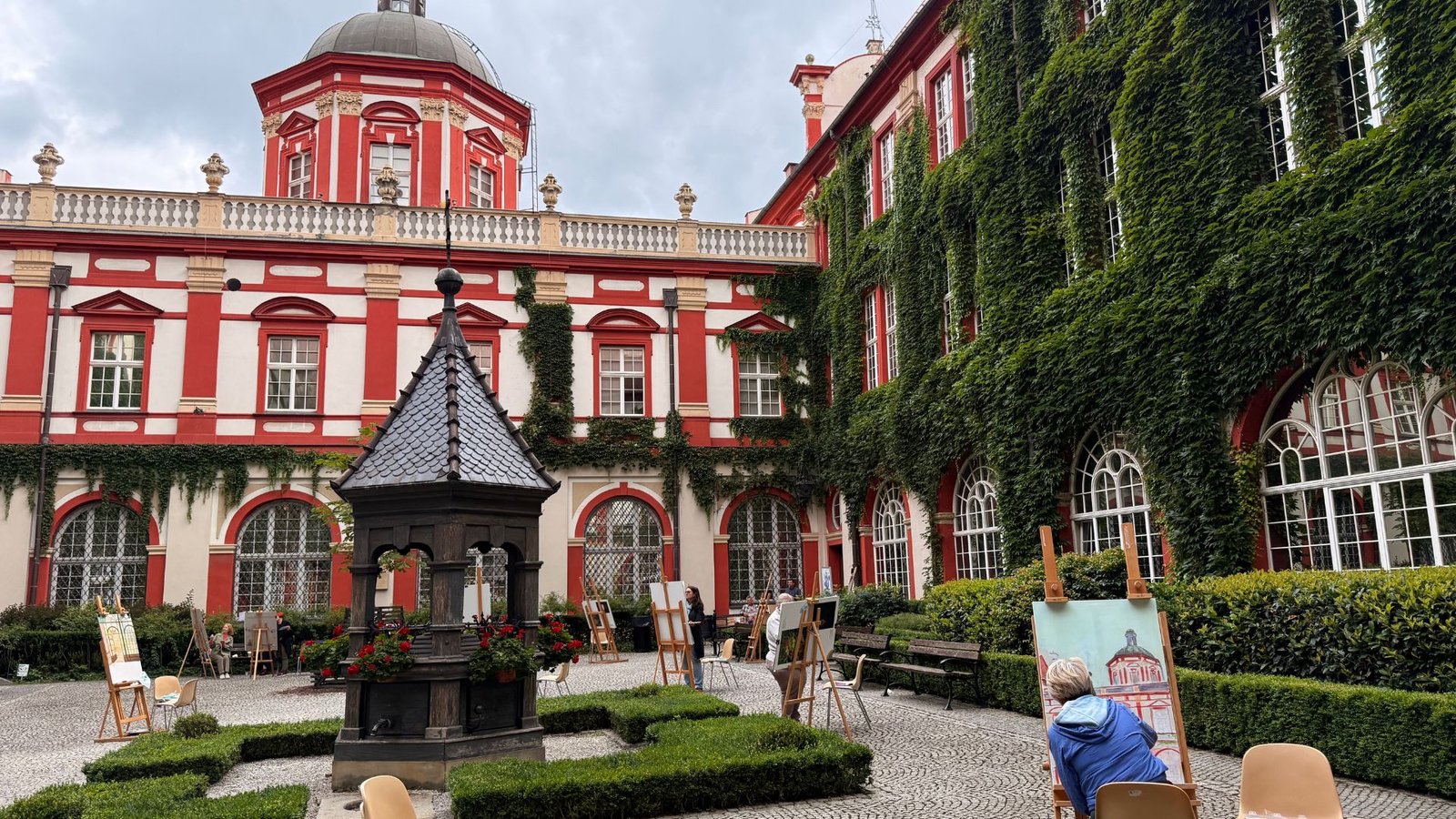
I spotted a bunch of ladies spending their afternoon inside this garden in Wrocław, painting! - Poznań: This place is often overlooked by first-time visitors to Poland, but spending a week here allowed me to discover a different, slower side of the country. With its colourful Old Market Square, beautiful architecture, charming cafés and lively student atmosphere, the city has plenty to keep you occupied without ever feeling overwhelming. I found myself slowing down, lingering over meals, wandering through the streets without an agenda and simply absorbing the rhythm of everyday life. If you want to experience a less touristy and more laid-back side of Poland, Poznań is a wonderful place to do just that.
- Toruń: Famous as the birthplace of astronomer Nicolaus Copernicus and for its traditional gingerbread, Toruń is a charming medieval city on the Vistula River. Its UNESCO-listed Old Town makes it particularly lovely for a slow afternoon of wandering.
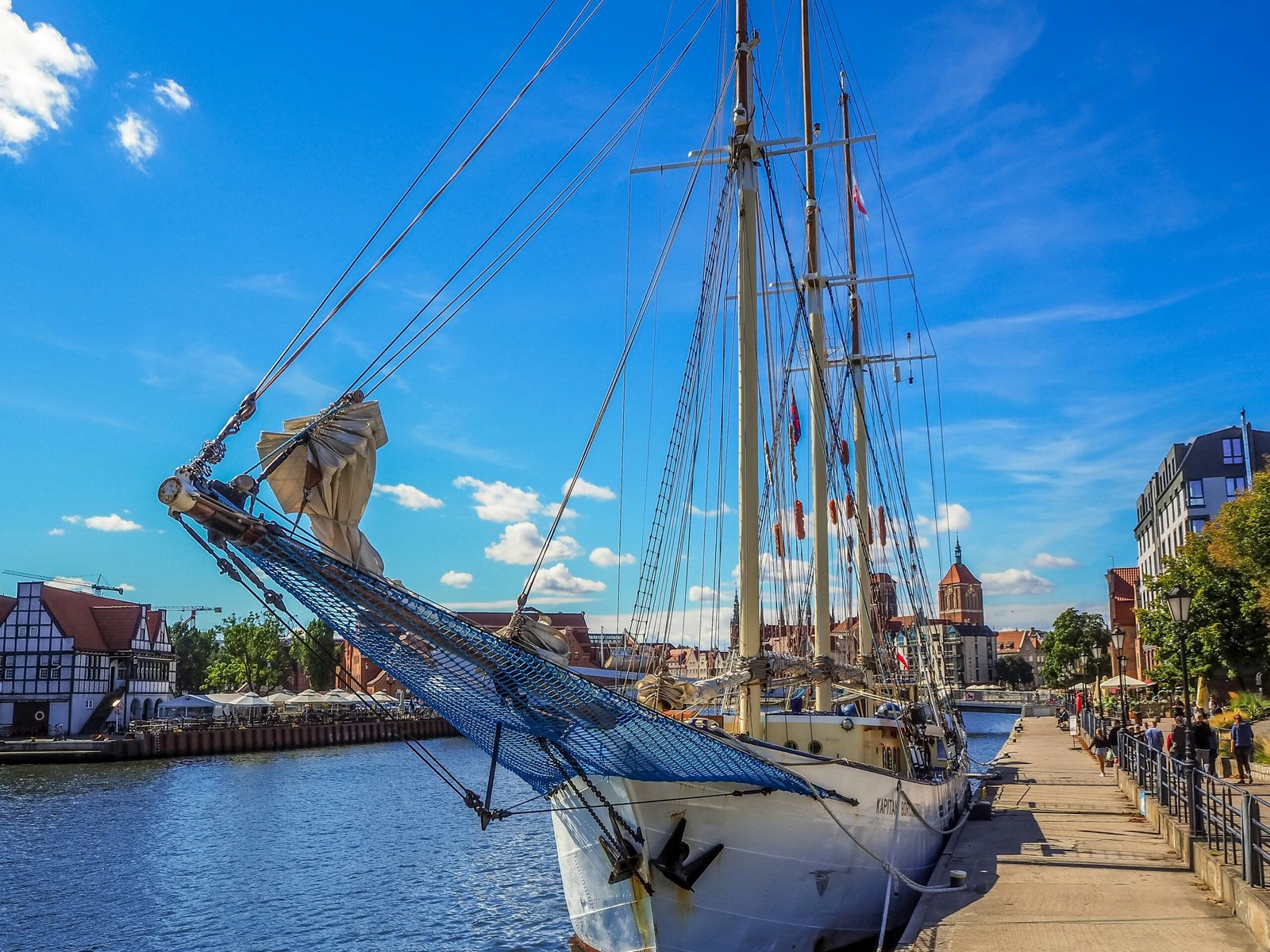
- Gdańsk: Located on the Baltic coast, Gdańsk feels completely different from Poland’s inland cities. Its colourful waterfront, historic streets and maritime character make it one of the country’s most beautiful cities. You can also combine it with nearby Sopot and Gdynia to explore the Polish Baltic coast.
- Szczecin: Close to the German border, Szczecin is another city that tends to fly under the radar. Its grand architecture, riverside setting, leafy parks, and fascinating history make it worth considering for a longer Poland itinerary.
- Lublin: In eastern Poland, Lublin is a wonderful choice for travellers looking to venture beyond the usual tourist circuit. Its colourful Old Town, castle, and multicultural history give the city a distinctive character.
If you have 7–10 days, I’d stick to two or three cities rather than trying to see everything. With two weeks or more, however, you can start connecting the dots and experience the wonderful diversity of Poland—from its historic cities and medieval towns to the Baltic coast and the mountains.
What should be the ideal budget for exploring Poland for 2 weeks?
Poland is one of the more affordable European destinations, especially when compared to Western Europe. For a two-week trip from India, I’d budget around INR 1.7– INR 2 lakh per person, depending on your choice of accommodation, food, and experiences.
Here’s a rough breakdown based on my experience:
- Flights: A return flight from India to Poland will cost approximately INR 60,000 – INR 70,000 per person. Fares can go higher during peak season, so booking early is a good idea.
- Accommodation: Budget and comfortable stays can cost around INR 4,000 – INR 5,000 per night, although this varies considerably by city and location. In Warsaw, Kraków, and Poznań, hotels around the Old Town tend to be more expensive and can go up to INR 8,000 a night. For 14 nights, I’d keep around INR 80,000 for a couple travelling together.
- Food: You can eat quite affordably in Poland. Żabka, the ubiquitous convenience-store chain, is great for quick, budget-friendly meals and snacks. A sit-down meal for two at a mid-range restaurant will usually cost around INR 2,500 – INR 3,000. Poland doesn’t really have the street-food culture you might be used to in India, although you’ll find plenty of doner kebabs and falafel boxes for a quick meal. For two people, I’d budget around INR 50,000 for food for two weeks.
- Local transport: Public transport in Polish cities is excellent and relatively affordable. Trams, buses and metro systems make getting around easy, and day or multi-day passes can be particularly useful if you’re sightseeing extensively.
- Sightseeing: Most museums, castles, and major attractions charge an entrance fee, although some offer free admission on specific days of the week. I’d keep around INR 20,000 per person for sightseeing and attractions over two weeks.
For a European holiday, I found Poland surprisingly easy on the pocket. You don’t need to travel on an ultra-tight budget to enjoy it—you can stay well, eat at good restaurants and explore plenty of attractions without spending a fortune!
What food to eat in Poland?
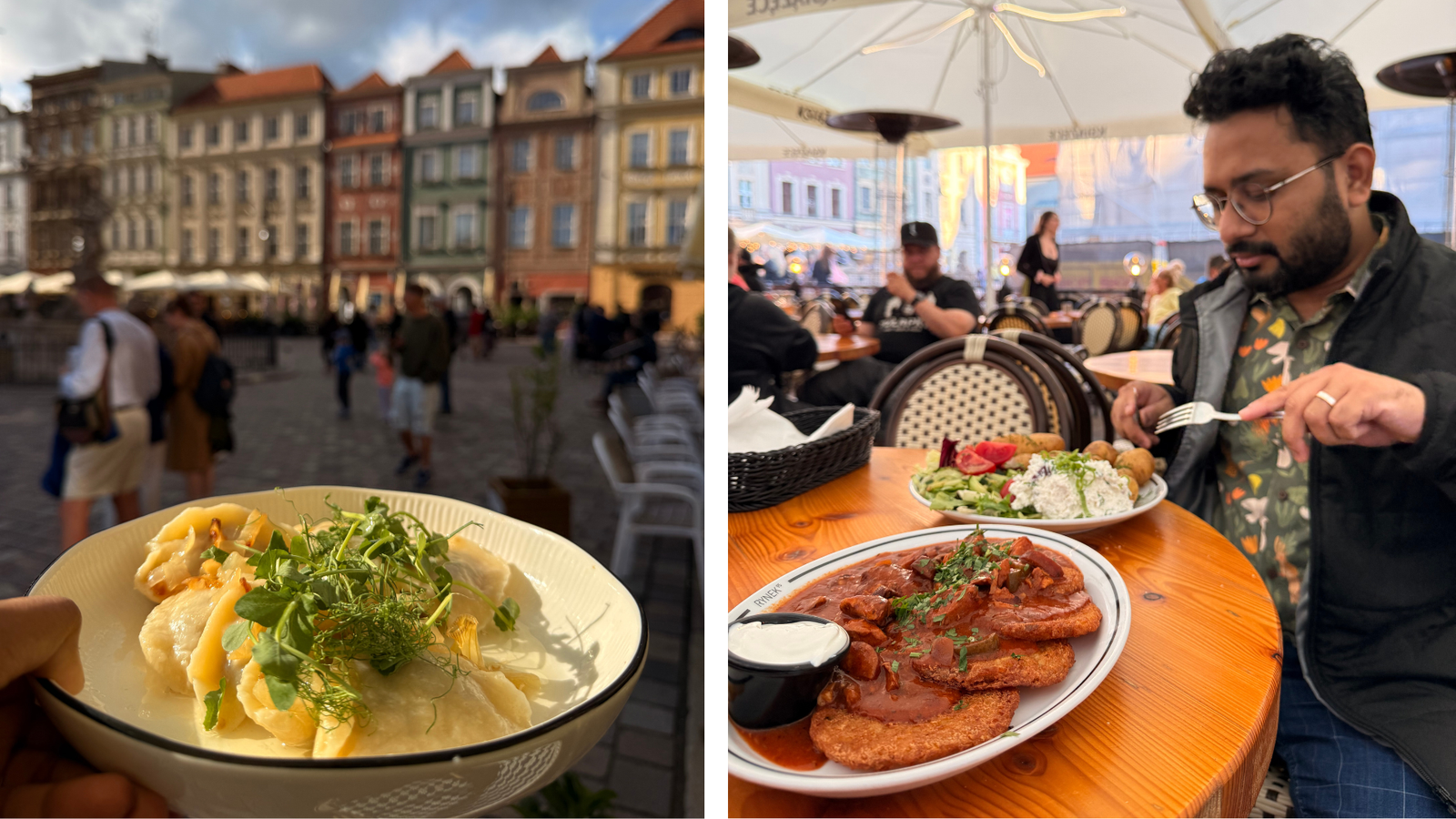
Polish food is hearty, comforting, and deeply rooted in the country’s history and seasons. Expect plenty of potatoes, cabbage, meat, mushrooms, and fermented flavours, with generous portions that are perfect after a long day of sightseeing.
- Pierogi — Poland’s most iconic dish, these dumplings come with an endless variety of fillings. Try the classic pierogi ruskie, filled with potato and twaróg (farmer’s cheese), or versions stuffed with meat, mushrooms and cabbage. You can also find sweet pierogi filled with fruits like strawberries or blueberries.
- Bigos — Often called hunter’s stew, bigos is a rich, slow-cooked combination of sauerkraut, fresh cabbage and meat, usually pork or sausage. It’s one of Poland’s classic comfort foods and tastes even better when eaten on a cold day.
- Żurek — A distinctive Polish sour rye soup made with fermented rye flour, usually served with white sausage and a boiled egg. The slightly tangy flavour might be unfamiliar at first, but it’s one of the country’s most traditional dishes.
- Barszcz — Polish beetroot soup, usually served hot and beautifully deep red. It can be enjoyed on its own or with little mushroom- or meat-filled dumplings called uszka.
- Placki ziemniaczane — Crispy Polish potato pancakes, usually served with sour cream, mushroom sauce or meat. They’re simple, filling and perfect for a quick meal.
- Zapiekanka — Think of this as Poland’s answer to an open-faced pizza. It’s a toasted baguette topped with mushrooms, cheese and other ingredients, usually finished with ketchup or sauce. You’ll find it particularly popular as a late-night snack.
- Kiełbasa — Polish sausage is practically an institution. There are numerous varieties, often smoked and grilled, and you’ll find them everywhere from traditional restaurants to markets and food stalls.
- Gołąbki — Cabbage leaves stuffed with a mixture of minced meat and rice, usually served with tomato or mushroom sauce. It’s a classic Polish home-style dish.
- Oscypek — If you’re heading towards the Tatra Mountains and Zakopane, look out for this smoked sheep’s-milk cheese. Traditionally produced in the Podhale region, it’s often grilled and served with cranberry sauce.
- Pączki — You can’t leave Poland without trying these indulgent filled doughnuts. Traditionally associated with Tłusty Czwartek (Fat Thursday), they’re filled with rose jam, plum jam, custard or other sweet fillings and dusted with sugar.
- Piernik — Especially if you’re visiting Toruń, try piernik, the city’s famous traditional gingerbread. Made with honey and warming spices, it has been part of Toruń’s culinary identity for centuries.
And don’t forget Polish drinks!
Kompot, a sweet fruit drink made by simmering fresh or dried fruit, is a traditional accompaniment to Polish meals. You’ll also find plenty of excellent Polish beer, while Żubrówka, a bison-grass-flavoured vodka, is one of the country’s most distinctive spirits.
If you’re travelling around Poland, I’d actually recommend eating your way through the country. Try pierogi and zapiekanka in Kraków, piernik in Toruń, and oscypek when you head towards the Tatra Mountains; the regional specialities are part of what makes travelling through Poland so rewarding.
Thanks to my Polish friend, Kasia, my experience of eating my way through Poland was even more special. She introduced me to some of her favourite local dishes and took me beyond the usual tourist restaurants, including Poland’s traditional milk bars (bar mleczny). These no-frills, cafeteria-style eateries were originally created as affordable places for workers and students to eat, and they remain a wonderful way to experience simple, home-style Polish food without spending much.
Which places to visit in Poland to learn about World War II?
If you’re interested in understanding Poland beyond its beautiful cities and landscapes, take some time to learn about its history during World War II. Some of the places I visited left me deeply touched and, at times, completely overwhelmed. It isn’t always easy history to witness, but it is an important part of understanding Poland and its people. From the remnants of wartime destruction to museums and memorials that preserve stories of unimaginable loss and resilience, these experiences stayed with me long after I left. If you have the time, I believe Poland’s difficult past is something worth witnessing, remembering and reflecting on.
1. Museum of the Second World War, Gdańsk
This should be at the top of your list. The museum tells the story of WWII from a broad international perspective, while placing Poland and its civilian population at the centre of the narrative. The exhibition covers the origins of the war, the German and Soviet occupations, resistance, the Holocaust, and the enormous human cost of the conflict.
2. Westerplatte, Gdańsk
Just outside central Gdańsk, Westerplatte is one of the most significant WWII sites in Poland. It was here that German forces attacked a Polish military depot on 1 September 1939, marking the beginning of World War II in Europe. Today, you can walk around the former battlefield and see the surviving ruins and memorials. The site is now part of the Museum of the Second World War.
3. Auschwitz-Birkenau, near Kraków
Perhaps the most difficult but important place to visit, Auschwitz-Birkenau was the largest Nazi German concentration and extermination camp. A visit here offers a deeply sobering understanding of the Holocaust and the systematic murder carried out by Nazi Germany. If you’re staying in Kraków, it can be visited as a day trip, but I’d recommend giving yourself enough time and approaching the visit with the seriousness it deserves.
4. Warsaw Uprising Museum, Warsaw
Warsaw’s history during WWII is impossible to understand without learning about the 1944 Warsaw Uprising, when the Polish resistance rose against German occupation. The Warsaw Uprising Museum brings the story to life through photographs, personal accounts, artefacts, and immersive exhibits, including a recreation of the underground sewers used by insurgents.
5. POLIN Museum, Warsaw
While POLIN is not exclusively a WWII museum, it’s an important stop for understanding the history of Poland’s Jewish community and the Holocaust. The museum stands in the former Jewish quarter of Warsaw, an area that became the Warsaw Ghetto during the German occupation. Its Holocaust gallery and exhibitions on the Warsaw Ghetto Uprising provide important context to the events of the war.
Tip: The museum has FREE entry on every Tuesday.
6. Jewish Ghetto in Warsaw
Even beyond the museums, walking through the former Warsaw Ghetto is a powerful way to understand the scale of what happened to the city’s Jewish population. Much of pre-war Warsaw was destroyed, but memorials, surviving fragments of the ghetto wall, and markers throughout the neighbourhood still tell parts of the story.
If you have limited time, I’d prioritise Auschwitz-Birkenau + the Warsaw Uprising Museum + the Museum of the Second World War in Gdańsk. Together, they offer three very different perspectives: the Holocaust, the experience of occupied Warsaw, and the wider story of WWII.
What would be an ideal 8- 10 days’ itinerary for Poland?
If you’re travelling to Poland for the first time, I’d recommend 8–10 days to experience some of the country’s most interesting cities without making the trip feel like a race. This itinerary takes you from Warsaw to Kraków, Wrocław, and Poznań, with a day trip to Toruń along the way.
I’ve kept the pace fairly relaxed, with enough time to wander, eat well, and actually enjoy each city (and this is pretty much what I followed!).
Days 1–2: Warsaw
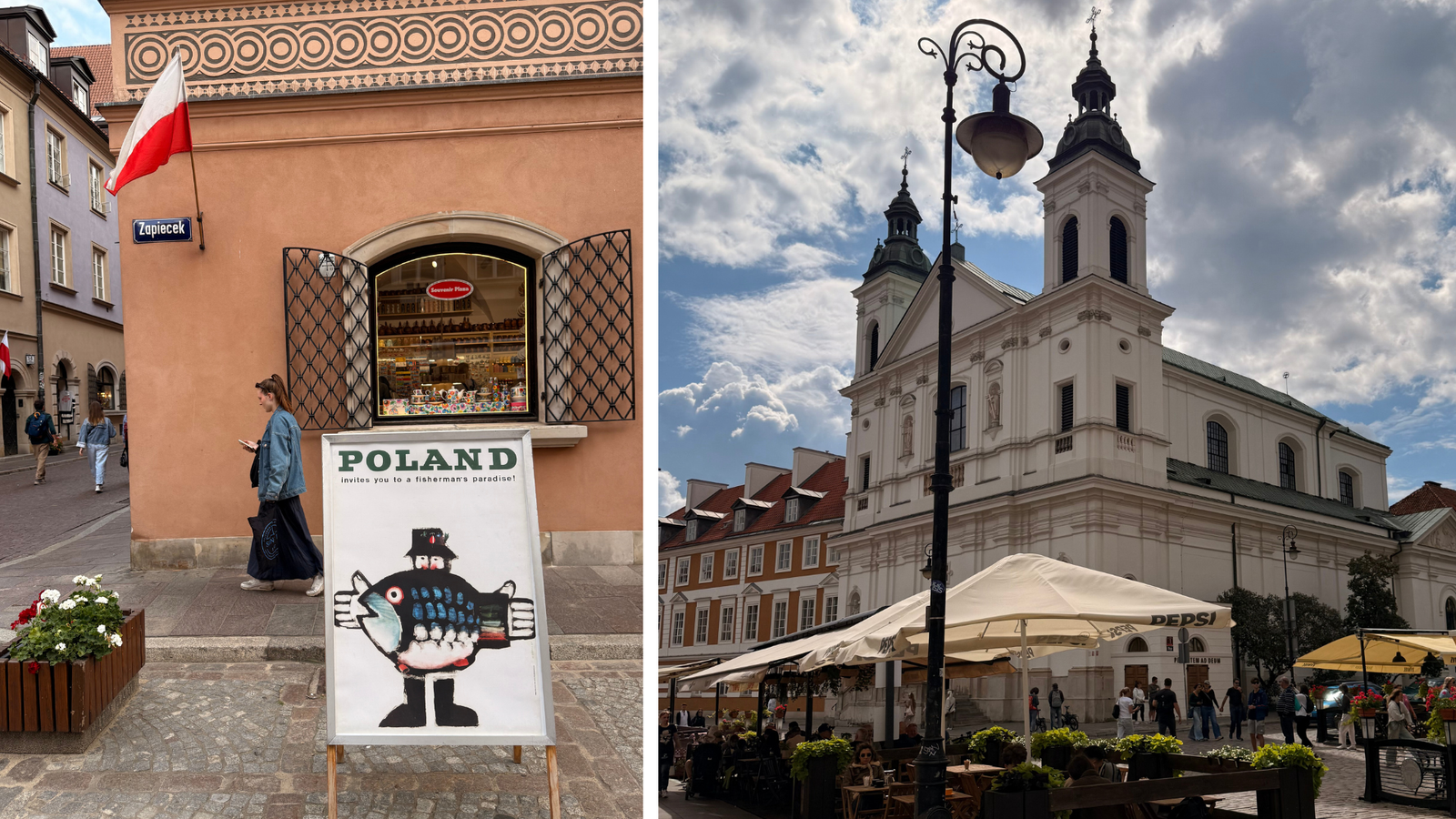
Start your trip in Warsaw, Poland’s fascinating capital. Spend your first day exploring the Old Town, with its colourful buildings, cobbled streets and the impressive Royal Castle. Take your time wandering around the Market Square, visit the city’s churches and museums, and walk along the Vistula River in the evening.
On Day 2, dive a little deeper into Warsaw’s history. Visit the Warsaw Uprising Museum, the POLIN Museum, the Marie Curie Museum, and some of the city’s beautiful palaces and churches. Warsaw has a lot to offer, so don’t try to cram everything into one day.
Days 3–5: Kraków
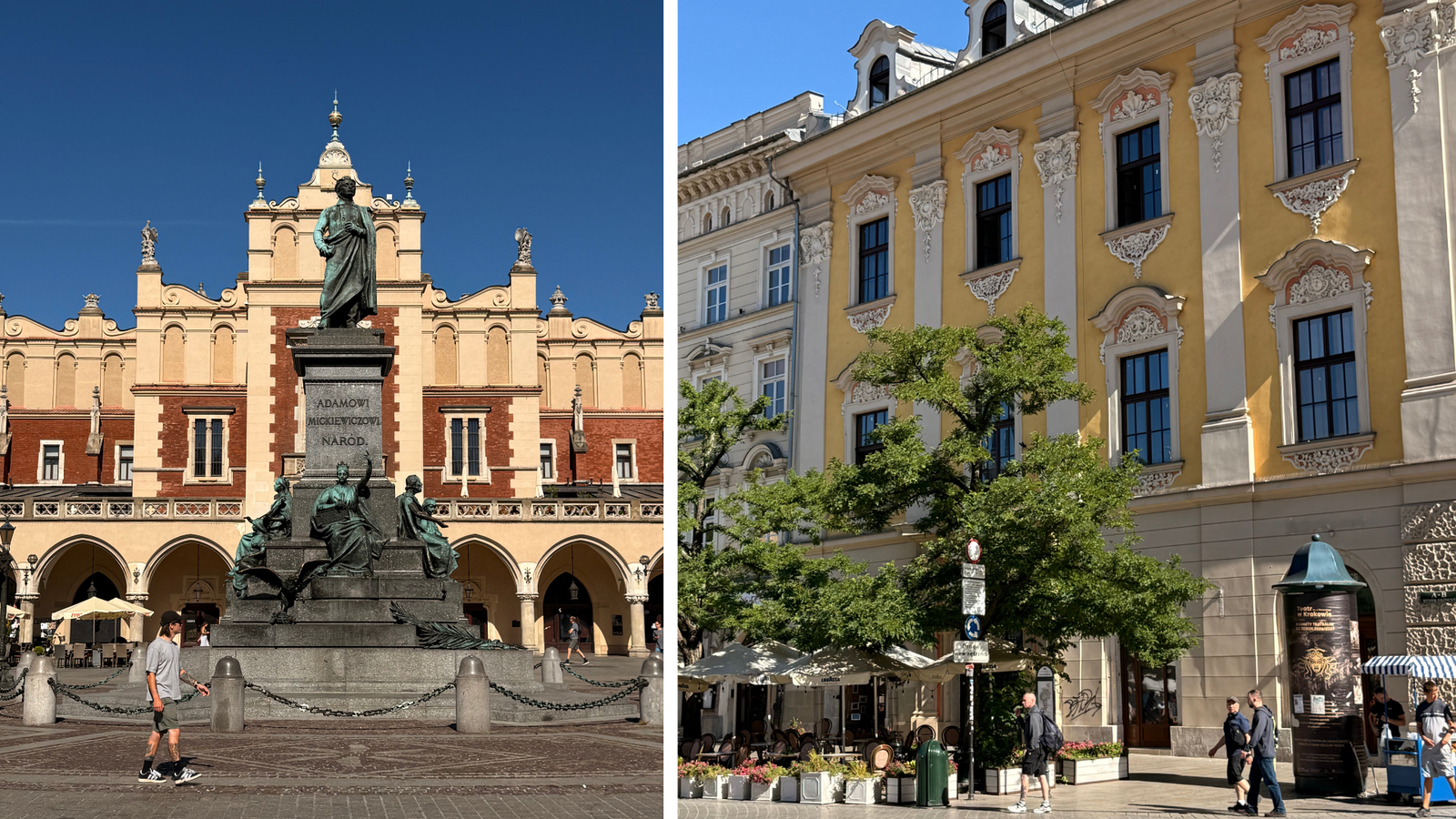
Take an early train from Warsaw to Kraków, one of Poland’s most atmospheric cities. Give yourself three days and two nights here. Spend your first day exploring the historic Old Town, starting at the magnificent Rynek Główny before walking up to Wawel Castle. Take a stroll along the Vistula River and spend some time exploring the cafés, restaurants and little streets around the centre.
Keep the second day for one of Poland’s most important (and difficult) historical experiences: a day trip to Auschwitz-Birkenau. It’s a deeply moving visit, so don’t plan too much for the evening afterwards.
On your third day, visit the Wieliczka Salt Mine, a remarkable underground complex with chapels, sculptures and chambers carved into the salt. Once you’re back in Kraków, spend the evening exploring Kazimierz, the city’s historic Jewish quarter, and the area around the former Kraków Ghetto.
Days 6–7: Wrocław
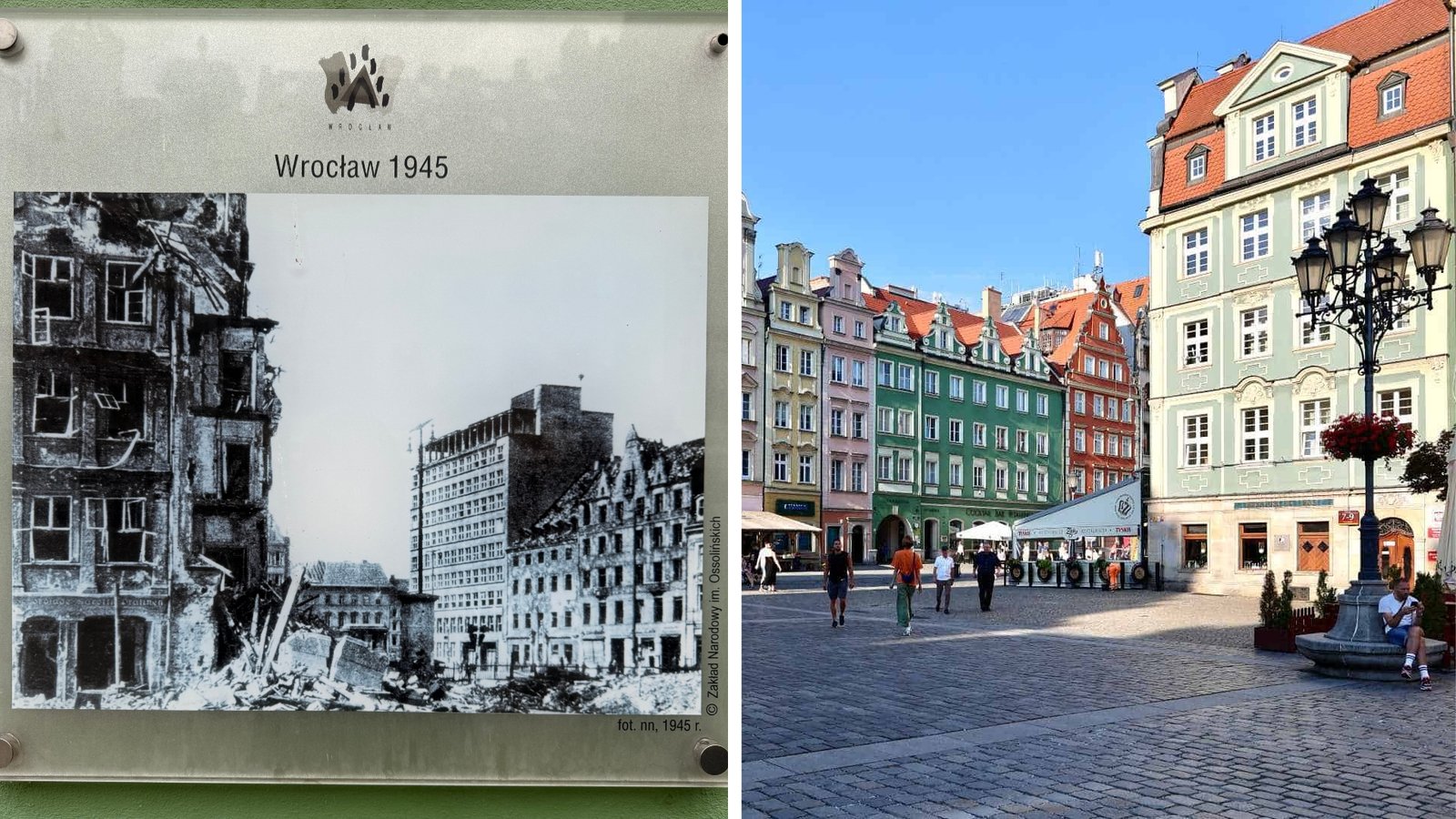
Catch a train to Wrocław, one of my favourite cities in Poland. Spend at least a full day exploring its beautiful Old Town and Market Square, learn about the impact of WW II in the city, cross its many bridges, and wander around Ostrów Tumski, the oldest part of the city.
Don’t forget to look down as you walk, because the city is famous for its hundreds of tiny Wrocław dwarfs, hidden everywhere from pavements to shopfronts! If you have 10 days rather than eight, I’d add an extra day in Wrocław. After moving between cities and sightseeing, it’s lovely to have a day with no real agenda— to sit at a café, take a riverside walk, and simply slow down.
MUST: Get in touch with Whistling Hound when in Wrocław, because Amit will show you the best spots in the town!
Days 8–9: Poznań + Toruń
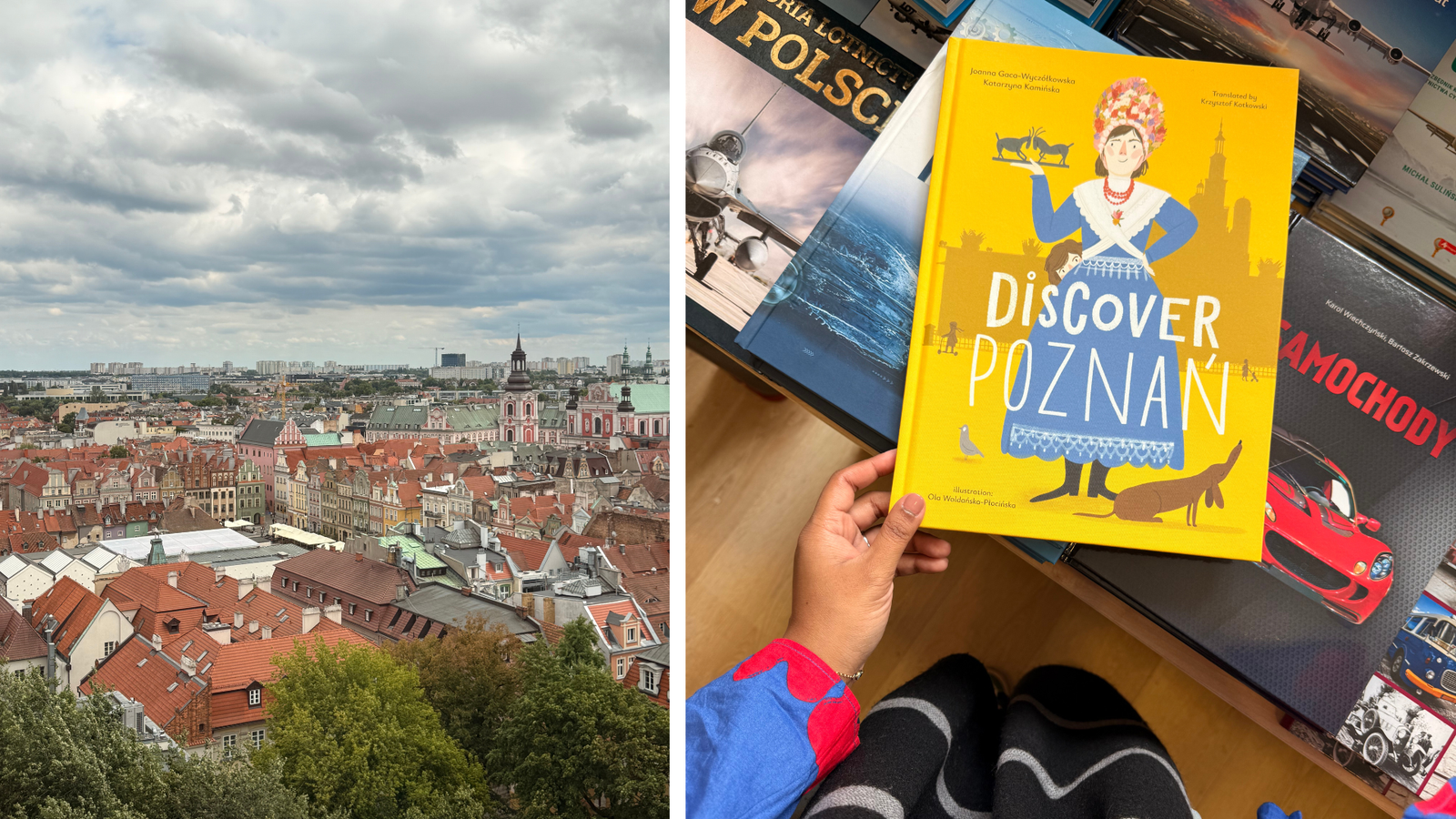
Take the train to Poznań, another city that deserves more attention than it gets. Spend the afternoon exploring the colourful Old Market Square, admiring the Renaissance Town Hall and wandering through the surrounding streets.
Keep the next day for a day trip to Toruń, the medieval city best known as the birthplace of astronomer Nicolaus Copernicus. Walk around its UNESCO-listed Old Town, admire the Gothic architecture and, of course, try some of the city’s famous piernik (gingerbread).
Return to Poznań in the evening and enjoy one last relaxed dinner before heading back to Warsaw.
Day 10: Warsaw
Take the train from Poznań back to Warsaw for your final day. Depending on your flight timing, use the day to revisit anything you missed at the beginning of the trip, pick up some souvenirs, or simply enjoy one last Polish meal before heading home.
In just about 10 days, don’t be tempted to add too many more cities. I found that Poland is best experienced when you leave a little room for slow mornings, long lunches, and aimless walks. After all, some of my favourite moments came when I wasn’t trying to see anything at all.
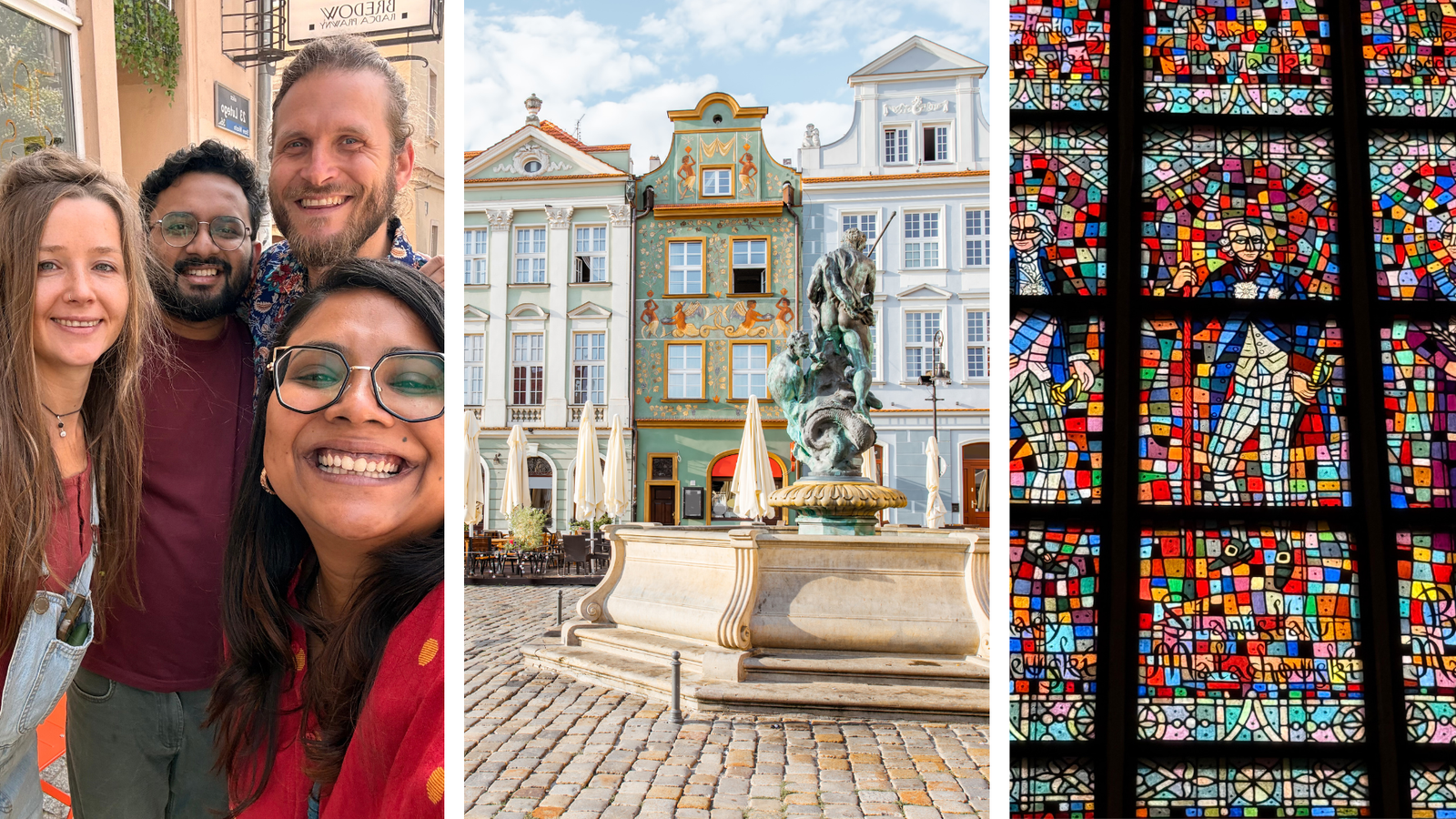
Poland surprised me in more ways than I expected!
I came to Poland thinking I’d spend a couple of weeks ticking off cities and sights, but I ended up slowing down, eating my way through the country, learning about its complicated past, and discovering places that I hadn’t even considered adding to my itinerary. From the colourful streets of Poznań and Wrocław to the history of Kraków and the energy of Warsaw, every city offered something different.
If you’re planning a trip to Poland, I hope this guide helps you plan yours with a little more ease, and perhaps inspires you to look beyond the usual European favourites! Poland may not always be the first country that comes to mind when you think of Europe, but that’s exactly what makes exploring it so rewarding.
And if you have any questions about travelling to Poland, feel free to leave a comment or reach out to me. I’m happy to help wherever I can!
Disclaimer: This post contains a few affiliate links. If you click any of them and make a purchase, I might earn a small commission at no extra cost to you. Just know that I truly appreciate your support if you choose to do so.
Tags:
Share:


About Me
I travel to collect stories, slowly and meaningfully, with an open heart. I wander a little farther for good food, linger longer to understand a place, and write so I can call it “work.” A slow traveller at heart, I believe in experiences over checklists, in moments that unfold at their own pace, and in connections that stay long after the journey ends.
An absolute foodie and die-hard mountain lover, I find my happiest moments in quiet Himalayan towns with a cup of lemon-honey-ginger tea in hand. Over the years, I’ve had the joy of exploring places across India and beyond, each trip teaching me something new about people, cultures, and myself. When I’m not lost in thought or coffee, you’ll find me exploring the world one destination at a time, always looking for places that make me feel something. I love to read and write (give me a book and I’ll love you all the more) and share honest insights, real photos, and thoughtful recommendations from my own travels, so you can experience every place a little deeper, a little slower, and with just the right touch of comfort.
 Pinterest
  Linkedin
  MuckRack
Exploring The World, One Place At a Time!