An Indian Traveller’s Guide to Hong Kong | 5 Days in Hong Kong
Your ultimate guide to Hong Kong begins with how easy it is to get there. Hong Kong is visa-free for Indian passport holders, with only a simple Pre-Arrival Registration (PAR) required, making spontaneous travel totally doable. Add to that its skyline, street food, islands, shopping, culture, and Disneyland, and you’ve got a city that’s equal parts chaos and charm, waiting to be explored.
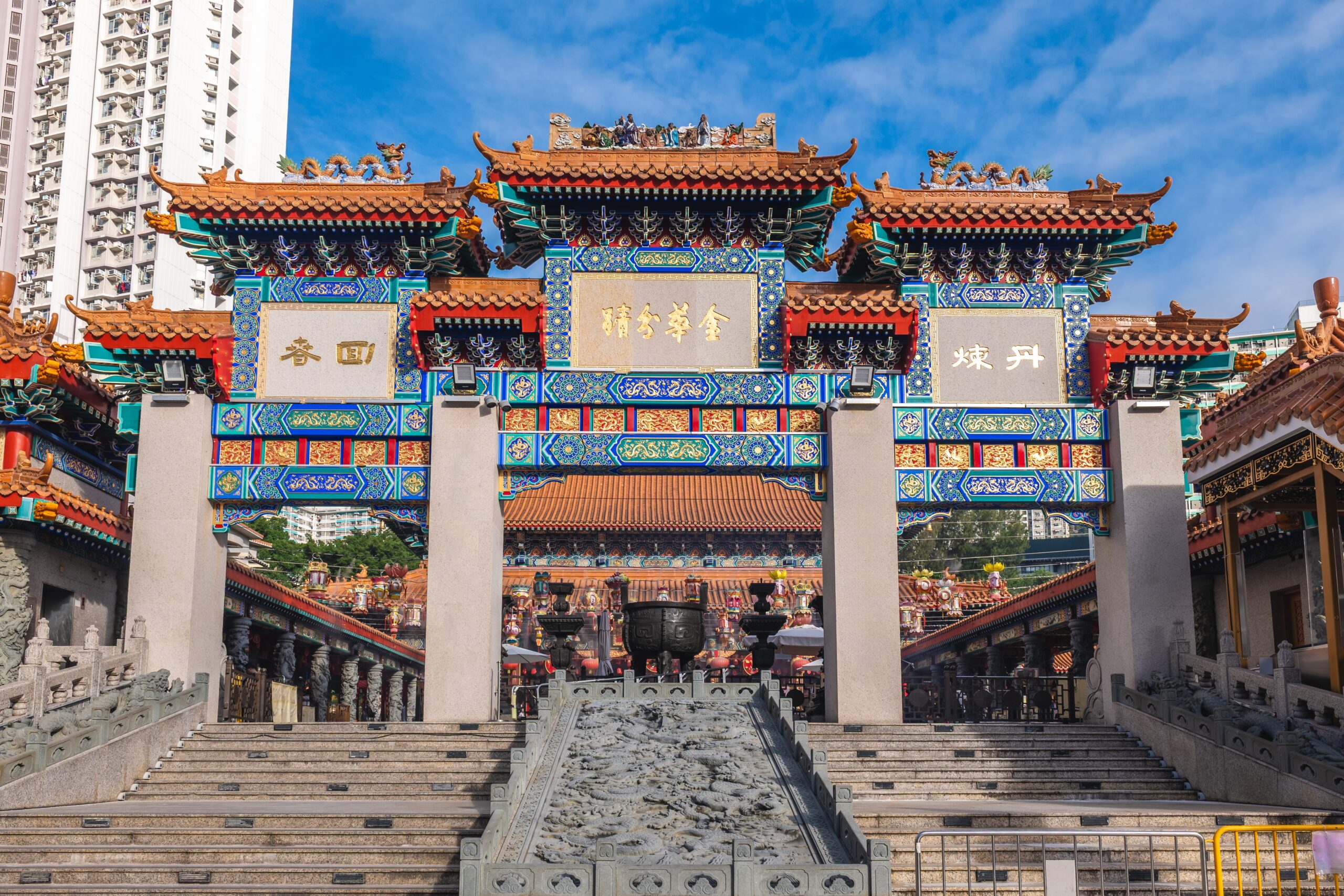
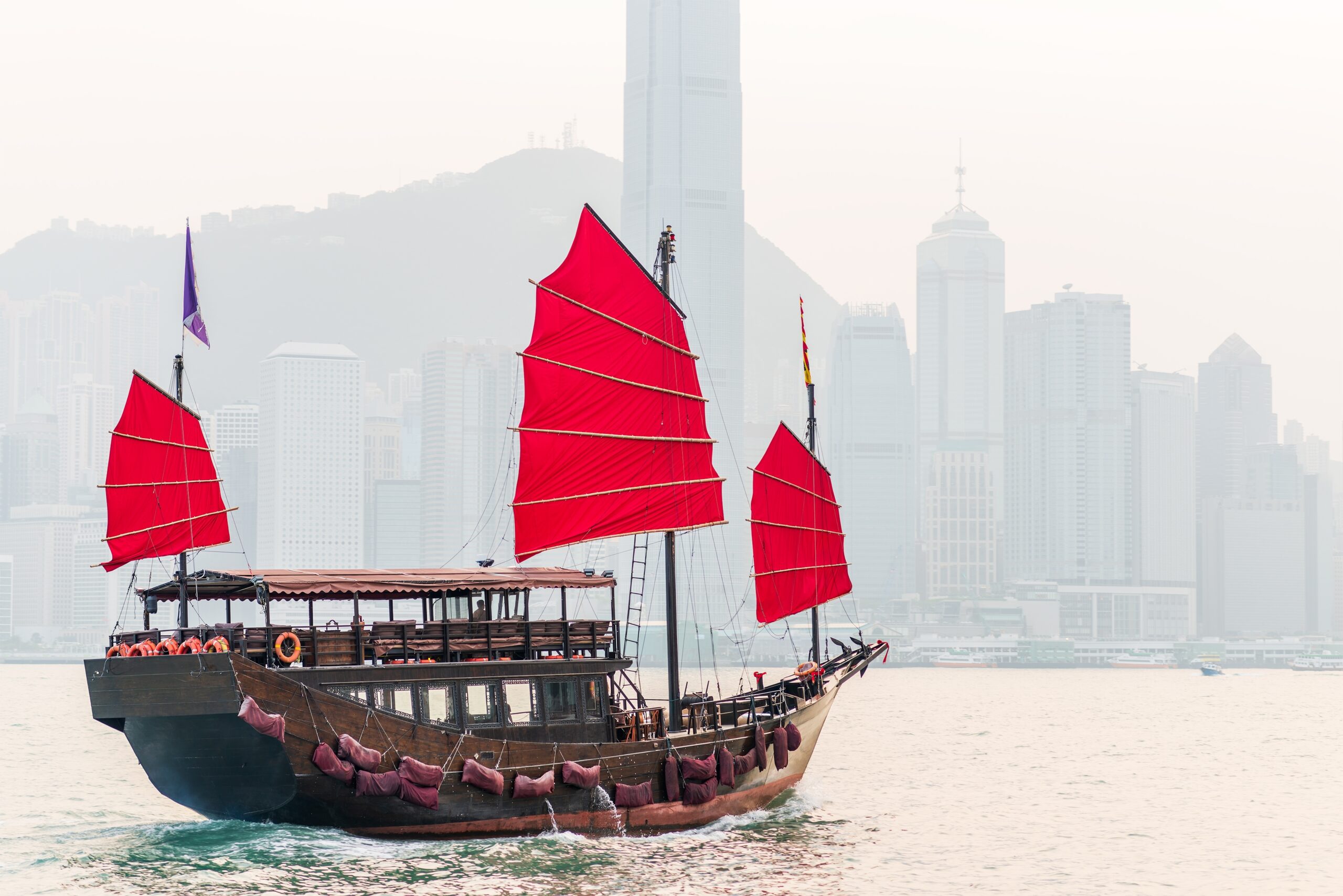
Wong Tai Sin Temple is located in Kowloon, Hong Kong.
Hong Kong is the kind of place that feels like beautiful madness in motion. Known as the “Fragrant Harbour,” this special administrative region of China is one of the most densely populated cities in the world, and somehow, that only adds to its charm.
It is loud, fast, and magnetic in a way that pulls travellers in almost instantly.
Sleek, glass-clad skyscrapers tower over stylish boutiques and lively street markets filled with quirky antiques and local finds. Ancient temples exist comfortably alongside churches and mosques, creating a cityscape where cultures blend without trying too hard. Between the urban rush, you will find green parks, fascinating museums, zoos, and of course, the childlike joy of Disneyland. One of my favourite things about Hong Kong is how easy it is to move around. The public transport system is so smooth and efficient that navigating this megacity feels surprisingly stress-free.
With endless things to do, Hong Kong can feel overwhelming in the best possible way. One moment you are slurping wonton noodles and sampling delicate dim sum, the next you are wandering through buzzing shopping streets or laughing your way through karaoke bars. A short trip away, the neighbouring islands offer a change of pace, including a quick escape to Macau.
I explored Hong Kong with a friend, and together we drifted between its calm hideaways and chaotic streets, slowly falling for the many moods of this unforgettable city. And to say the least, it remains one of the best cities I’ve ever visited.
Hong Kong is visa-free for Indian passport holders, but you must complete a Pre-Arrival Registration (PAR) online before travel. The process is simple and usually approved instantly. Once approved, you can stay in Hong Kong for up to 14 days per visit. Carry a printout or digital copy of your PAR confirmation while travelling.
The best time to visit Hong Kong is from October to March, when the city enjoys pleasant weather that is perfect for sightseeing, outdoor walks, and ferry rides. During these months, humidity levels drop, the skies are clearer, and the overall vibe of the city feels much more comfortable for travellers who plan to be out and about all day. This is also when Hong Kong looks its best, with crisp views of the skyline, cooler evenings, and ideal conditions for exploring neighbourhoods, markets, islands, and hiking trails.
I visited Hong Kong in December, and the weather was honestly beautiful. The days were mild and comfortable, perfect for long walks, sightseeing, and hopping between attractions without feeling drained. By evening and night, it turned pleasantly cold, just enough to enjoy layering up and strolling through the city lights without the sticky heat that Hong Kong is known for. It felt like the kind of weather that lets you explore from morning till night without needing constant breaks.
In contrast, the summer months from June to September can be quite intense. The city becomes hot and extremely humid, and this is also the season for heavy rainfall and occasional typhoons. While Hong Kong is well-equipped to function even during bad weather, outdoor plans, ferry rides to islands, and theme park visits can get disrupted. Sightseeing in the heat can also feel exhausting, especially if you are walking a lot or exploring street markets.
Currency and Payments in Hong Kong
The local currency in Hong Kong is the Hong Kong Dollar (HKD), and it is the main form of payment across the city. While Hong Kong is largely cashless, it is still a good idea to carry some cash, especially for street markets, small local eateries, bakeries, ferries to nearby islands, and hole-in-the-wall food spots where cards may not always be accepted.
Credit and debit cards are widely used in hotels, shopping malls, restaurants, attractions, and even convenience stores. Most international cards from India, including Visa and Mastercard, work smoothly in Hong Kong. However, do inform your bank before travelling to avoid any international transaction blocks. Also, keep in mind that some banks may charge a small foreign transaction fee for every swipe.
You will find ATMs easily across the city, especially in MTR stations, malls, convenience stores, and near tourist areas. Withdrawing cash using an Indian debit card is simple, but do check your bank’s international withdrawal charges beforehand. It is often more convenient to withdraw a decent amount at once rather than making multiple small withdrawals to avoid repeated fees.
Another very useful option in Hong Kong is the Octopus Card, a prepaid card for public transport that can also be used to pay at supermarkets, cafes, bakeries, vending machines, and even at some attractions. You can top it up with cash or a card and use it as a tap-and-go wallet, making daily expenses quick and hassle-free.
As for currency exchange, you can exchange money at the airport, exchange counters, and banks across the city, but rates at the airport are usually slightly higher. If you prefer, you can carry a small amount of HKD from India and withdraw the rest locally. Overall, payments in Hong Kong are smooth and traveller-friendly, and with a mix of cards, some cash, and an Octopus Card, you will be well covered for almost every situation.
Language and Communication
Cantonese is widely spoken, but English is commonly used, especially in tourist areas, hotels, transport stations, and restaurants. You won’t have trouble communicating, and signage throughout the city is bilingual.
Connectivity and Internet
You can buy a local SIM card at the airport or use an international roaming plan from India. Free Wi-Fi is available in many public places, MTR stations, cafes, and malls, which makes navigating and booking on the go very convenient.
Cultural Tips
Hong Kong is fast-paced and punctual. Stand on the right side of escalators, queue patiently, and be mindful in public transport. People are polite but busy, so quick and clear communication works best. Tipping is not mandatory but appreciated in some restaurants and for exceptional service.
Getting There from India
Hong Kong is well connected to India, making it a convenient international destination for both first-time and frequent travellers. You can find flights from major Indian cities like Delhi, Mumbai, Bengaluru, and Chennai, with options for both direct and one-stop connections.
Direct flights usually take around 5 to 6 hours, making Hong Kong one of the quickest long-haul international destinations from India. One-stop flights, depending on the layover city and duration, can take anywhere between 8 to 14 hours in total.
It is a good idea to book your flights well in advance, particularly if you are travelling during peak periods like December, long weekends, festive seasons, summer vacations, or Chinese New Year. Airfares can spike sharply during these times, and seats on direct flights tend to sell out fast.
P.S: Booking early not only helps you save money but also gives you better choices of flight times and seats.
5 Days in Hong Kong – A Detailed Travel Itinerary
Five days may not be enough to see everything, but it is just perfect for falling in love with the city, exploring its highlights, and still having moments to simply wander and soak up the vibes.
Day 1: Arrival, First Impressions & City Vibes
This day is all about landing, settling in, and letting Hong Kong introduce itself to you.
After landing at Hong Kong International Airport and checking into your hotel, step out for your first walk in the city. Even a short stroll here feels like sightseeing. Start your exploration in Central, one of Hong Kong’s most interesting neighbourhoods, where modern skyscrapers and old-world charm exist side by side.
Visit the beautiful Man Mo Temple, one of the oldest temples in the city, known for its giant incense coils and peaceful atmosphere. It is a lovely contrast to the fast-paced streets outside and a great way to begin your Hong Kong journey on a calm note. Walk around the surrounding lanes, pop into little souvenir shops, and just observe everyday life unfolding around you.
From here, head towards SoHo and the Central–Mid-Levels Escalators. Even if you are not planning to shop or dine here, the escalators themselves are a fun experience and give you a peek into how locals move around the city. Grab a quick bite at a café or try your first Hong Kong meal, maybe dim sum or wonton noodles.
In the evening, take a relaxed walk along Victoria Harbour and enjoy your first proper view of Hong Kong’s iconic skyline. The city lights up beautifully after sunset, and this is when it truly starts to feel magical.
At night, head to Temple Street Night Market in Kowloon. This is the perfect introduction to Hong Kong’s street market culture. Browse stalls selling clothes, souvenirs, trinkets, and random things you did not know you needed. Try local street food, sip on bubble tea, and simply soak in the chaos and energy of the night market. End the day tired, overstimulated, and already a little in love with Hong Kong.
Day 2: Hong Kong Disneyland, The Most Awaited Day
This is the day many people look forward to the most, and honestly, it deserves a full day of your time.
Start early and head to Hong Kong Disneyland. The journey itself is fun, especially the Disney-themed MTR line that builds up the excitement. Once inside, take your time exploring the different themed lands, clicking endless photos, and enjoying the rides. Whether you are a hardcore Disney fan or not, there is something incredibly joyful about spending an entire day here.
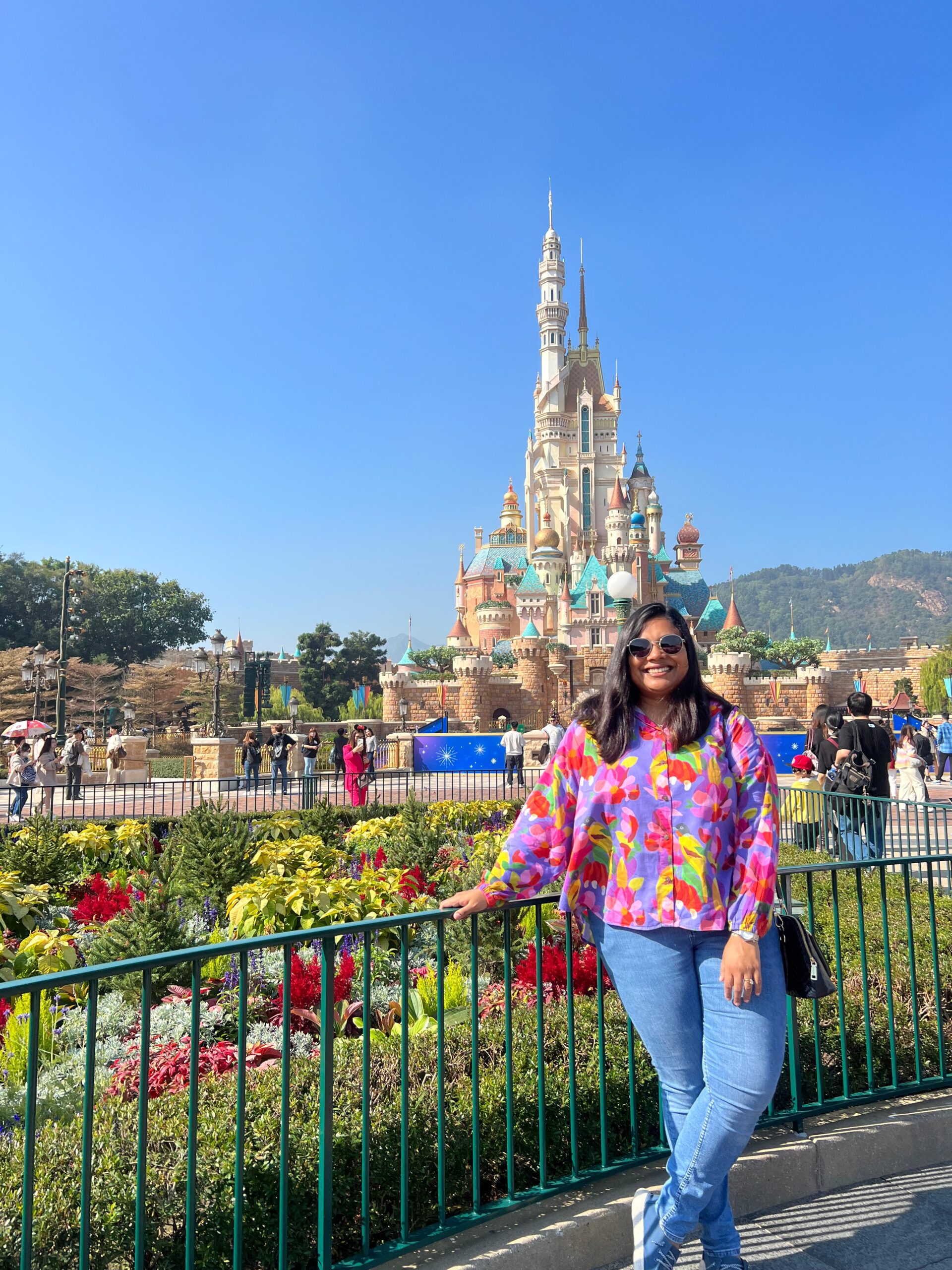
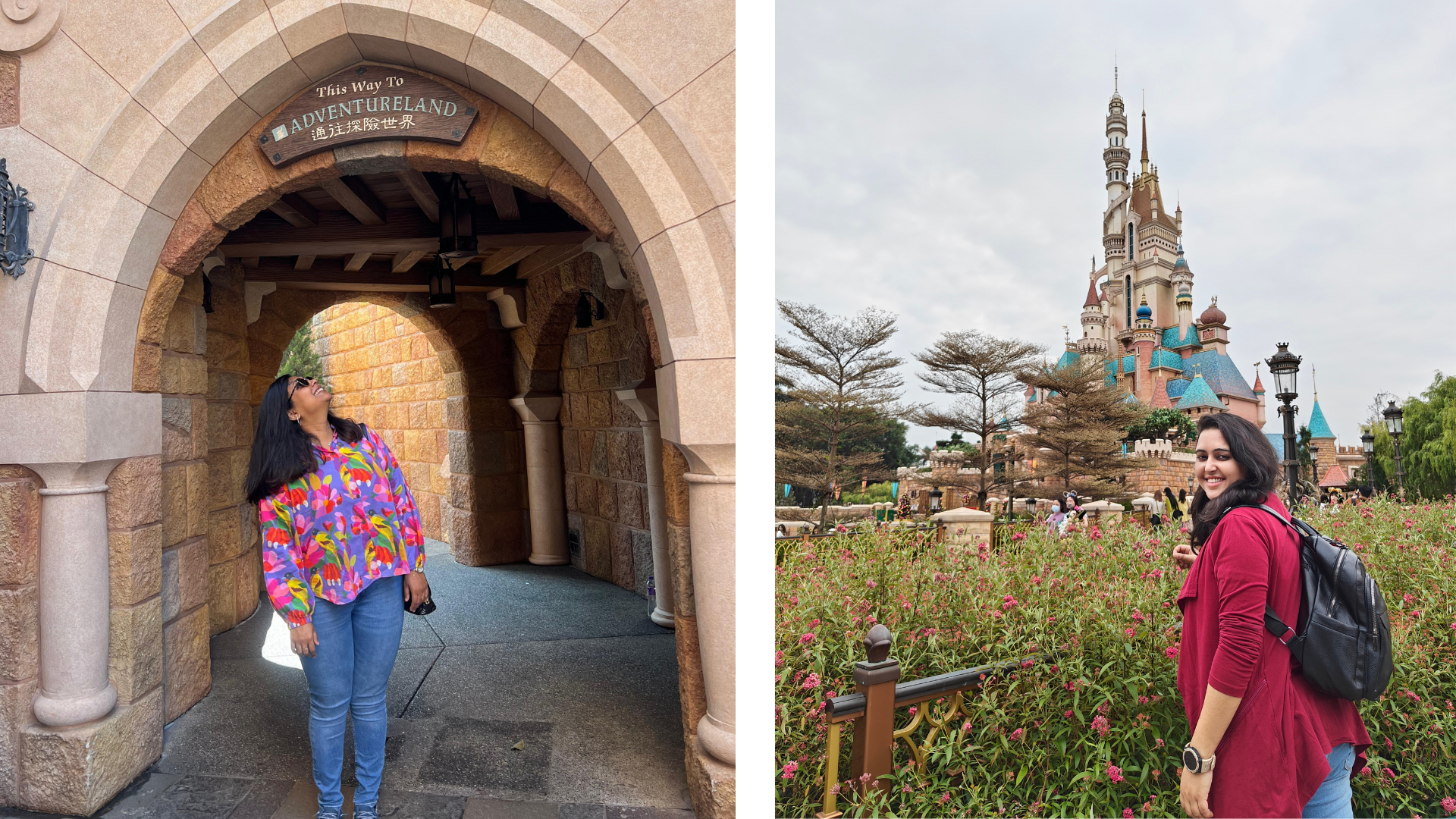
Myself (left) and Nargis, my friend (right) at Disneyland, Hong Kong.
Plan your rides in advance, especially the popular ones, and take breaks between zones so you do not burn out too quickly. Try the themed snacks and desserts, watch a parade if it fits your timing, and just let yourself be a child for the day. Trust me when I say this, it’s nearly impossible to explore the whole place in a day, and enjoy all the rides (because every ride usually has 30 to 40 minutes waiting time!), but try to soak in as much as you can.
Stay back for the evening fireworks or light show, which is usually a beautiful way to end the day. By the time you head back to your hotel, you will be tired in the best possible way, with sore feet and a phone full of happy photos.
Day 3: Lantau Island, Big Buddha & Ngong Ping
After the madness of Disneyland, Day 3 is about slowing down and seeing a calmer, greener side of Hong Kong.
Head to Lantau Islandearly in the morning and take the Ngong Ping 360 cable car. The views from the cable car are stunning, with mountains, sea, and tiny villages below. This ride alone is an experience and sets the tone for the day.
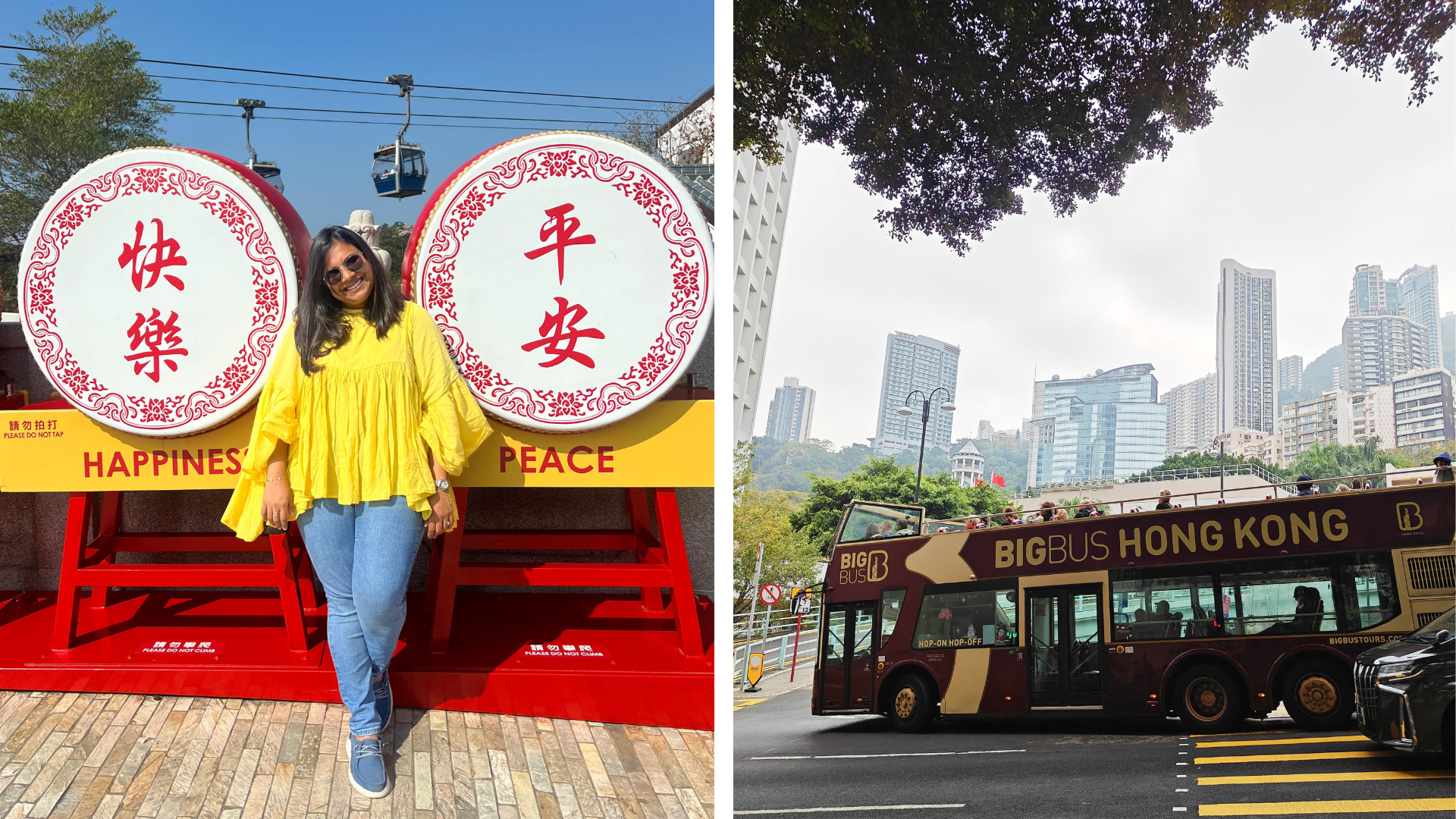
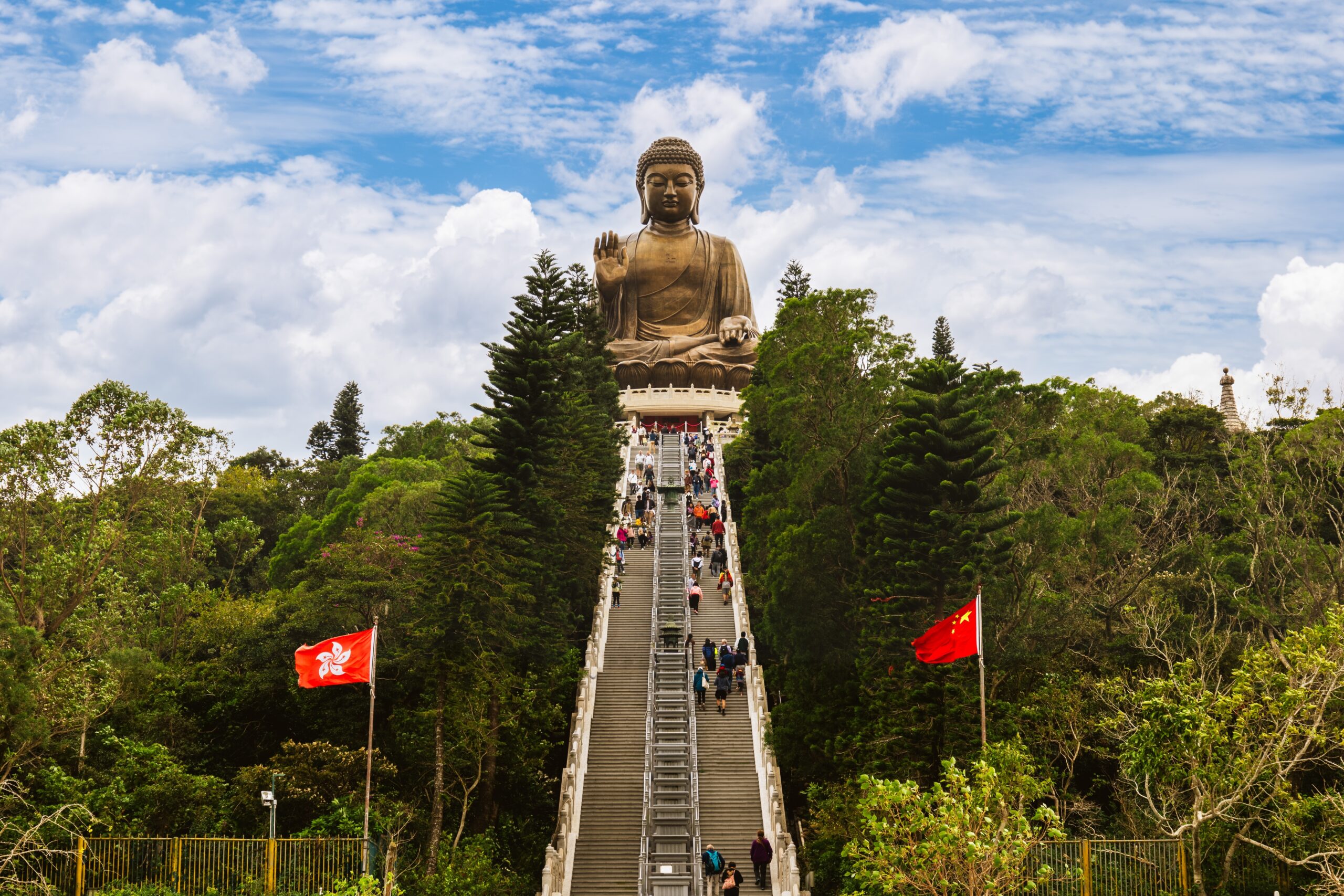
At Ngong Ping, walk up to the majestic Tian Tan Buddha (Big Buddha). The climb can be a little tiring, but the view from the top and the peaceful energy around the statue make it worth it. Spend some time at the Po Lin Monastery, light an incense stick if you wish, and enjoy the calm atmosphere.
The Big Buddha is located at Ngong Ping, Lantau Island, in Hong Kong.
Explore the Ngong Ping Village area for souvenirs, tea, and snacks. Everything here feels slower compared to the city, and that is the charm of Lantau. If you have time and energy, you can also visit Tai O Fishing Village, known for its stilt houses and old-world charm. It gives you a glimpse into a completely different side of Hong Kong that most people do not associate with the city.
Return to the city by evening and keep the night relaxed. Maybe grab dinner near your hotel or go for a casual walk to process how different Hong Kong can feel within just a short ferry or cable car ride.
Day 4: Victoria Peak, Harbour Views & Shopping Streets
This day is all about classic Hong Kong sights and skyline views.
Start with a visit to Victoria Peak. Take the Peak Tram up and enjoy panoramic views of the city and harbour. This is one of those postcard Hong Kong moments and is totally worth the hype. Spend some time at the viewpoint, walk around the Peak Circle Walk if you like easy scenic walks, and take your time clicking photos.
Head back down and explore Central and Causeway Bay. These areas are great for walking around, café hopping, and light shopping. You do not have to buy anything, but browsing through stores and observing the city’s fashion and lifestyle culture is an experience in itself.
In the evening, take a short ride on the Star Ferry across Victoria Harbour. It is inexpensive, simple, and one of the most charming things you can do in Hong Kong. The views during sunset and after dark are beautiful, and the ferry ride gives you a moment to slow down in the middle of a busy day.
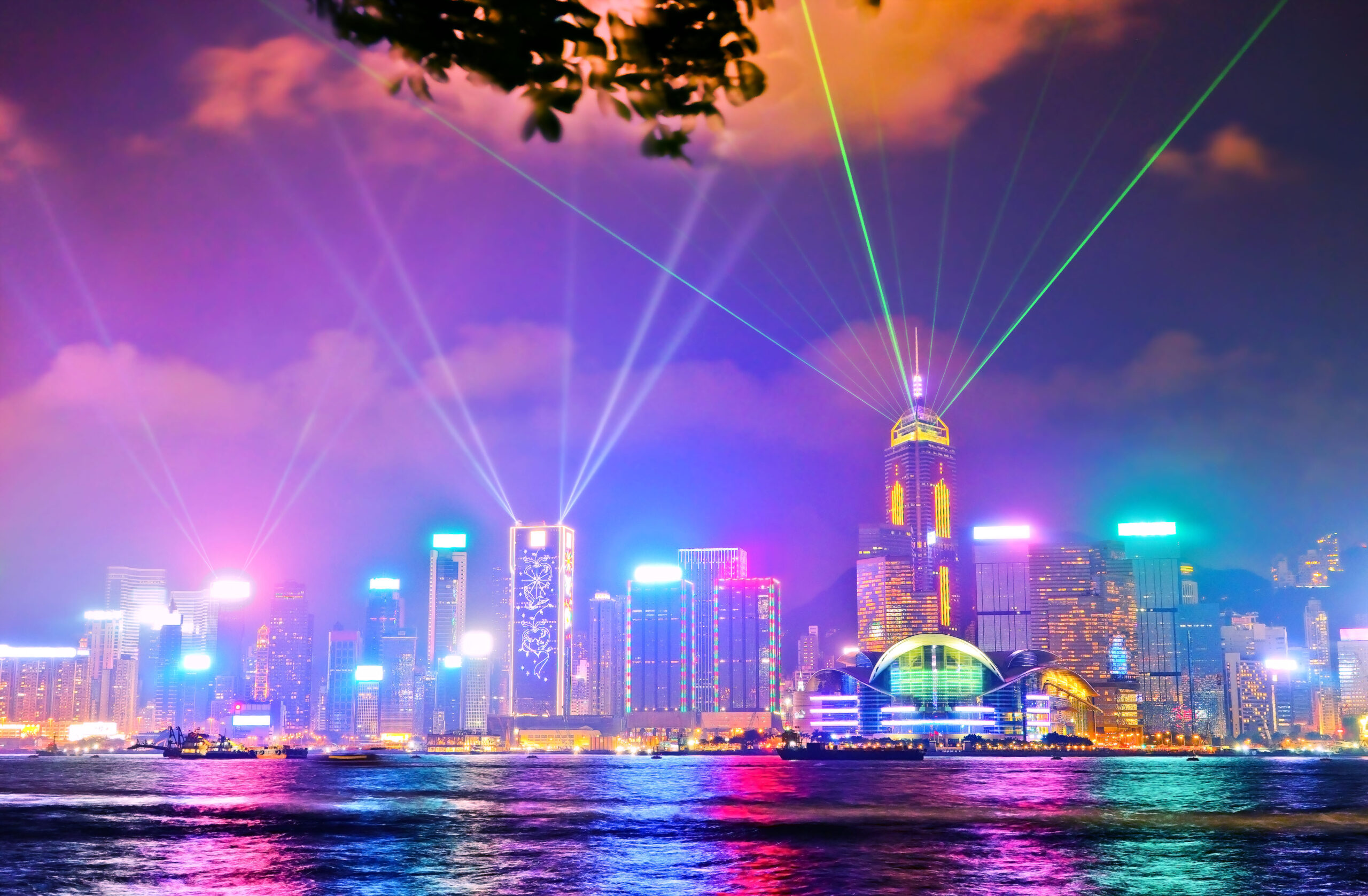
Victoria Harbour and Hong Kong skyline with the Symphony of Lights Show.
End the night by watching the Symphony of Lights show along the harbour. It may feel touristy, but standing by the water with the skyline lighting up around you is a very Hong Kong moment and a lovely way to wrap up the day.
Day 5: Markets, Local Neighbourhoods & Last-Minute Exploring
Your last day is perfect for wandering without a strict plan and picking up souvenirs.
Start with Mong Kok, one of Hong Kong’s busiest and most lively neighbourhoods. Explore street markets like Ladies’ Market and nearby lanes filled with shops selling everything from clothes to gadgets. This is a good place to buy small souvenirs for people back home.
If you enjoy quirky experiences, you can also walk through local streets, visit small bakeries, and try snacks you did not get around to earlier. This is your chance to slow down and notice the small details of the city that often get missed when you are rushing from one attraction to another.
If time permits before your flight, squeeze in one last café visit, do a final walk along the harbour, or revisit a spot you loved earlier in the trip. There is something bittersweet about the last day in Hong Kong, especially once you realise how much you have seen in just five days and how much still remains unexplored.
P.S: Many Indian travellers like to squeeze in Macau as well, since it is also visa-free and just a short ferry ride away from Hong Kong. We were really short on time, though, so we decided to give it a miss. As they say, you can never see it all in one go, and that just means there’s a good reason to come back.
Where to Stay in Hong Kong?
Choosing the right area to stay in Hong Kong can completely shape your experience, especially if it is your first time in the city. The good news is that Hong Kong’s public transport is so efficient that you can stay in most central neighbourhoods and still get around easily. That said, a few areas are especially popular with Indian travellers because they are well-connected, lively, and close to major attractions.
Tsim Sha Tsui (TST) is one of the most convenient and traveller-friendly areas to stay in. It is packed with hotels across all budgets, from budget hostels and mid-range stays to luxury harbour-view properties. You will find plenty of restaurants here, including Indian options, along with shopping streets and malls, and easy access to the Star Ferry and the Victoria Harbour promenade. Staying in TST is great if you like being in the middle of the action and having things to do right outside your hotel.
Central is perfect if you enjoy a more polished, city-meets-luxury vibe. This area is home to high-end hotels, stylish cafés, rooftop bars, and some of Hong Kong’s most iconic spots. It is extremely well-connected by the MTR and ferries, making it easy to reach almost anywhere in the city. While accommodation here can be on the pricier side, staying in Central puts you right in the heart of Hong Kong’s business and lifestyle district, with great access to SoHo, Man Mo Temple, and Victoria Peak.
Causeway Bay is a dream if shopping and food are high on your travel list. This area is lively, youthful, and always buzzing with energy. You will find huge malls, high-street brands, local boutiques, and endless places to eat. Hotels here range from compact budget stays to comfortable mid-range options. Causeway Bay is also well connected by metro, making it easy to move around even if you spend most evenings exploring nearby streets.
Mong Kok is ideal if you want to experience Hong Kong at its most local and lively. This area is famous for its street markets, neon-lit lanes, small shops, and non-stop energy. Accommodation here is generally more budget-friendly, with plenty of smaller hotels and guesthouses. Staying in Mong Kok gives you a raw, authentic feel of the city and puts you right next to popular markets and late-night food spots. It can feel crowded and chaotic, but that is also part of the charm.
No matter where you stay, try to choose a hotel near an MTR station. This makes getting around incredibly easy and saves a lot of time and energy, especially after long days of sightseeing. Hong Kong hotels tend to have smaller rooms, especially in budget and mid-range categories, so it helps to manage expectations and prioritise location over room size.
Best Things to Eat in Hong Kong
Hong Kong is a dream destination for food lovers. From humble street stalls to Michelin-starred restaurants, the city takes food very seriously. Whether you are adventurous with your palate or prefer familiar flavours, there is something here for everyone. Nargis and I were overeating for almost all meals, and here’s a sneak peek into what you absolutely shouldn’t miss while in Hong Kong:
Dim Sums
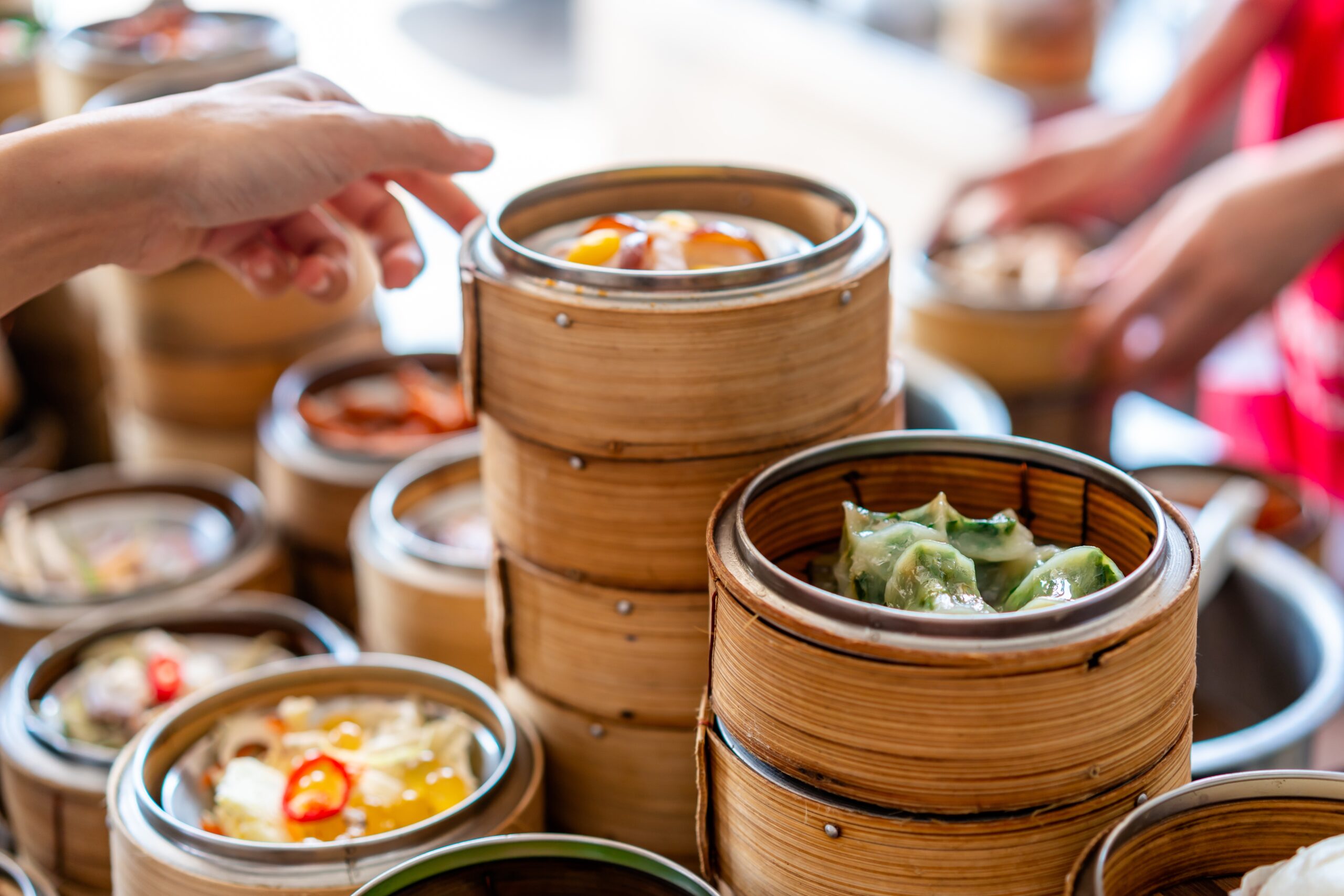
You simply cannot visit Hong Kong without eating dim sum. Think of it as small, shareable dishes served on tiny plates in bamboo baskets. Popular items include har gow (shrimp dumplings), siu mai (pork dumplings), cheung fun (rice rolls), char siu bao (BBQ pork buns), and custard buns. Dim sum is usually eaten for brunch or lunch, and it is a slow, social meal. Go with friends, order a variety, and taste a little bit of everything. Even if you are a vegetarian, you will find options like vegetable dumplings, tofu skin rolls, and mushroom buns.
Wonton Noodles
A comforting bowl of wonton noodle soup is classic Hong Kong food. The broth is light yet flavourful, the noodles are thin and springy, and the wontons are filled with juicy shrimp or meat. This is perfect for quick meals between sightseeing spots and something you will likely crave more than once during your trip. It is simple food done really well.
Roast Meats and Rice Bowls
Hong Kong is famous for its Cantonese roast meats, especially char siu (BBQ pork), roast duck, and soy sauce chicken. These are usually served with rice and a light soup on the side. You will see many small local eateries with meats hanging in their display windows. These places are great for affordable, filling meals and give you a taste of everyday Hong Kong food culture.
Egg Waffles and Street Snacks
If you love snacking as you walk, Hong Kong will keep you very happy. Try the famous egg waffles (gai daan jai), crispy on the outside and soft inside. You will also find fish balls, curry fish balls, stinky tofu (for the brave), sweet potato fries, and pineapple buns. Street food is perfect for quick bites while exploring markets and busy neighbourhoods.
Hong Kong-Style Milk Tea
Hong Kong’s milk tea is strong, smooth, and surprisingly addictive. It is made with black tea and evaporated or condensed milk, giving it a rich, creamy taste. You can get it hot or iced from local tea cafes and bakeries. Pair it with a bun or pastry for a quick breakfast or afternoon break.
Pineapple Buns and Bakery Treats
Despite the name, pineapple buns do not contain pineapple. They are soft buns with a sweet, crumbly topping that resembles pineapple skin. They are best eaten fresh, sometimes with a slab of butter inside. Local bakeries also sell egg tarts, custard buns, and other pastries that make for easy grab-and-go snacks while sightseeing.
Clay Pot Rice
If you are visiting during cooler months, try clay pot rice. This dish is cooked in a clay pot with rice, meats like sausage or chicken, and soy-based sauces. The rice at the bottom gets crispy, which is honestly the best part. It is comforting, filling, and perfect for evenings when you want something warm and satisfying.
Seafood by the Harbour
Being a coastal city, Hong Kong has amazing seafood. In areas near the water, you will find restaurants serving fresh fish, prawns, crab, clams, and oysters. You can often choose your seafood and the way you want it cooked, such as steamed with garlic, stir-fried with chilli, or in black bean sauce. If you enjoy seafood, this is a must-try experience.
Indian and Vegetarian Food Options – If you ever crave familiar flavours, Hong Kong has plenty of Indian restaurants, especially in areas like Tsim Sha Tsui and Central. You will find North Indian, South Indian, and even Jain-friendly options in some places. Vegetarian travellers will not struggle either. In addition to Indian food, many Chinese restaurants offer vegetarian dishes, and bakeries and convenience stores carry ready-to-eat vegetarian snacks.
Hong Kong is the kind of city that surprises you at every turn. One moment you are surrounded by towering skyscrapers and flashing lights, and the next you are standing in a quiet temple or looking out at the sea from a peaceful island. It is chaotic and calming at the same time, and that contrast is what makes it so special.
No matter how much you plan, some of the best moments here come from getting a little lost, trying something new, and letting the city lead the way.
If you’ve been to Hong Kong, I’d love to know what your favourite experience was. Was it the food, the views, Disneyland, or a quiet corner you stumbled upon unexpectedly? And if you’re planning a trip to Hong Kong, feel free to reach out. I’d be more than happy to help you plan an amazing, stress-free trip and make the most of your time in this beautifully chaotic city.
Frequently Asked Questions About Travelling to Hong Kong
1) Is Hong Kong visa-free for Indian travellers? Yes, Hong Kong is visa-free for Indian passport holders. You just need to complete the Pre-Arrival Registration (PAR) online before travelling. It is quick, free, and usually approved instantly.
2) How many days are enough for Hong Kong? Ideally, 5 to 6 days are perfect for a first trip. This gives you enough time to explore the city, visit Disneyland, take a trip to Lantau Island, enjoy the markets and shopping streets, and still soak up the vibe without rushing.
3) What is the best time to visit Hong Kong? The best time to visit is from October to March, when the weather is pleasant and comfortable for sightseeing. Winters are mild, days are great for walking, and evenings can get slightly chilly.
4) Is Hong Kong expensive? Hong Kong can feel expensive, especially for hotels and upscale dining. However, you can easily balance your budget with public transport, street food, local eateries, bakeries, and budget hotels or hostels. With smart planning, Hong Kong can be done comfortably on a mid-range budget.
5) Is it easy to get around Hong Kong? Yes, extremely easy. The MTR (metro), buses, trams, and ferries connect almost every part of the city. An Octopus Card makes travelling around super convenient and saves time.
6) Is vegetarian food available in Hong Kong? Yes. While Hong Kong is known for seafood and meat dishes, you will find vegetarian options in Chinese restaurants, dedicated vegetarian eateries, Indian restaurants, and cafes. Supermarkets and bakeries also have vegetarian-friendly snacks.
7) Is Hong Kong safe for solo travellers? Hong Kong is generally considered very safe, even for solo travellers. Public transport is reliable, streets are well-lit, and the city is busy even at night. Basic travel precautions are always recommended, just like in any big city.
8) Can I use my Indian credit or debit cards in Hong Kong? Yes, Indian cards are accepted at most hotels, malls, restaurants, and stores. It is still good to carry some cash for street markets and small local eateries. Inform your bank before travelling to avoid international transaction issues.
9) Should I include Macau in my Hong Kong trip? Many travellers do, since Macau is visa-free for Indians and just a short ferry ride away. If you have an extra day or two, it can be a fun addition. If you’re short on time, Hong Kong alone has more than enough to keep you busy.
10) Is English spoken in Hong Kong? Yes, English is widely spoken, especially in tourist areas, hotels, transport stations, and restaurants. Getting around and communicating is usually not a problem.
Disclaimer: This post contains a few affiliate links. If you click any of them and make a purchase, I might earn a small commission at no extra cost to you. Just know that I truly appreciate your support if you choose to do so.
I travel to collect stories, slowly and meaningfully, with an open heart. I wander a little farther for good food, linger longer to understand a place, and write so I can call it “work.” A slow traveller at heart, I believe in experiences over checklists, in moments that unfold at their own pace, and in connections that stay long after the journey ends. An absolute foodie and die-hard mountain lover, I find my happiest moments in quiet Himalayan towns with a cup of lemon-honey-ginger tea in hand. Over the years, I’ve had the joy of exploring places across India and beyond, each trip teaching me something new about people, cultures, and myself. When I’m not lost in thought or coffee, you’ll find me exploring the world one destination at a time, always looking for places that make me feel something. I love to read and write (give me a book and I’ll love you all the more) and share honest insights, real photos, and thoughtful recommendations from my own travels, so you can experience every place a little deeper, a little slower, and with just the right touch of comfort.



 Pinterest
  Linkedin
  MuckRack