Nepal
What Made Me Fall In Love With Nepal?
Being Indians, we barely think of Nepal as a foreign country (more so because we don’t need a Visa to hop in there!) and quite often, ignore it for our aspirations to see those countries which are more polished by the effects of globalization.
For me, the story was a little different. Ever since my love for the mountains grew into something much deeper, I’d dreamt of seeing Mount Everest up close. That dream is what drew me to Nepal—and it’s also the reason I know I’ll keep going back.
A small, landlocked country nestled between India and China, Nepal feels like a slice of heaven on Earth. Home to the mighty Himalayas, emerald valleys, centuries-old temples, and a culture that’s as warm as it is vibrant, it’s a destination that has long held a special place on every backpacker’s bucket list.
In just about a week, here’s what made me fall in love with Nepal.
The People in Nepal
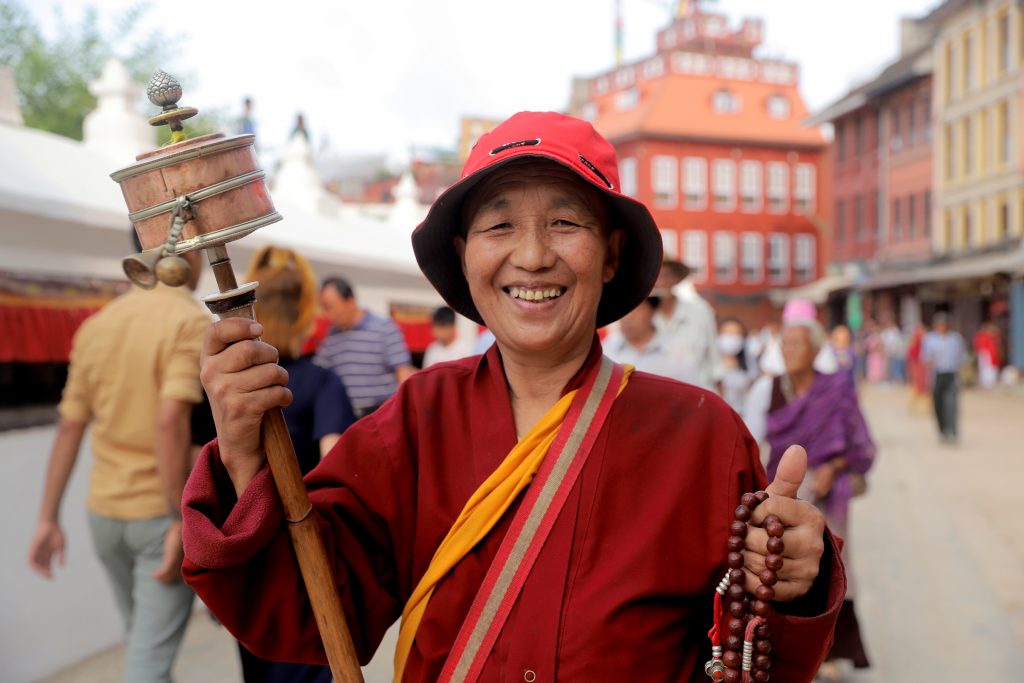
From the immigration officer at the airport and the cab driver waiting outside to the shopkeepers in the streets of Kathmandu and the attendants at my hostel, there wasn’t a single person who didn’t greet me with a warm smile and a heartfelt “Namaste.” There was an unmistakable sense of generosity and kindness everywhere I went—a warmth that made me feel at home almost instantly.
Nepal has endured immense hardship over the past decade, from devastating earthquakes to other natural calamities, and many communities are still rebuilding their lives. Yet, what struck me most was the resilience of its people. Despite everything, they carried an infectious optimism and a quiet contentment that was deeply inspiring.
Conversations came easily, too. Nepalis are incredibly warm and approachable, often striking up a chat without hesitation. During a taxi ride from Thamel to the Swayambhunath, my driver—a middle-aged man—shared the story of his life. He spoke about years of working long hours, saving every penny, and making countless sacrifices so his two children could pursue their education abroad. There was no trace of self-pity in his voice, only pride and hope.
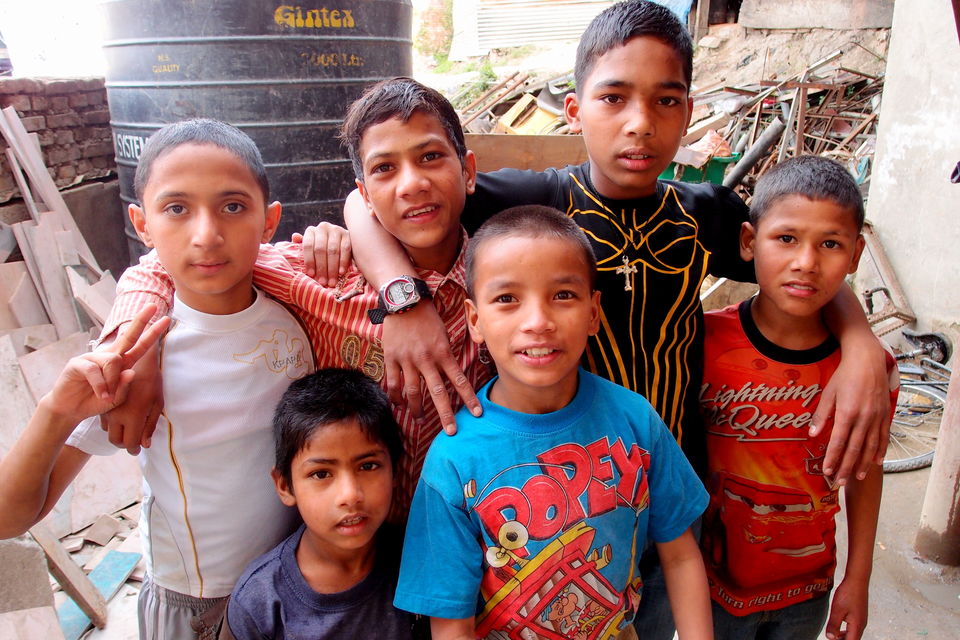
One of the most meaningful parts of my journey was volunteering at an orphanage. I spent my days playing, learning, and laughing with children who had so little in terms of material possessions, yet radiated an incredible zest for life. It was impossible not to grow attached to them. Even now, I find myself wanting to return—not just to Nepal’s mountains or temples, but to spend more time with those children who left such a lasting imprint on my heart.
The Old World Charm in Nepal
Walking through the narrow lanes of Bhaktapur’s temple complex felt like stepping back in time—to an era when life moved at a gentler pace. Potters lined both sides of the streets, completely immersed in their craft, their hands shaping clay with the kind of patience that only comes from generations of tradition. As I wandered deeper into the old town, my guide pointed out the beautifully preserved Newari homes, their intricately carved wooden windows and brick facades looking as though they had been lifted straight from the pages of a storybook.
While Nepal’s iconic landmarks deserve every bit of their fame, it’s these quieter corners that truly capture the country’s soul. Hidden away from the crowds, they continue to preserve an old-world charm that feels increasingly rare in today’s fast-paced world.
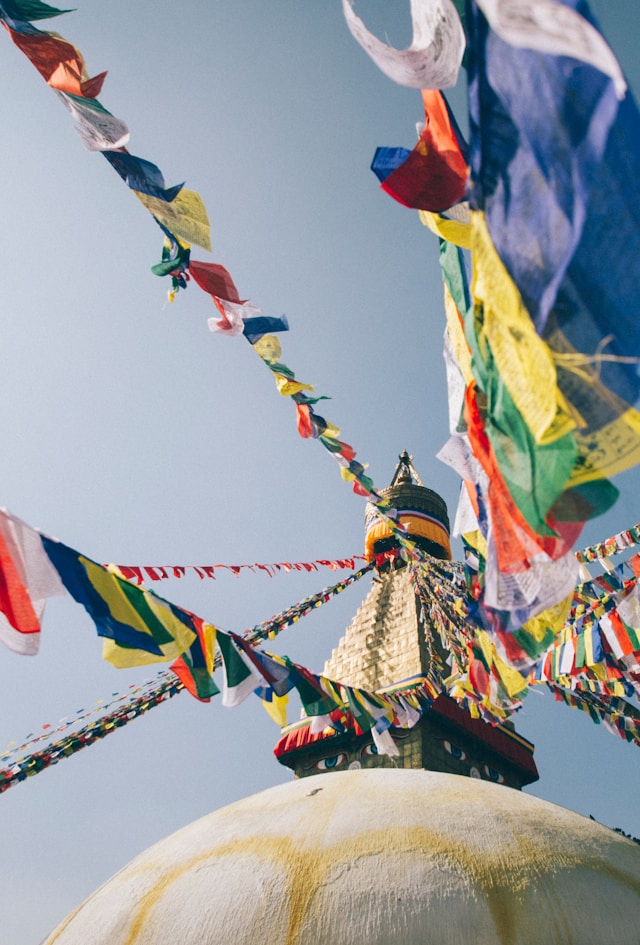
From the grand Durbar Square in Patan to the towering Nyatapola Temple in Bhaktapur and the sacred Pashupatinath Temple in Kathmandu, Nepal’s centuries-old architecture left me in awe at every turn. Although much of this remarkable heritage was damaged during the devastating 2015 earthquake, restoration efforts are steadily bringing these monuments back to life. With support from the government, local artisans, and international partners, Nepal is carefully preserving its history—one brick, one carving, and one temple at a time.

The Food in Nepal
Being a foodie, I’m always on the lookout for authentic local flavours wherever I travel. And if there’s one thing Nepal didn’t disappoint me with, it was the food. Every meal felt comforting, wholesome, and packed with flavour—leaving me wanting just one more bite.
From piping hot momos and hearty bowls of thukpa to spicy dum aloo and succulent Gorkhali lamb, Nepali cuisine is a treat for anyone who loves good food. But if there’s one meal you absolutely shouldn’t miss, it’s the traditional Nepali Thali—a generous spread of daal, bhaat (rice), seasonal vegetables, pickles, and curries that perfectly reflects the country’s simple yet soulful culinary traditions. Served at countless local eateries, especially around Thamel in Kathmandu, it’s the kind of meal that stays with you long after your trip is over. Sometimes, the simplest dishes end up becoming the most memorable.
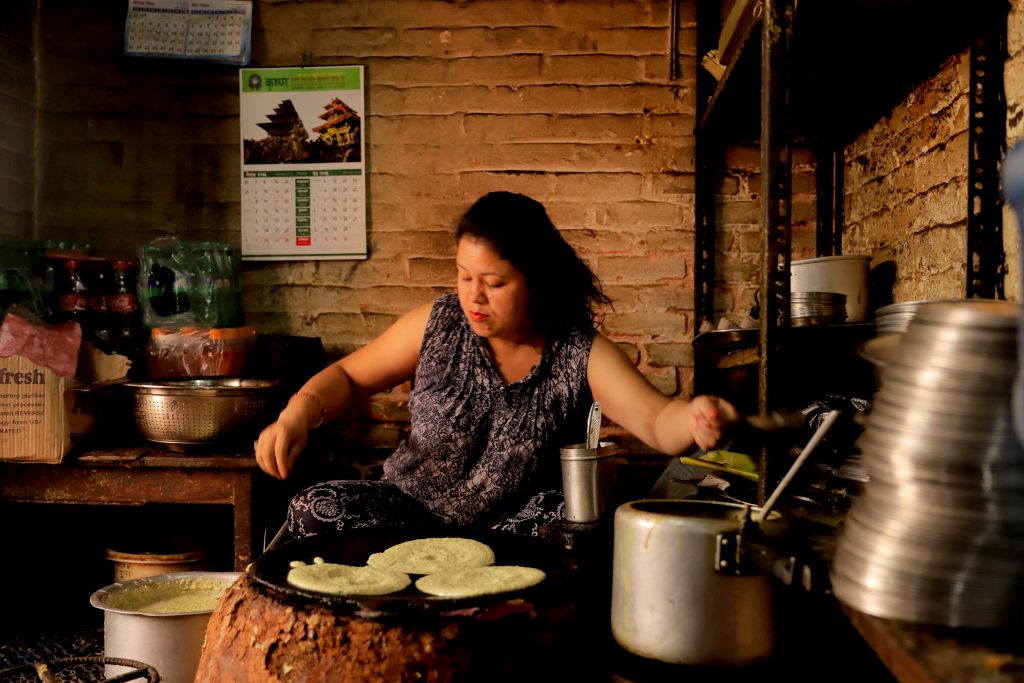
And while you’re exploring Nepal’s culinary landscape, don’t stop at the classics—make it a point to try authentic Newari cuisine. Rich in flavour and deeply rooted in tradition, it features an array of distinctive dishes, many of them prepared with meat, aromatic spices, and age-old recipes passed down through generations.
I was fortunate to have a local friend who took it upon himself to introduce me to the very best of Newari food. Instead of restaurants catering to tourists, he led me through narrow, unassuming lanes in Kathmandu and Bhaktapur to tiny eateries that I would have never discovered on my own. Every meal was a revelation, and not a single dish disappointed.
The one I’ll never forget, though, was Bara Wo—a savoury lentil pancake that I enjoyed with buffalo meat at a local family’s home in Bhaktapur. Sitting on the floor of a traditional Newari house, sharing homemade food and conversations with people I’d only just met, was one of those travel experiences that no guidebook can ever promise.
The Himalayas
Last, but certainly not least, one can visit Nepal simply for the Himalayas.
As mountaineer Frank Smythe once wrote, “There is something about the Himalayas not possessed by the Alps, something unseen and unknown, a charm that pervades every hour spent among them, a mystery intriguing and disturbing. Confronted by them, a man loses his grasp of ordinary things, perceiving himself as immortal, an entity capable of outdistancing all changes, all decay, all life, all death.”
The moment you find yourself surrounded by these towering peaks, you’ll understand why Nepal is regarded as a pilgrimage for trekkers, climbers, and mountain lovers from around the world. Home to eight of the world’s fourteen highest mountains, including the mighty Mount Everest, Nepal offers countless opportunities to experience the grandeur of the Himalayas—whether you’re embarking on a challenging trek, taking a scenic mountain flight, or simply watching the sun rise over snow-covered summits.
For me, Nepal was far more than just another destination. It was a place that surprised me with the kindness of its people, captivated me with its centuries-old heritage, delighted me with its food, and fulfilled a lifelong dream of standing in the shadow of the world’s highest mountains. And perhaps that’s the magic of Nepal—you may leave the country, but a part of you always remains among the Himalayas.
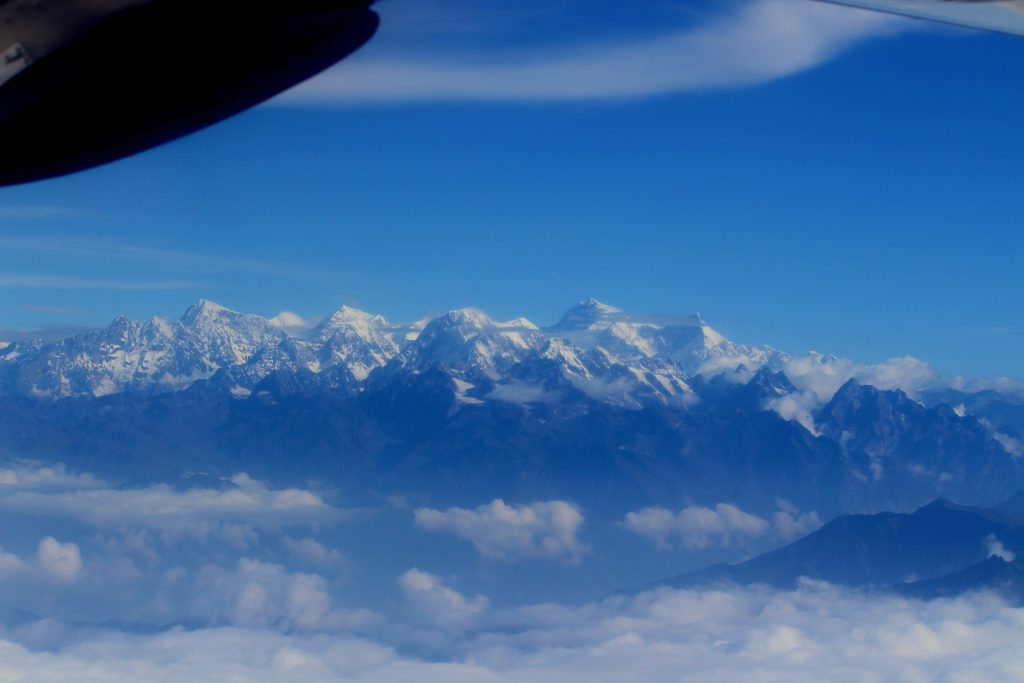
One of the highlights of my trip was taking the Everest Mountain Flight—easily one of the best decisions I made in Nepal. As the aircraft soared above the clouds and the Himalayan range slowly came into view, I found myself glued to the window, unable to look away. Catching a glimpse of Mount Everest and its neighbouring peaks from above was a surreal experience, one that filled me with childlike wonder.
Even after landing back in Kathmandu, the mountains never really left my side. The valley itself is cradled by the Himalayan ranges, and whether you’re driving to Nagarkot for a sunrise, heading towards Pokhara, or simply wandering through the city on a clear day, snow-capped peaks are a constant presence on the horizon.
Of course, if you’re looking for the ultimate Himalayan adventure, nothing compares to the Everest Base Camp Trek. I couldn’t fit it into this trip, but it’s firmly on my bucket list—and perhaps the very reason I’ll return to Nepal sooner than later.
What makes Nepal even more special is that experiencing all of this doesn’t require a luxury budget. From affordable stays and delicious local food to unforgettable adventures and world-class mountain views, it’s a destination that offers incredible value for money. It’s easy to see why Lonely Planet once named Nepal one of the world’s best budget travel destinations. But if you ask me, the memories you’ll take home are worth far more than what you’ll spend.
Frequently Asked Questions about Traveling to Nepal
-
Do Indian citizens need a visa to visit Nepal?
No, Indian citizens do not need a visa to enter Nepal. You can travel using either:
- A valid passport or
- A government-issued photo ID like an Aadhaar card or voter ID.
-
What is the best time to visit Nepal?
The best time to visit is during the spring (March to May) and autumn (September to November). These seasons offer clear skies and mild temperatures, making it ideal for trekking and sightseeing.
-
What are the top tourist attractions in Nepal?
Popular attractions include:
- Kathmandu Valley: Home to UNESCO World Heritage Sites like Pashupatinath Temple, Boudhanath Stupa, and Durbar Square.
- Pokhara: Known for Phewa Lake and adventure activities.
- Lumbini: The birthplace of Lord Buddha.
- Chitwan National Park: For jungle safaris and wildlife.
- Mount Everest: Trekking to Everest Base Camp or scenic flights.
- Annapurna Circuit: A famous trekking route.
-
What is the currency in Nepal, and can I use Indian Rupees?
The currency is the Nepalese Rupee (NPR). Indian Rupees are widely accepted, but only in denominations of INR 100 or lower. Larger denominations may not be accepted.
-
What languages are spoken in Nepal?
The official language is Nepali, but English is widely spoken in tourist areas. You will also hear local languages like Maithili, Bhojpuri, and Newari.
-
Can I trek in Nepal without a guide?
Yes, you can trek independently in certain regions, but some areas require you to hire a guide or porter. The Annapurna Circuit and Everest Base Camp treks are popular for solo trekkers, but a guide is recommended for safety.
-
What is the time difference between India and Nepal?
Nepal follows Nepal Standard Time (NST), which is 45 minutes ahead of Indian Standard Time (IST). For example, if it is 12:00 PM in India, it will be 12:45 PM in Nepal.
Have you been to Nepal? I’d love to hear about the moments that made your journey unforgettable—whether it was a hidden trail, a memorable conversation with a local, an incredible meal, or an adventure off the beaten path. Share your stories in the comments below; I’m always excited to discover Nepal through someone else’s eyes, too.
Disclaimer: This post contains a few affiliate links. If you click any of them and make a purchase, I might earn a small commission at no extra cost to you. Just know that I truly appreciate your support if you choose to do so.
Views: 1,327


 Pinterest
  Linkedin
  MuckRack










I had experience the mesmerizing country with beautiful memories through the post.
https://fitfoodfusion.blogspot.com/2023/10/nepal-jewel-of-south-asia.html