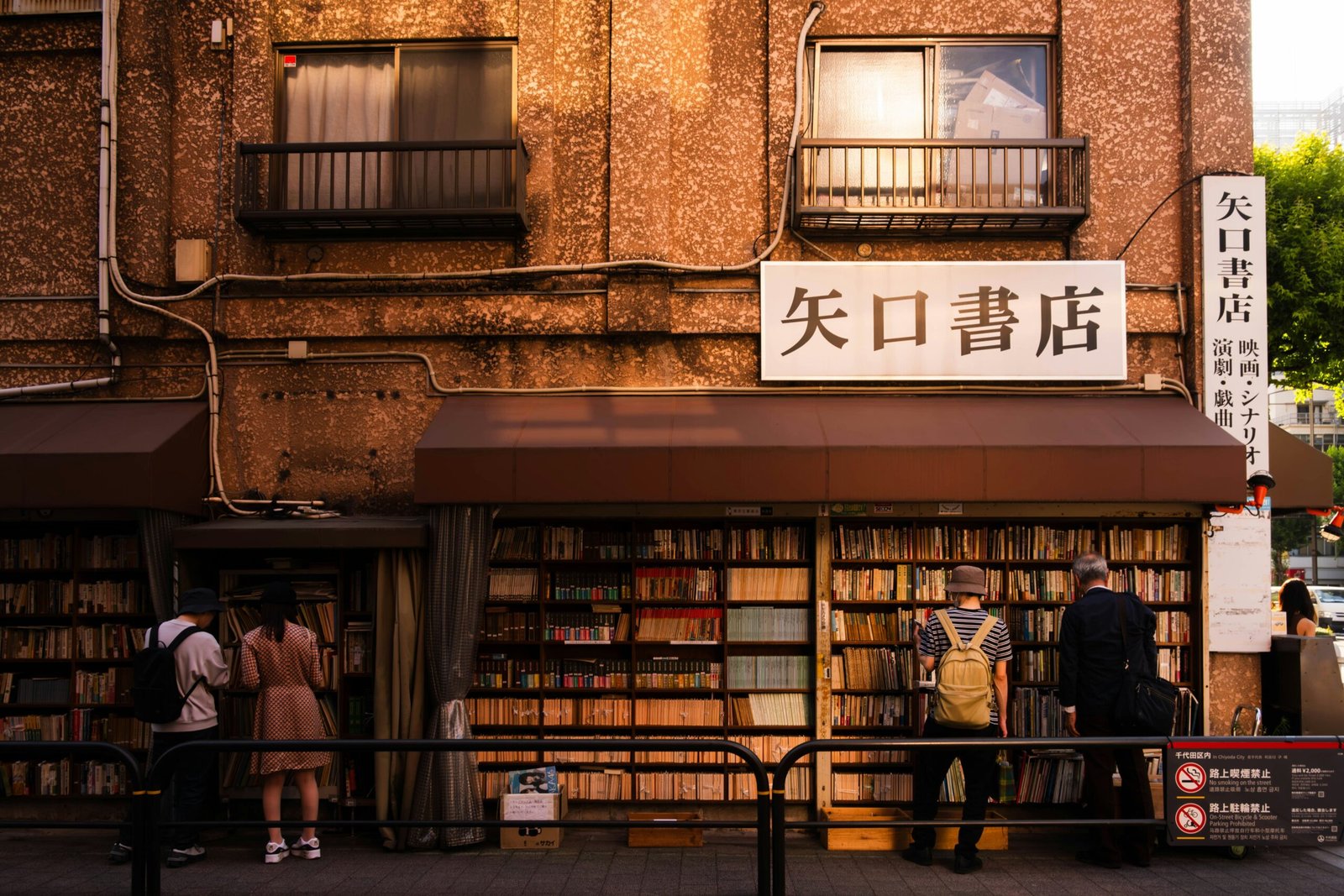

Jimbōchō Book Town | Tokyo’s Unique Neighborhood
Tucked away in central Tokyo, Jimbōchō Book Town is a paradise for book lovers, collectors, and curious travellers. Home to more than a hundred bookstores, cosy cafés, and specialist shops, this historic neighborhood offers a slower, more intellectual side of the Japanese capital.
When I met Miki and asked her for bookstore recommendations in Tokyo, she mentioned a neighborhood called Jimbōchō and casually added that it was a little out of the way. I dropped a pin on Google Maps without thinking much about it, not realising she had just pointed me towards a treasure island for book lovers.
Home to more than a hundred bookstores, Jimbōchō Book Town is nothing short of paradise for anyone who loves the written word. Rare first editions sit alongside vintage maps, manga, art books, academic texts, and literary treasures from around the world. Walking through the streets, I found myself slowing down, peering into shop after shop, never quite knowing what I would stumble upon next. It is the sort of place where every shelf has a story, and every discovery feels delightfully personal.
Where is Jimbōchō?
Nestled in Tokyo’s Chiyoda ward, between Kanda, Ochanomizu, and the Imperial Palace area, Jimbōchō is a neighborhood that feels wonderfully removed from the city’s fast-paced, neon-lit image. While the first few days in Tokyo were all about skyscrapers, technology, and endless crowds, I found something entirely different here: quiet streets lined with bookstores, old cafés, and a sense of history that lingers around every corner.
What makes Jimbōchō special is not just the sheer number of bookshops. It is the story behind them. The area takes its name from Jinbo Nagaharu, a samurai who once governed the area during the Sengoku period. Later, during the Edo era, the land surrounding the nearby Edo Castle was home to samurai residences. Over the centuries, the district evolved alongside modern Tokyo, eventually becoming closely linked with the universities, publishers, and academic institutions that still surround it today.
After a devastating fire in 1913 destroyed much of the neighborhood, several second-hand booksellers began setting up shop here. Their success transformed this place into Tokyo’s literary hub, attracting readers, collectors, scholars, and publishers from across Japan. More than a century later, that identity remains firmly intact. Today, Jimbōchō is widely regarded as one of the world’s greatest book districts. Within a few walkable streets, you’ll find hundreds of bookstores specialising in everything from rare first editions and vintage maps to manga, photography books, ukiyo-e prints, and academic texts.
For me, however, the real appeal was in the vibe of the place. There was something deeply satisfying about wandering through Jimbōchō without a plan, stepping into old bookstores, browsing dusty shelves, and discovering treasures I wasn’t looking for in the first place.
How to Reach Jimbōchō Book Town?
One of the best things about Jimbōchō is how easy it is to reach, despite feeling like a hidden discovery. The most convenient option is to take the Tokyo Metro or Toei Subway directly to Jimbōchō Station. Three lines serve the station:
- Tokyo Metro Hanzomon Line
- Toei Shinjuku Line
- Toei Mita Line
Once you get out of the station, you’re already in the heart of Book Town. Several exits lead directly into the bookstore district, making it almost impossible to get lost.
If you’re staying in popular neighborhoods such as Shibuya, Shinjuku, Asakusa, or Ueno, reaching Jimbōchō usually takes between 15 and 30 minutes by train.
[Also read: Where to stay in Tokyo?]
Another option is to walk from Ochanomizu Station, which is about 10 to 15 minutes away. I particularly enjoyed approaching Jimbōchō this way because it allowed me to wander through quieter streets and gradually watch the neighborhood transform from a typical Tokyo business district into a book lover’s paradise.
What to See in Jimbōchō Beyond the Bookstores?
While the bookstores are undoubtedly the main attraction, I quickly realised that Jimbōchō is much more than shelves lined with books. The neighborhood rewards slow exploration, and some of my favourite discoveries came while simply wandering its streets.
Start at the Book and City Information Center
If you’re visiting Jimbōchō for the first time, I would recommend making the Book and City Information Center your first stop. Located along Kanda Suzuran-dori, this small but useful centre offers neighborhood maps, brochures, bookstore guides, and information on literary events and new book releases. I found it particularly helpful for getting my bearings and identifying a few shops that I might otherwise have walked past!
Take a Break at PAPER BACK CAFE
One of the most pleasant surprises in Jimbōchō was PAPER BACK CAFE, located inside Books Tokyodo, one of the district’s most established bookstores. Books Tokyodo has been a part of the neighborhood for well over a century and continues to be a favourite among local readers.
This was like my favorite spot, offering a seamless blend of books and coffee! After picking up a few titles, you can settle into the café with a coffee and enjoy a slower pace of Tokyo life. For book lovers, it is an easy place to lose track of time.
Wander Along Kanda Suzuran-dori
Many visitors focus entirely on the larger bookstores, but I found Kanda Suzuran-dori to be one of the most enjoyable streets in the district. Between the bookshops, you’ll come across independent cafés, quirky storefronts, vintage signs, and glimpses of everyday Tokyo that often go unnoticed.
Explore the Historic Bookstores of Yasukuni-dori
I continued towards Yasukuni-dori, one of Jimbōchō’s most iconic streets. Here, historic buildings house generations-old bookstores, many specialising in subjects you would never expect to find elsewhere. Even if you don’t speak Japanese, these shops are fascinating to explore. Their window displays alone offer a glimpse into the incredible diversity of Jimbōchō’s literary culture.
Visit Hara Shobo for Traditional Japanese Prints
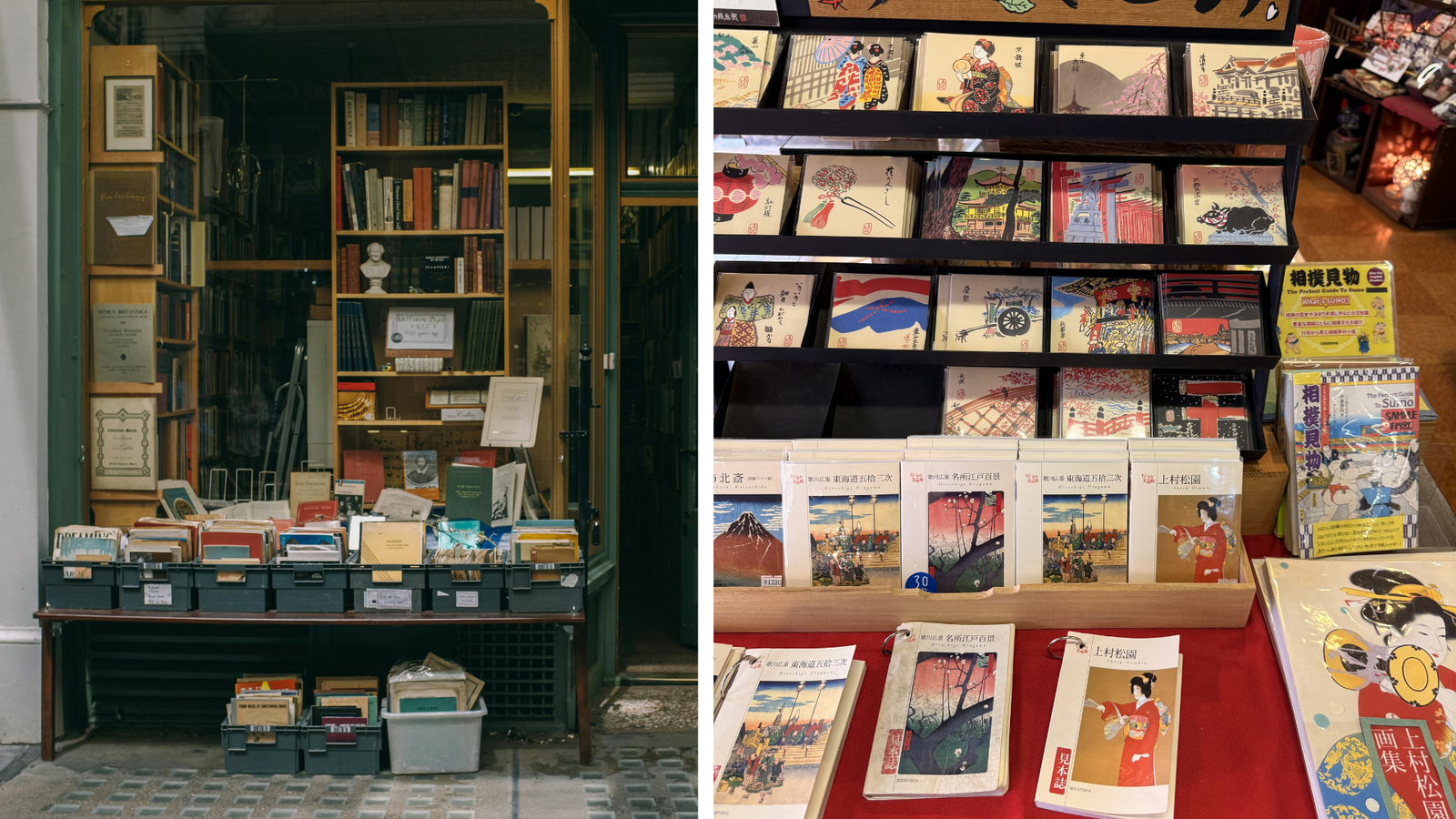
Among the many specialist stores, Hara Shobo is one that you just can’t skip! Established in the early 20th century, the shop is known for its collection of ukiyo-e and traditional Japanese woodblock prints.
Inside, you’ll find everything from affordable reproductions to valuable collector’s pieces. Even if you’re not an art collector, browsing the beautifully detailed prints offers a wonderful introduction to a classic form of Japanese art. I also thought they made far more meaningful souvenirs than the usual airport gifts.
For travellers looking to take home a piece of Japanese culture, this is one of the most rewarding stops in Jimbōchō.
[Also read: 13 Must-Visit Bookstores, Cafes, and Curry Spots]
Things to Remember Before Visiting Jimbōchō
Don’t Expect Every Bookstore to Have English Books
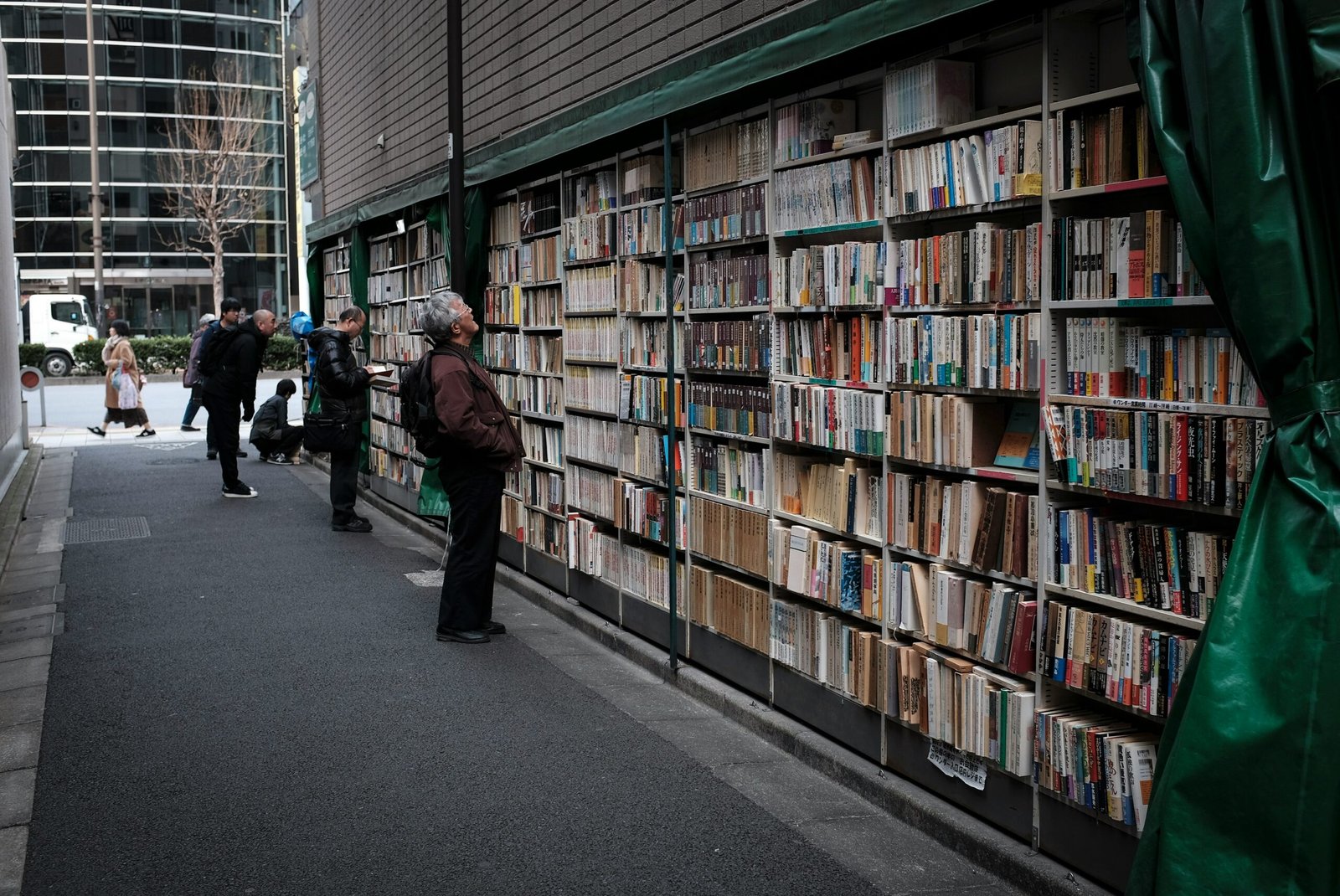
While some shops have impressive English-language collections, many specialise in Japanese titles. That said, don’t let the language barrier discourage you. Half the joy of Jimbōchō lies in browsing beautiful covers, vintage illustrations, maps, prints, magazines, and photography books that can be appreciated regardless of language.
Visit During the Day
Most bookstores open around 10 or 11 in the morning. Arriving too early may leave you wandering past closed shutters. I found the late morning and early afternoon to be the ideal time to visit, when the streets are lively but not overwhelmingly crowded.
Carry Cash
Although Japan has become increasingly card-friendly, some smaller second-hand bookstores still prefer cash, particularly when selling rare books or vintage items. Having a little cash on hand can save you from disappointment when you stumble upon an unexpected treasure.
Give Yourself More Time Than You Think You’ll Need
I initially planned to spend an hour in Jimbōchō. Three hours later, I was still wandering between bookshops, peering into display windows and discovering new side streets. This is not a neighborhood to rush through. Leave room in your itinerary for spontaneous discoveries.
Look Beyond Books
Jimbōchō isn’t just about literature. Many shops sell vintage movie posters, old maps, woodblock prints, magazines, postcards, and fascinating pieces of Japanese ephemera. Even travellers who aren’t avid readers often find themselves leaving with a unique souvenir.
Bring a Tote Bag
This may sound obvious, but books get heavy surprisingly quickly. If you’re anything like me, you’ll convince yourself that you’re “just browsing” before somehow leaving with several purchases!
Pair Your Visit with a Café Stop
One of my favourite things about Jimbōchō is its slower pace. The neighborhood is dotted with old-school cafés where you can sit down with your latest find, enjoy a coffee, and watch Tokyo move at a gentler rhythm. It feels worlds away from the city’s more frenetic districts.
Remember That the Best Finds Are Often Hidden
Some of the most memorable bookstores in Jimbōchō aren’t the large, obvious ones along the main road. Look up, look down, and don’t hesitate to climb narrow staircases or venture into tucked-away alleys. The real magic of Jimbōchō often lies behind an unassuming doorway.
I have always believed that the best way to experience a destination is to slow down and allow room for serendipity. In a city as energetic and overwhelming as Tokyo, Jimbōchō felt like a breath of fresh air. For a few hours, I found myself moving at a gentler pace, getting lost among stories, old maps, vintage prints, and hidden bookstores. And in a city that rarely seems to pause, that felt like a rare luxury.
If you’re looking to experience a different side of Tokyo, one that is thoughtful, nostalgic, and wonderfully unhurried, make time for Jimbōchō. You might arrive for the books, but you’ll stay for the atmosphere.
Disclaimer: This post contains a few affiliate links. If you happen to click on any of them and make a purchase, I might earn a small commission at no extra cost to you. Just know that I truly appreciate your support if you choose to do so.
Tags:
Share:


About Me
I travel to collect stories, slowly and meaningfully, with an open heart. I wander a little farther for good food, linger longer to understand a place, and write so I can call it “work.” A slow traveller at heart, I believe in experiences over checklists, in moments that unfold at their own pace, and in connections that stay long after the journey ends.
An absolute foodie and die-hard mountain lover, I find my happiest moments in quiet Himalayan towns with a cup of lemon-honey-ginger tea in hand. Over the years, I’ve had the joy of exploring places across India and beyond, each trip teaching me something new about people, cultures, and myself. When I’m not lost in thought or coffee, you’ll find me exploring the world one destination at a time, always looking for places that make me feel something. I love to read and write (give me a book and I’ll love you all the more) and share honest insights, real photos, and thoughtful recommendations from my own travels, so you can experience every place a little deeper, a little slower, and with just the right touch of comfort.
 Pinterest
  Linkedin
  MuckRack
Exploring The World, One Place At a Time!